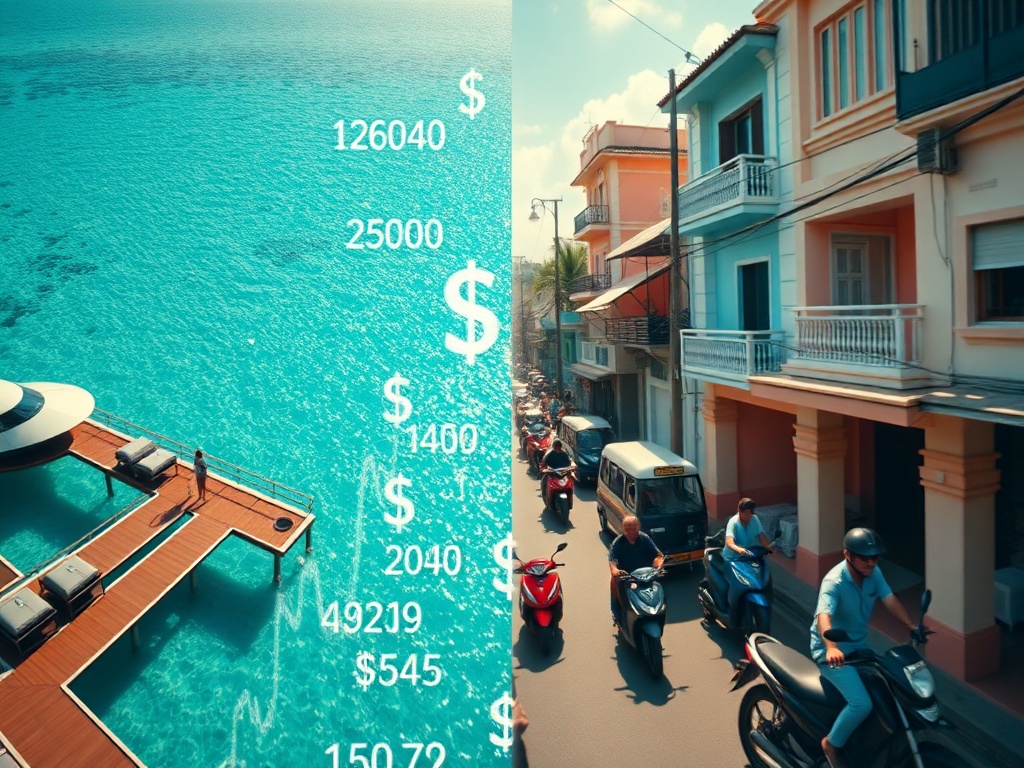
12% STO Rates, Remittance Caps, and the Widening Gap in Malé
The announcement of returning to STO rates between 12-18 percent landed with familiar weight in a nation grappling with economic uncertainty. This move, coupled with a cap on remittances affecting the Indian diaspora and other expatriate communities, signals another chapter in Maldives' ongoing financial recalibration. Meanwhile, the World Bank's forecast of 3.9% GDP growth for 2026—described as "so low and unheard of in previous administrations"—has amplified concerns about the nation's economic direction.
At the heart of these policy debates lies a recurring question: who truly benefits from Maldives' economic structure? The tourism industry, generating approximately 80% of national revenue according to public discourse, remains dominated by pioneering families from Malé. Yet critics argue this concentration of wealth has created systemic inequities. "It's greed for prime real estate more than anything else," observes one perspective circulating in public conversation, pointing to how economic policies often appear to favor "a privileged few" who "feel they are more deserving than those who aren't part of the privileged group."
The tension between tourism's economic dominance and other potential sectors remains palpable. Some recall how the shipping industry—once positioned to potentially eclipse tourism—was sidelined, leaving the nation heavily dependent on a single revenue stream. This historical perspective fuels current skepticism about whether resort owners genuinely drive policy or merely benefit from its existing contours.
Meanwhile, practical financial constraints reveal deeper structural issues. With banks facing capital limitations, development opportunities increasingly flow to those who can finance projects without loans—typically the wealthiest families. This dynamic reinforces existing disparities, as one commentator notes: "It's just giving everything to the wealthy elite again."
The government's challenging position is acknowledged in these discussions—facing billions in loans, over 50,000 people needing immediate housing, and overloaded healthcare systems. Yet the perception persists that policy responses often prioritize certain interests over others.
What emerges from these economic debates is a nation at a crossroads, forced to balance immediate financial pressures against long-term equitable development. The question isn't merely about growth percentages or exchange rates, but about who carries the weight of economic adjustments and who reaps the benefits—a calculation that will ultimately define Maldives' social and economic landscape for years to come.
— Source fragments: STO rates, remittance cap, resort leverage questions, GDP growth concerns, wealth distribution comments, tourism revenue statistics, shipping industry history, banking limitations, economic migration reality