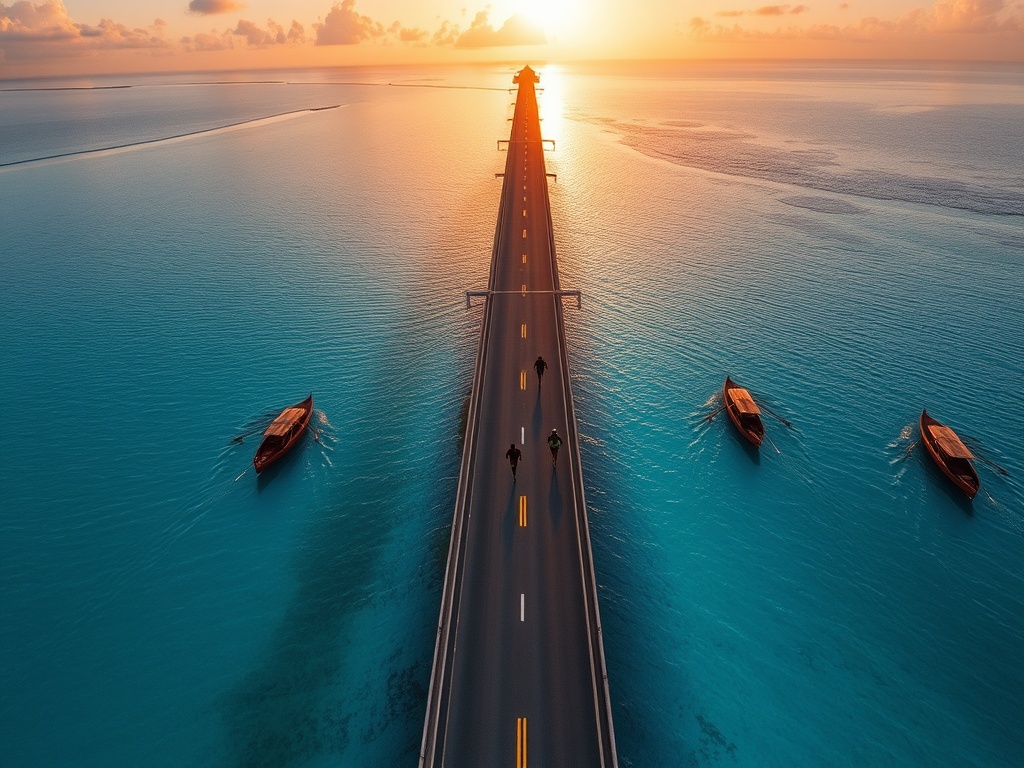
14 Kilometers of Asphalt Connecting Two Oceans in Addu
The ribbon of asphalt stretches between two oceans, a 14-kilometer link road in Addu City that represents more than just transportation infrastructure. It embodies a vision of the Maldives where development extends beyond the crowded capital, where geography becomes opportunity. Here, between endless horizons and sea on both sides, lies the potential for world-class events that could put Maldivian scenery on the global sporting map.
This physical transformation extends across the archipelago. Harbors now accommodate fishing fleets that form the backbone of island economies. Water systems bring reliable access to communities long dependent on precarious sources. Housing projects address the chronic congestion that has plagued urban centers. Airports connect remote atolls to economic opportunities. And that first bridge—a engineering marvel in a nation of islands—has fundamentally altered daily movement and economic possibilities.
The scale of this infrastructure push prompts reflection on how we measure development. The physical evidence is undeniable—concrete, asphalt, and steel structures that will outlast political cycles and individual memories. Years from now, people may forget which administration built particular roads or towers, but the infrastructure itself will remain, silently shaping lives and economies.
This national approach to development represents a significant shift from the historical concentration of resources in Malé. The philosophy appears to be one of distributed investment—ensuring that progress reaches every atoll rather than accumulating in a single urban center. Even critics acknowledge the unprecedented pace of visible change, pointing to resolved issues like chronic flooding that had long plagued communities.
The infrastructure conversation naturally extends to utilities and connectivity. Visionaries propose a national power grid linking atolls, creating resilience through interconnection. When one island experiences outages, others could supply backup—a practical solution that acknowledges both geographical challenges and economic realities.
As these projects take shape across the islands, they raise deeper questions about legacy and sustainability. The physical structures we build today will define the Maldives for generations. They represent not just political achievements but the foundation upon which future prosperity must be built—a nation connected, resilient, and developed from north to south.
— Source fragments: Addu City geography for marathon; national power grid connectivity; physical infrastructure legacy; development across all atolls including harbors, water systems, housing, airports, bridge; acknowledgment of rapid development progress