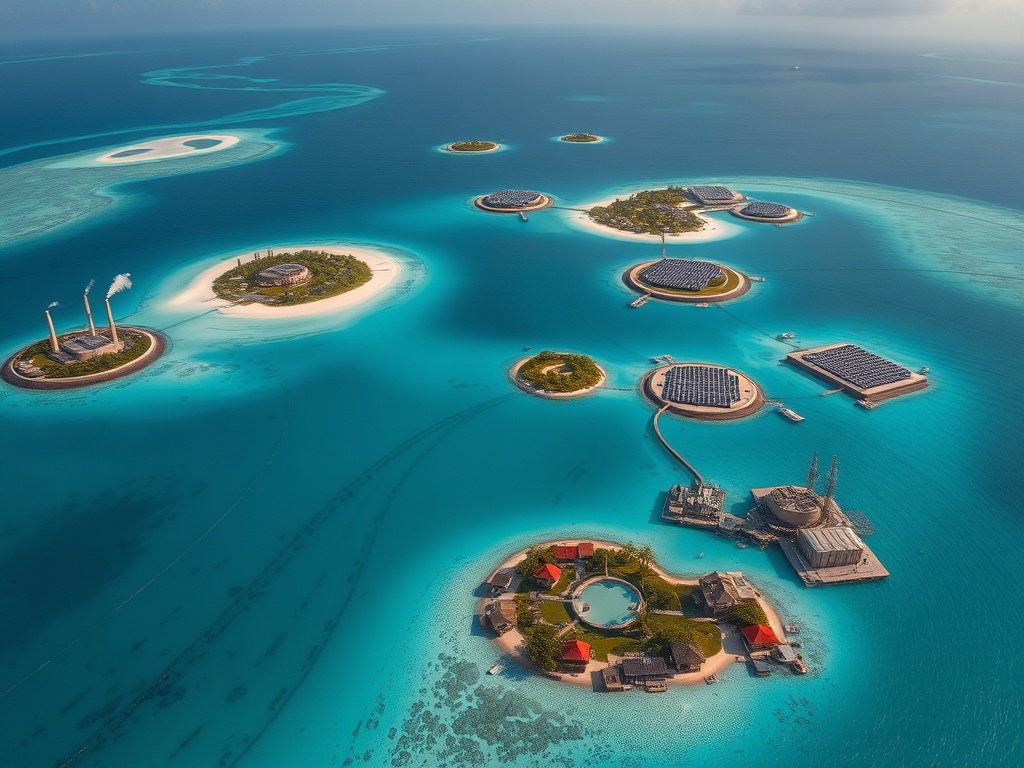
185 Islands, One Shared Power Grid
The scattered geography of the Maldives has long presented unique infrastructure challenges, with each of the nation's 185 inhabited islands traditionally requiring its own self-contained systems. Yet emerging conversations among experts and observers suggest a paradigm shift may be underway—one that could transform how the archipelago manages essential services from energy distribution to flood control.
Recent discussions have highlighted the potential for underwater cable networks to connect geographically proximate islands sharing the same lagoons. This approach would allow for centralized power generation through strategically located powerhouses or solar farms, rather than maintaining individual power stations on every island. The economic and environmental benefits could be substantial, reducing both capital expenditure and maintenance costs while potentially increasing system reliability.
Simultaneously, infrastructure durability remains a pressing concern, particularly in high-traffic urban centers like Malé. Questions about how new systems would perform under heavy vehicle loads and intense usage patterns underscore the need for robust engineering solutions tailored to local conditions. The capital's congestion challenges demand infrastructure that can withstand both environmental pressures and the wear of daily urban life.
The recent transfer of pump maintenance responsibilities to the Maldives National Defence Force (MNDF) illustrates the complex interplay between technical solutions and governance structures. While this move has shifted accountability away from local councils, it highlights the ongoing challenge of maintaining critical infrastructure across different administrative layers. The presence or absence of essential equipment like hydrant pumps becomes not just a technical question but one of institutional capacity and coordination.
Even abandoned facilities, such as the marine research station mentioned in public discourse, represent opportunities for reevaluation and potential repurposing. These existing structures could serve as platforms for testing new approaches to sustainable development, from renewable energy integration to climate-resilient construction methods.
The broader conversation reflects a growing recognition that the Maldives' future infrastructure must balance innovation with practicality, centralization with local needs, and technical solutions with effective governance. As climate change intensifies and urban pressures grow, these discussions take on increased urgency—pointing toward a future where smart, interconnected systems might finally overcome the tyranny of distance that has long defined development in the island nation.
— Source fragments: Chinese government upgrades to storm water system; underwater cables connecting islands; centralized power generation; infrastructure performance under heavy traffic; pump maintenance responsibility transfer; equipment availability questions