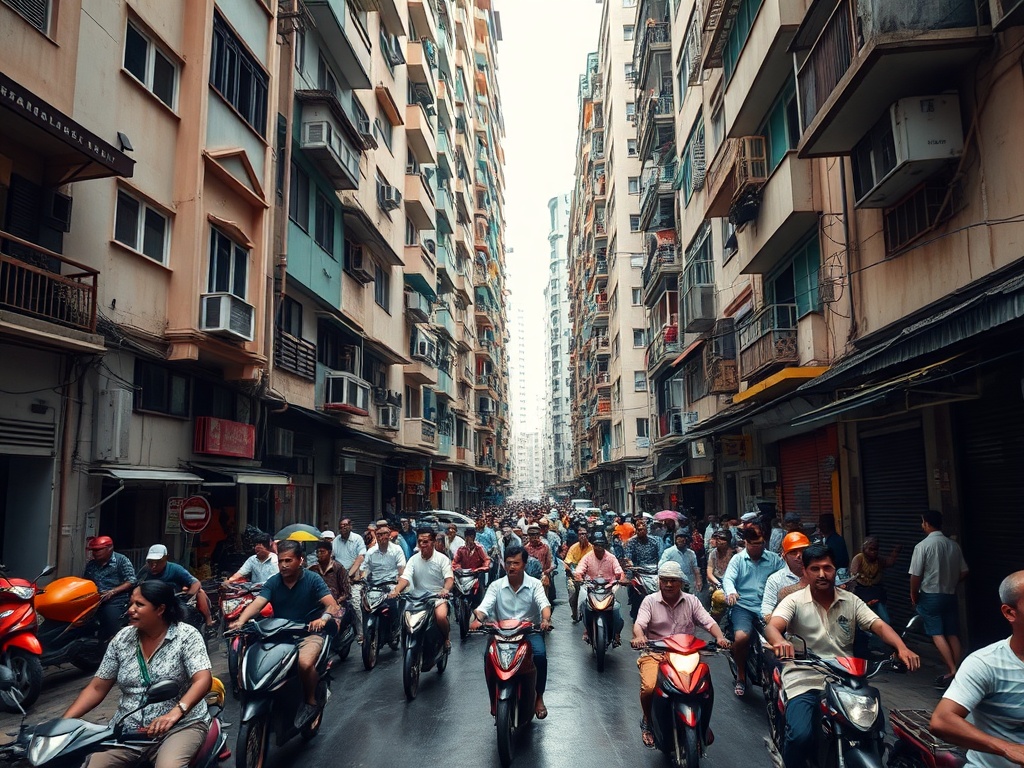
211,000 People on 8.3 Square Kilometers
In the dense urban fabric of Malé, where every square meter carries a premium, the conversation around housing has become increasingly polarized. On one side, there are calls for building separate expatriate cities from scratch with proper standards, acknowledging the unhygienic conditions many foreign workers endure—sharing accommodations with 10-12 people while splitting rent. On the other, voices demand immediate rent control, frustrated by what they see as treating housing costs as an unchanging law of nature.
The reality is that both perspectives miss the complexity of Malé's housing equation. The capital's 8.3 square kilometers must accommodate not just a population of 211,000, but also provide access to the nation's best jobs, healthcare, and education. This concentration creates a perfect storm where even "half-decent" apartments command fortunes, and business owners themselves live in cramped conditions to minimize spending.
The discussion around segregated housing for expatriates reflects a deeper institutional divide, with critics pointing to schemes like Binveriya as examples of systemic discrimination. Yet the solution cannot be mere geographic separation when the fundamental issue remains land scarcity and economic pressure.
Rent control advocates argue for immediate action, noting that previous conversations about fixing prices have gone nowhere. But opponents counter that without changing external factors—limited land, high demand, and Malé's role as the nation's hub—rents will remain elevated regardless of regulation. Landlords, in this view, are simply responding to market realities rather than creating them.
The housing crisis exposes deeper structural problems in Maldivian governance and economy. When even those who should be economically secure struggle to find decent living conditions, it suggests systemic failure rather than individual hardship. The conversation needs to move beyond quick fixes and segregation debates to address the fundamental question: how can a nation built across hundreds of islands continue concentrating its population and opportunities in one overcrowded capital?
Until Maldivians confront the geographic and economic centralization that makes Malé both essential and unaffordable, the housing debate will continue circling the same solutions without reaching meaningful resolution. The crisis isn't just about rent prices or expatriate conditions—it's about a development model that has reached its breaking point.
— Source fragments: A crisis is a crisis whether its in Dubai or maldives. Needs to be fixed; Actually expatriates are living in very unhygienic conditions in Male'. Most are sharing accommodation with 10, 12 people splitting rent; The discriminatory Binveriya scheme is up there with the institutional issues that continue to divide the Maldives; Rent prices are on the rise; Decent living conditions are very expensive in malé that even some businesses owners live in cramped up houses; In Malé even a half-decent apartment costs a fortune; The conversation should be 'we need to fix the rent prices asap' instead of 'let's benevolently segregate fellow workers'; limited land high demand being the capital oh yeah did i mention that it's 8.30 square kilometres with a population of 211k