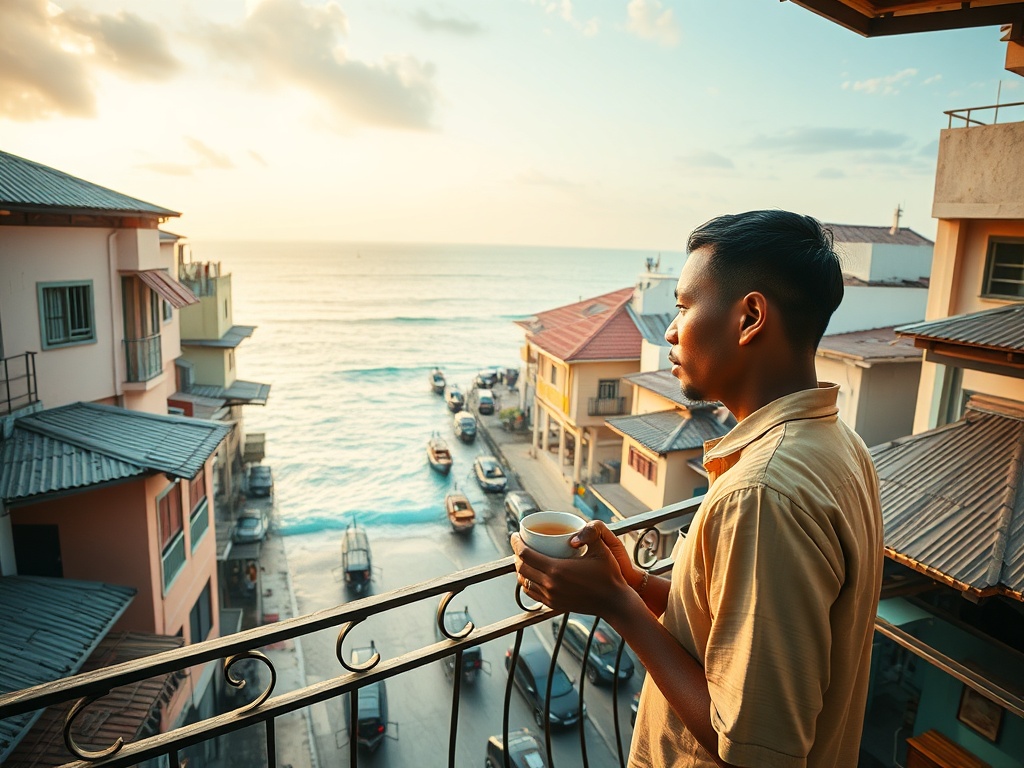
24,000 Rufiyaa a Month for a Balcony That Isn't Home
The morning call to prayer echoed through the narrow streets of Malé, bouncing off concrete walls that seemed to lean closer each year. Ahmed stood on his rented balcony, counting the months he'd paid 24,000 rufiyaa for this temporary space that would never be his. The salt air carried memories of a different life—one his parents had left behind in Fuvahmulah decades ago, chasing opportunity in the capital.
He remembered his father's stories of Fuvahmulah's wide streets and generous yards, where children played football until the streetlights came on. Now his parents were aging, and Ahmed found himself caught between two islands that both claimed he didn't belong. In Malé, he was from Fuvahmulah. In Fuvahmulah, he was from Malé. The paperwork confirmed what he already felt—a citizen without territory.
Last month, he'd met a man from Addu who'd received a job offer in the north. 'Imagine,' the man had said, 'buying a house, living there for your contract, then selling it and moving home.' The idea felt like science fiction. Ahmed's reality was different—he watched as others collected housing like seashells, while he remained adrift.
Sometimes he'd walk past the Hiya flats, watching lights go on in apartments owned by people who already had homes elsewhere. He thought of his friend waiting for rent from a resort tenant—'like waiting for rain in the desert,' she'd said. The system felt designed to keep people like him perpetually temporary.
Yet in the quiet moments, when the afternoon sun turned the Indian Ocean to liquid gold, Ahmed found stubborn hope. He'd been working for years to build something stable, saving what he could, navigating the bureaucracy. The struggle felt ancestral—his grandparents had fought the sea for survival, his parents had fought poverty, and now he fought paperwork and policies.
He looked out at the harbor, where ferries came and went like clockwork, connecting islands that remained separate in their rules and requirements. The water between them wasn't the real barrier—it was the invisible lines drawn by systems that forgot people needed roots somewhere, anywhere.
Tomorrow he would file another application, send another email, make another call. Not because he believed it would work, but because giving up would mean accepting he truly belonged nowhere. And in a nation of a thousand islands, that felt like the cruelest joke of all.
— Source fragments: currently we are stuck with land we are born in; paying 24k for rent to an apartment which will never be mine; My parents left Fuvahmulah in the 80s and moved to Malé... where do I belong?; people who already have housing are taking advantage; Waiting for rent from a RT is like waiting for rain the desert