24,000 Rufiyaa a Month to Watch Someone Else's Dust Settle
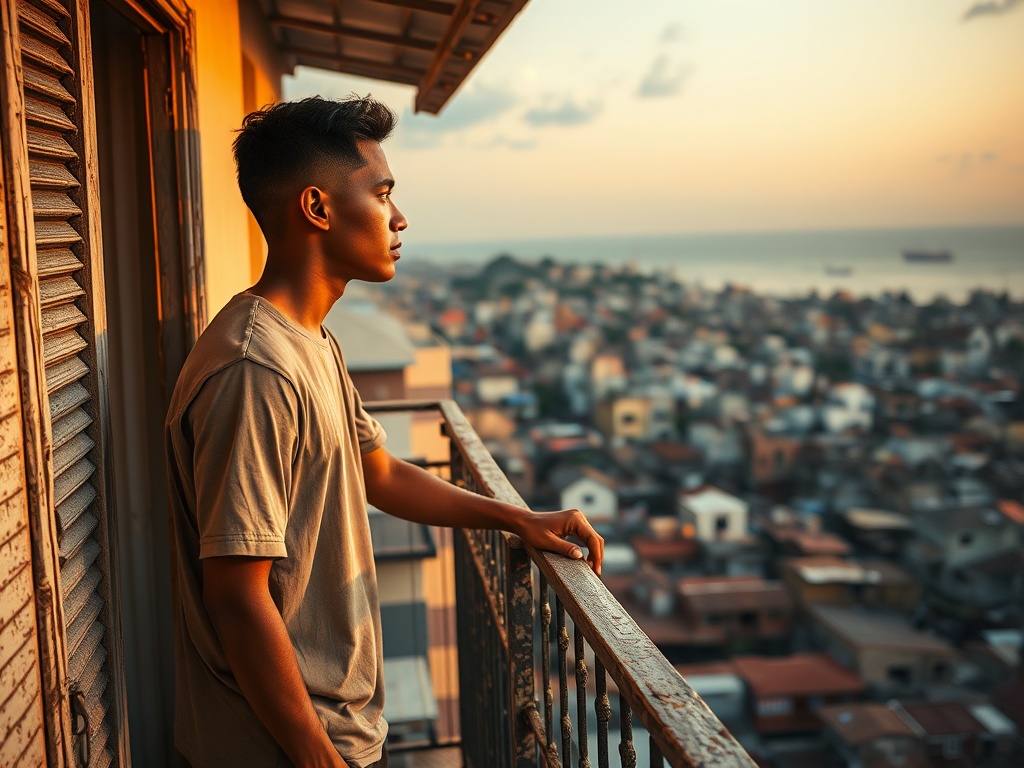
The morning sun caught the dust motes dancing in my rented Male' apartment, each particle a tiny island floating in the sea of light. I paid 24,000 rufiyaa every month to watch someone else's dust settle. The landlord's name was on the deed, but my sweat paid for the paint, my memories filled the cracks in the walls.
My father used to tell me about Fuvahmulah, the island he left in the 80s chasing opportunity. He described the broad streets, the freshwater lakes, the way the land felt solid underfoot. 'One day,' he'd say, 'we'll have our own piece of earth.' But when he passed, the only earth I inherited was the memory of his stories. The system said I didn't belong there—I hadn't lived there long enough. The system said I didn't belong here in Male' either—I was just passing through, a permanent temporary resident.
I knew people who collected housing like seashells—a Hiya flat here, an inherited plot there, another grant through connections. They moved through the archipelago like kings, while the rest of us remained tenants in our own lives. I imagined what it would be like to get a job offer in Addu, to buy a small house near the equator, to live there for years knowing I could sell it and move on. But that dream felt as distant as the stars we used to navigate by.
Sometimes I'd walk along the Male' seawall and watch the waves lick the concrete. The ocean didn't care about paperwork or residency requirements. It treated all land equally, patiently wearing it down grain by grain. I thought about the policy makers in their offices, drawing lines on maps that determined where people could put down roots. They spoke of land grants and housing schemes while we waited for solutions like desert dwellers waiting for rain.
My friend Ahmed, born and raised in Laamu, faced the same paradox from the other side. 'They say I should be grateful for my ancestral land,' he told me once, 'but what good is land without opportunity? Without doctors, without schools, without jobs?' We were two sides of the same counterfeit coin—both trapped by geography, both dreaming of mobility that the system denied us.
The real inheritance wasn't land or property—it was this longing, this persistent ache for a place that would recognize us as belonging. Some nights, when the humidity made the walls sweat and the city noises faded to a murmur, I'd close my eyes and imagine a different Maldives—one where the islands weren't prisons but possibilities, where citizenship meant the freedom to put down roots wherever life took you.
Until then, we remain suspended between islands, between identities, between the lives we have and the homes we dream of—permanent residents of nowhere, temporary citizens everywhere.
— Source fragments: currently we are stuck with land we are born in; I'm from Male' and yet paying 24k for rent to an apartment which will never be mine; My inherited land? I live in Male' for rent; where do I belong? That's how a broken system creates second-class citizens; I know people who got land, who already had a Male Hiya Flat; suppose you got a nice job offer in Addu... buy a house, move in there for a few years, then sell it