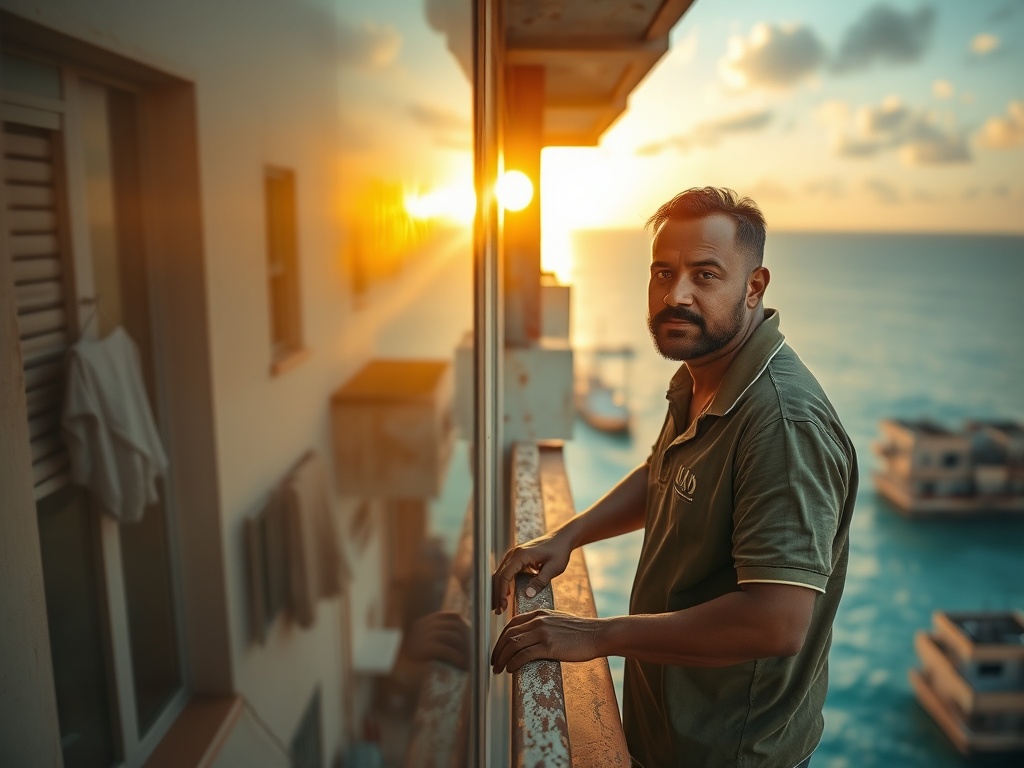
24,000 Rufiyaa for a View of Islands We Cannot Reach
The sea connects us, yet the land divides us. We are born to specific coordinates on this archipelago, tethered to places we may never call home. The inheritance of geography becomes both anchor and chain.
In Malé, the concrete stacks upward while the rent payments stack higher—24,000 rufiyaa for walls that will never be yours, a monthly reminder that you are temporary in your own capital. The city breathes with the rhythm of arrivals and departures, of people who came seeking opportunity only to find themselves suspended between islands.
Some speak of moving to Addu for work, buying a house, living there for years, then selling and returning north. The dream of mobility feels almost radical—to treat housing as something fluid, like the ocean currents that separate our islands. But reality resists. The system binds us to our birth islands while making us strangers in our own atolls.
There are those who left Fuvahmulah decades ago, whose children were born and raised in Malé, yet find themselves ineligible for housing in either place. Where do they belong? The question hangs in the salty air, unanswered. A broken system creates second-class citizens in their own country.
Meanwhile, housing becomes a game of accumulation for those already secure. Hiya flats multiply within families like coral polyps, while others search for inherited land that exists only in registry books. The policies that should provide shelter instead create hierarchies—the connected versus the waiting, the landowners versus the rent-payers.
Waiting for rent from government flats feels like waiting for rain in the desert. The reminders go out, the silence returns. Meanwhile, healthcare outside Malé remains underdeveloped, forcing travel back to the capital for minor issues. The infrastructure that should support decentralization remains concentrated, reinforcing the very centralization it claims to remedy.
What if the thousand islands weren't reserved for political favors and oligarchic collection? What if every Maldivian could access land with the same freedom as the ocean that surrounds us? The constitution speaks of eligibility, but reality speaks of limitation. The average person cannot simply move between islands as opportunity dictates—they are stuck with the land they were born to, a modern feudal system disguised as tradition.
The sea has always been our highway, our sustenance, our identity. Yet we've built walls of policy and privilege that make the distances between islands feel wider than the ocean itself. We are a nation of sailors who have forgotten how to navigate our own archipelago.
— Source fragments: currently we are stuck with land we are born in; I'm from Male' and yet paying 24k for rent; My inherited land? I live in Male' for rent; My parents left Fuvahmulah in the 80s and moved to Malé; Where do I belong?; suppose you got a nice job offer in Addu; Waiting for rent from a RT is like waiting for rain in the desert