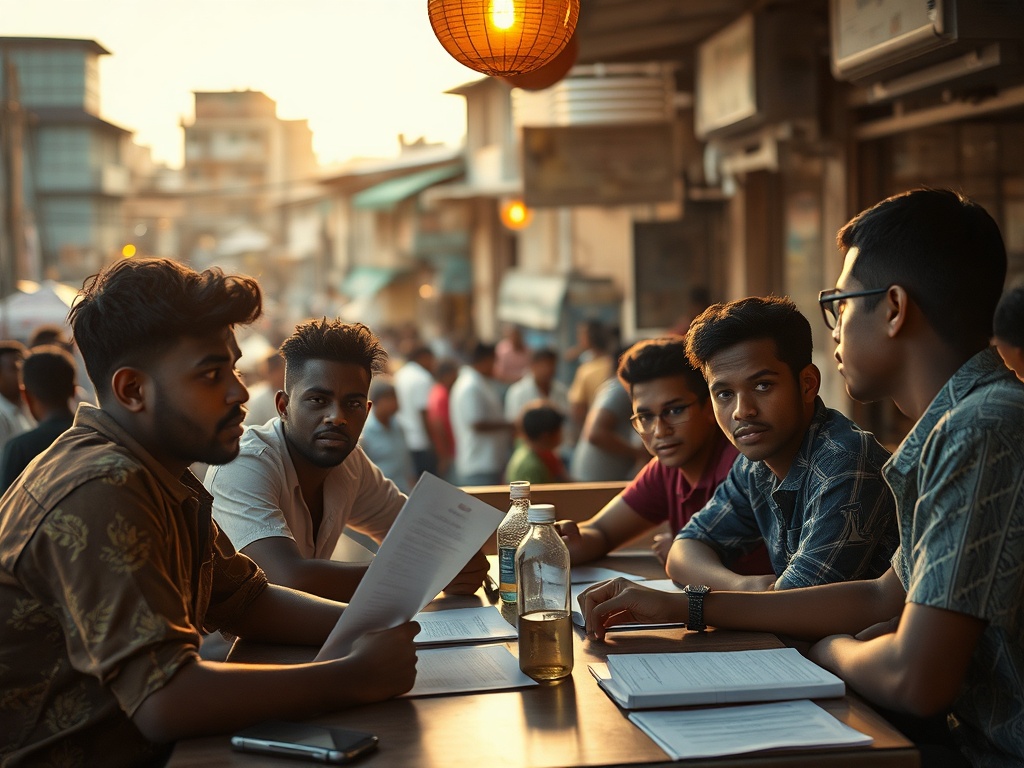
3,000 member threshold for political parties is absurd
Walking through Malé's crowded streets, where nearly half our population lives squeezed onto less than two square kilometers, the absurdity of requiring 3,000 members to form a political party becomes painfully clear. In a country of roughly 350,000 citizens, this threshold represents nearly one percent of our entire population just to register a political voice. When India, with over a billion people, requires only 100 members, our system seems designed not for democratic inclusion but for maintaining the status quo.
This isn't just about numbers on paper. The 3,000-member requirement effectively silences emerging voices, particularly among our youth who face 25-30% unemployment. How can young Maldivians with fresh ideas about tackling corruption, improving healthcare, or creating sustainable economic alternatives ever hope to organize politically when they need to gather nearly as many members as the entire population of some of our smaller islands? The system protects established parties while shutting out the very people who might offer solutions to our most pressing problems.
Our political landscape has become increasingly consolidated, with power concentrated among a few familiar faces. The current ruling bloc maintains its dominance while opposition parties remain fragmented. This high membership threshold ensures that new movements cannot easily challenge the existing power structures, no matter how compelling their vision for our islands might be. It's a bureaucratic barrier that serves political insiders at the expense of democratic renewal.
Consider what this means for local issues that get overlooked in national politics. The housing crisis in Malé, where government-subsidized flats are illegally sublet by politically connected individuals. The healthcare system strained by fraud and lacking basic medicines. The guesthouse tourism model that has eroded our luxury brand while creating social friction. These are complex problems that require diverse political perspectives, yet our system makes it nearly impossible for specialized, issue-focused parties to form and compete.
Lowering this threshold wouldn't just make our democracy more accessible—it would make it more responsive to the real concerns of Maldivians. When citizens prioritize jobs, housing, and corruption over abstract political debates, we need a system that allows grassroots movements to emerge organically. The sea that connects our islands also carries the potential for new ideas to flow between communities, if only we'd remove the artificial barriers that prevent them from taking root in our political soil.
Perhaps what we need most is the courage to trust our own people. To believe that Maldivians, in all our diversity of thought and experience, can responsibly participate in shaping our nation's future without excessive gatekeeping. The same resilience that has sustained our civilization for over 2,500 years can surely handle a more open political marketplace, where ideas compete on their merits rather than their ability to clear bureaucratic hurdles.