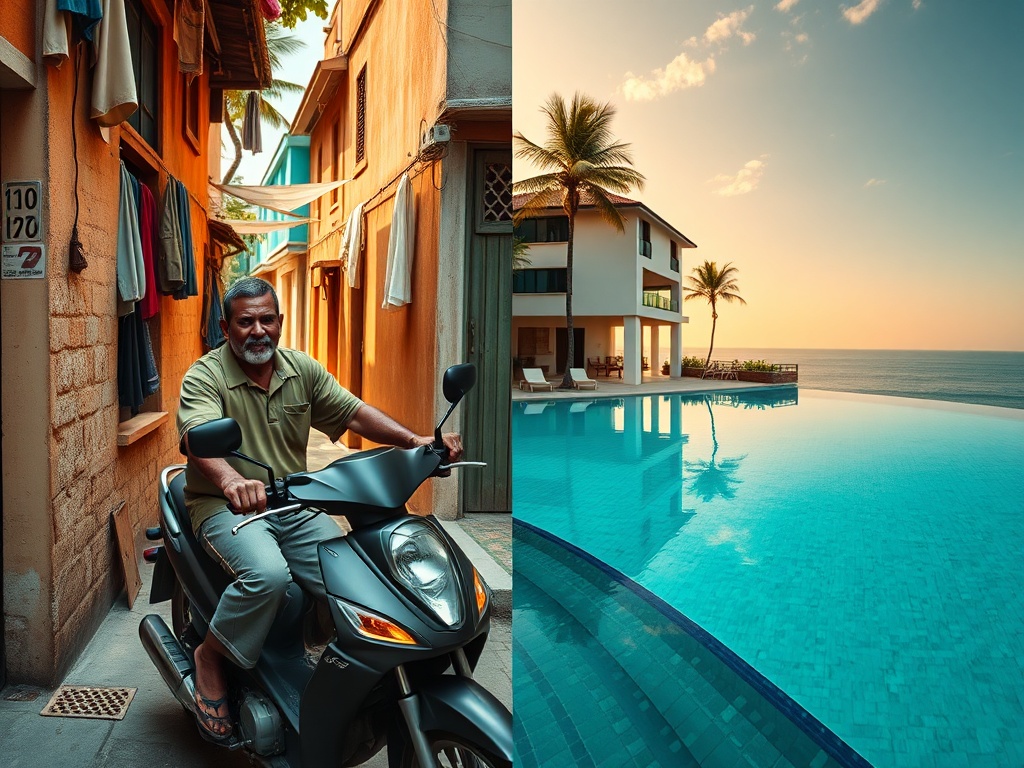
3.9% Growth and the Empty Resort Pools
The World Bank's projection of 3.9% GDP growth for 2026 hangs over the Maldives like an unspoken verdict—a figure so historically low that it signals something fundamentally amiss in the island nation's economic trajectory. This number, almost unheard of in previous administrations, has sparked a raw public reckoning with the structural contradictions of the Maldivian economy.
At the heart of this unease lies the tourism sector, which generates approximately 80% of national revenue yet remains a source of deepening social division. The industry's pioneers, predominantly from Male's elite circles, are celebrated for transforming the economy, yet their legacy is increasingly scrutinized. Critics point to what they see as a historical trade-off: the rise of tourism came at the expense of other potential sectors, particularly shipping, which some argue could have dwarfed tourism's economic contribution had it received similar investment and policy support.
The current economic landscape reveals a nation grappling with the consequences of this narrow development path. A forced USD forex policy continues to degrade the Maldivian Rufiyaa, while the national banking system struggles with liquidity constraints. Meanwhile, policies like remittance caps leave the Indian diaspora stranded, and controversial land distribution plans appear to favor wealthy families who can develop property without loans, given the banking sector's capital limitations.
This has fueled perceptions of inequitable wealth distribution that systematically favors a privileged few. The debate has shifted toward whether current government initiatives, while potentially well-intentioned, are being applied in ways that exacerbate existing inequalities. There's growing concern that economic migration to the Male' region, driven by necessity rather than choice, reflects deeper structural problems that remain unaddressed.
The conversation reveals a nation at a crossroads—between celebrating tourism's economic dominance and questioning its social costs, between acknowledging past achievements and recognizing missed opportunities. With the country facing billions in loans, a housing crisis affecting over 50,000 people, and an overloaded healthcare system, the fundamental question emerges: after 53 years of tourism-driven growth, why does sustainable, equitable development remain elusive? The answer may lie not in abandoning the tourism model, but in creating a more inclusive economic framework that distributes benefits beyond the privileged circles that currently dominate it.
— Source fragments: World Bank forecasts 3.9% GDP growth for 2026; pioneers of tourism industry are hathar kashi mathi male'; they also played a pivotal role in destroying the shipping industry; inequitable wealth distribution in favor of a privileged few; forced USD forex policy; cap on remittance; only wealthiest families will be in position to develop land; majority in Male' by forced economic migration; country nearly bankrupt with billions in loans