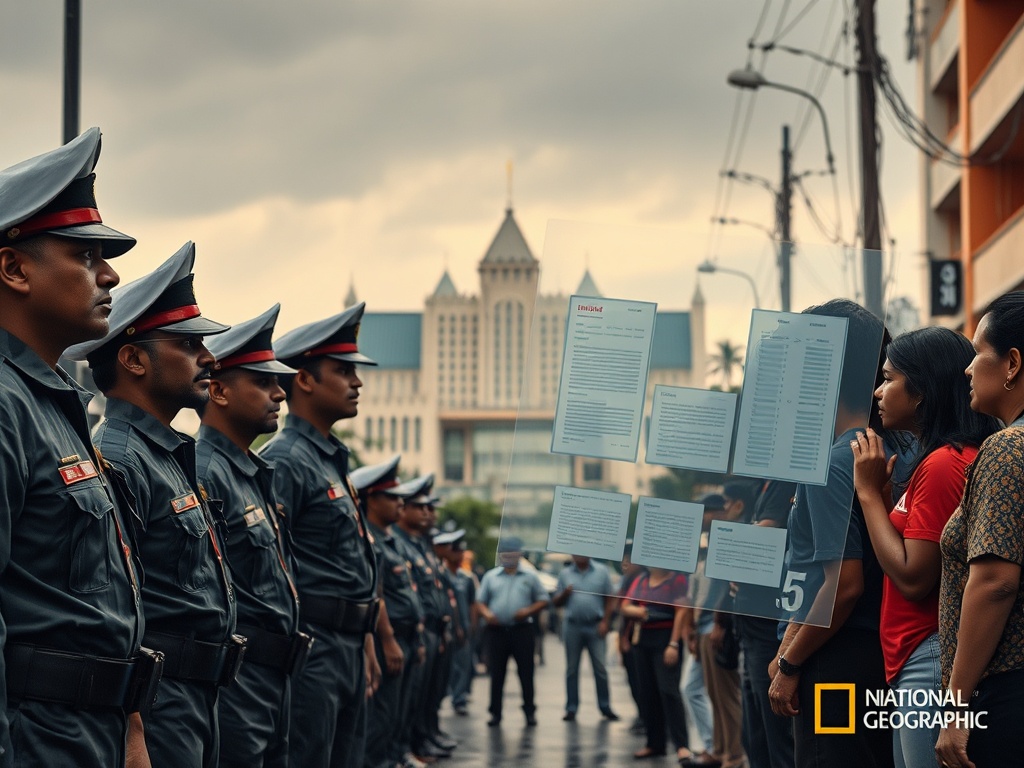
4% of the Budget for a Military That Faces No Threat
The debate over military spending in the Maldives has intensified against the backdrop of growing foreign military presence in the Indian Ocean region. With approximately 4% of the national budget now allocated to defense, critics question the necessity of such expenditures when the country faces no immediate territorial threats or enemy nations preparing for invasion.
The conversation reveals a fundamental tension in national security thinking. Many citizens recall a time when Maldivian waters were patrolled exclusively by national forces, contrasting sharply with the current reality of multiple foreign military assets operating in and around Maldivian territory. The presence of Indian military personnel and equipment, alongside surveillance operations by CENTCOM and RAF vessels, has created a complex security landscape that some view as compromising sovereignty.
Proponents of increased military spending argue that foreign presence necessitates stronger national defense capabilities. They point to the need for missiles, drones, and advanced equipment to maintain balance and deterrence. This perspective sees military investment as essential insurance in an increasingly contested maritime domain.
However, opposition voices counter that the real threats to national wellbeing lie elsewhere. They highlight pressing domestic needs: education systems requiring modernization, healthcare infrastructure in need of upgrade, housing shortages in congested urban centers, and decentralized services for outer islands. The allocation of billions for weapons, they argue, comes at the direct expense of addressing these fundamental quality-of-life issues.
The discussion extends beyond mere budget percentages to deeper questions of national identity and strategic positioning. Some express concern that hosting multiple foreign militaries—from India, China, and the United States—could transform the Maldives from a neutral nation into a potential battleground during regional conflicts. This fear contrasts with the historical reality that the country has maintained its sovereignty without significant military expenditure for decades.
The debate also touches on alternative security approaches, including proposals for mandatory military service or distributed citizen defense forces. Yet these ideas compete with the practical reality that the Maldives' GDP over 25 years barely matches the annual budget of neighboring military powers, highlighting the inherent asymmetry in regional power dynamics.
At its core, this national conversation reflects a society wrestling with how to preserve sovereignty while navigating complex geopolitical realities. The challenge lies in balancing legitimate security concerns with the urgent need for social development, all while maintaining the delicate balance of international relationships that underpin the Maldivian economy and strategic position.
— Source fragments: traditional libraries with books and stuff... i think that era is gone; We cant justify spending 4% of annual budget to military; Maldives has no enemy countries, no territorial conflict; Our EEZ is patrolled 24/7 by Indian military vessels; militarizing Maldivian territory with military presence from three countries; We need to spend on military more now because we have another country's military here