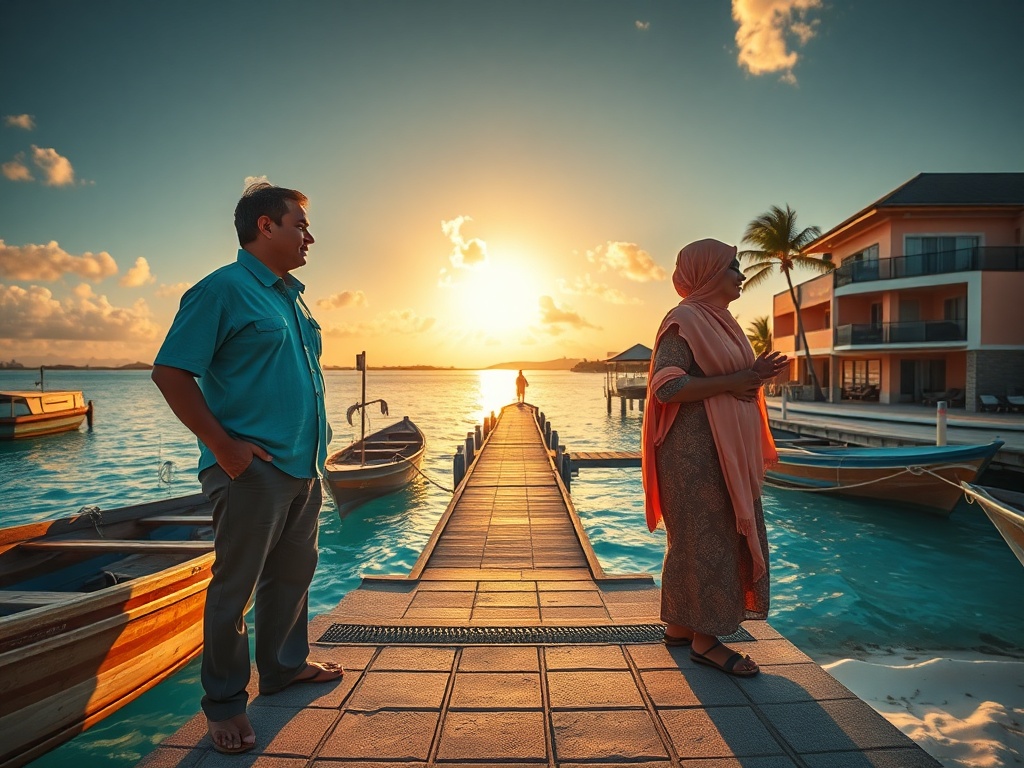
400,000 People, 100,000 Workers, and One Tourism Question
The conversation circulating among Maldivians reveals a nation at an economic crossroads. With a population of 400,000 supported by a workforce of approximately 100,000, the fundamental question isn't whether to diversify our economy, but how to do so without jeopardizing the tourism sector that currently sustains us.
The tension lies in competing visions of economic development. Some argue for radical diversification, questioning whether we should 'destroy' tourism to force economic evolution. Others advocate for a more measured approach—using tourism as a safety net while carefully exploring new sectors. This isn't merely theoretical; it's about ensuring that our 100,000-strong workforce can thrive within a $5 billion economy through fair compensation and sustainable growth.
The housing crisis exemplifies our economic contradictions. When Male' residents receive land in Hulhumale' only to rent it out while living abroad, it highlights how asset distribution can become wealth extraction rather than community building. The core issue isn't land ownership itself, but the financial flows it generates—money leaving rather than circulating within our islands.
Tourism policy stands at the center of this debate. While some call for making destinations more visitor-friendly, others point to the sector's historical development: individual entrepreneurs built the first resorts, with foreign investment following later. This legacy suggests that Maldivian innovation, not external solutions, has been our greatest strength.
The challenge isn't choosing between tourism and diversification, but finding the right balance. How do we elevate our tourism offerings while creating new economic pillars? How do we ensure wealth generation rather than mere redistribution? These questions reflect deeper concerns about economic sovereignty and sustainable development.
As we navigate these complex waters, the consensus emerging is that economic transformation requires careful calibration. We cannot abandon what works, nor can we remain dependent on a single industry. The path forward demands both preserving tourism's golden eggs while incubating new economic opportunities that benefit all Maldivians, not just a privileged few.
— Source fragments: Economic diversification vs tourism preservation debate; Housing and wealth distribution concerns; Workforce compensation in $5B economy; Tourism policy evolution and local entrepreneurship; Balanced economic development approach