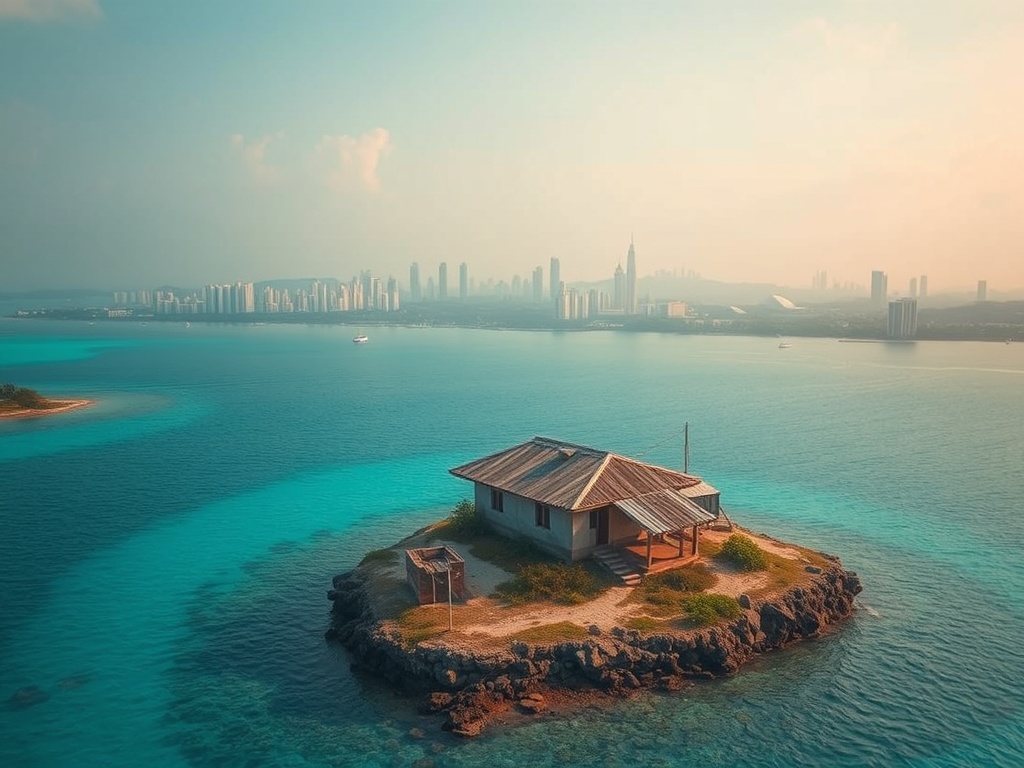
80 Staff for 500 Students, One FENAKA Office for an Island
On a typical Maldivian island, a school serving 500 students operates with approximately 80 staff members—teachers and support personnel combined. This educational ecosystem, while often stretched thin, represents the essential services that sustain island communities. Yet on that same island, FENAKA—the state-owned utility company—employs nearly an identical workforce. This parallel employment reality speaks volumes about how our nation operates, where public sector expansion often outpaces the development of core social services.
The disparity extends beyond employment numbers to the fundamental question of resource allocation. Why must successive governments continue channeling disproportionate public funds into developing Malé when many islands still lack basic facilities? The nation's collective resources flow overwhelmingly toward the capital, creating a gravitational pull that leaves outer islands in perpetual orbit around a centralized system. This isn't merely administrative preference—it's a structural imbalance that affects every aspect of island life.
The conversation about national resource distribution has become increasingly urgent. The pattern of concentrating development in Malé while outer islands struggle with inadequate infrastructure reflects deeper governance challenges. When a school's staffing levels mirror those of a utility company on the same island, it suggests a public sector that has grown without corresponding improvements in service delivery or efficiency.
This allocation dilemma touches every sector. From education to healthcare, from employment to infrastructure, the scales consistently tip toward the capital. The result is a nation where opportunity becomes geographically determined, where one's address dictates access to services, employment, and development.
The challenge isn't simply about numbers on a balance sheet—it's about the future trajectory of our island communities. When resource distribution becomes politicized, when development decisions serve electoral calculations rather than long-term national interest, we risk creating permanent divisions between Malé and the atolls. The conversation we need isn't about pitting regions against each other, but about building a framework where every island community can thrive with the resources necessary for sustainable development.
As the nation grapples with economic pressures and development goals, the question of fair distribution becomes increasingly critical. The solution requires moving beyond temporary fixes and electoral cycles to establish principles of equity that can guide national planning for generations. The alternative—continuing the current imbalanced approach—threatens not just individual communities but the cohesive development of the nation itself.
— Source fragments: On an island a school with 500 students is run by around 80 staff — teachers and support staff combined. Yet FENAKA employs nearly the same number on the same island; why must every government continue spending large amounts of public funds on developing Malé when many islands still lack basic facilities; Maldives needs a discussion on allocation of resources at a national level