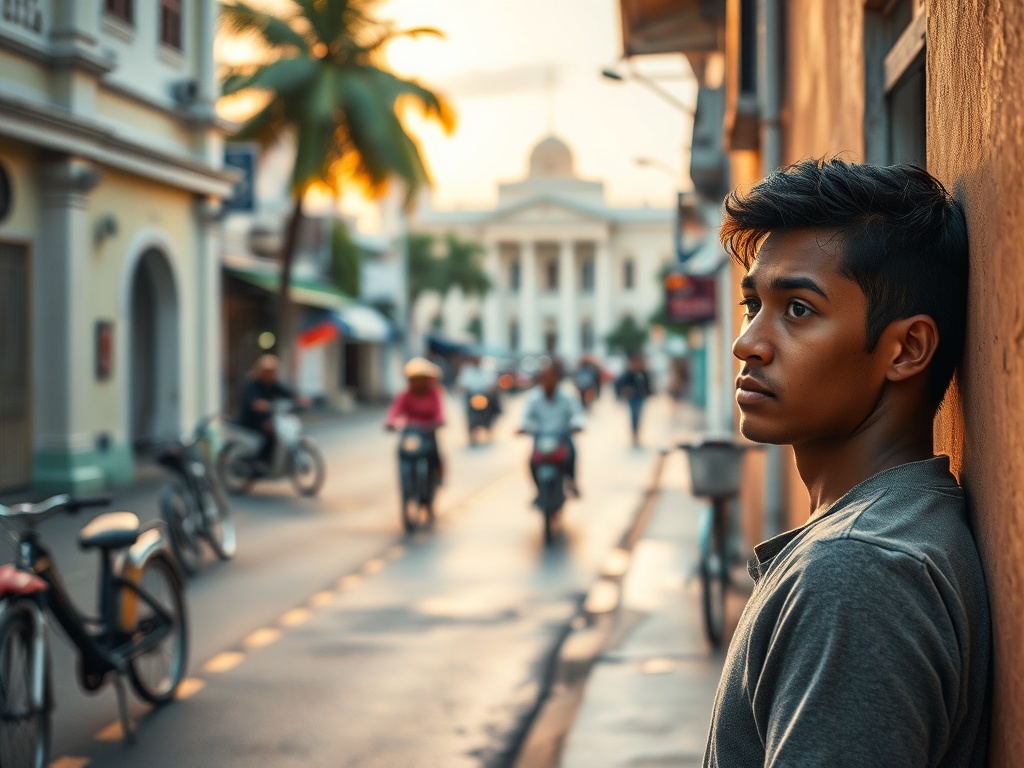
A Citizen's Gaze at the Parliament Building, Wondering Who It Serves
The relationship between citizens and their government has always been a delicate dance of trust and accountability. In democratic systems, people elect representatives to govern and parliamentarians to oversee them—a carefully balanced equation designed to prevent power from concentrating in the wrong hands. Yet across the Maldives, a palpable sense of disillusionment suggests this balance has been disrupted, leaving many to wonder when the mechanisms of accountability stopped functioning as intended.
When governments and MPs cease to perform their duties effectively, the social contract begins to fray. Citizens who once placed their faith in electoral processes now watch as political positions become occupied by individuals whose backgrounds raise serious questions about integrity and suitability for public office. The debate has shifted toward fundamental questions about who should be allowed to govern—whether known criminals and drug lords deserve equal political rights, or whether certain standards of character should be prerequisites for public service.
This crisis of confidence extends beyond individual appointments to encompass broader governance failures. The perception that environmental protections are being weaponized to shield government interests rather than serve public good reflects a deeper pattern of institutional capture. When regulatory bodies appear to serve political masters rather than constitutional mandates, public trust erodes at an alarming rate.
The political landscape reveals its own contradictions. The Maldives Democratic Party, born in exile 22 years ago as an inclusive movement against authoritarianism, now faces questions about whether it has maintained its founding principles. Meanwhile, current leadership faces accusations of economic exploitation and governance failures that echo past administrations.
What emerges is a troubling pattern of political stagnation—governments riding out their terms while accepting whatever verdict awaits them, protesters seeing their gear gather dust as planned demonstrations lose momentum, and citizens feeling increasingly powerless to effect change. The system appears designed to withstand public pressure rather than respond to it.
Yet beneath this surface of resignation lies a persistent undercurrent of democratic aspiration. The very act of questioning, criticizing, and demanding better reflects an enduring belief that government should serve the people, not the other way around. The challenge now is whether these democratic impulses can find effective expression within a system that seems increasingly resistant to accountability—or whether new forms of civic engagement will be necessary to restore the balance between citizens and those who govern them.
— Source fragments: Let's not distant ourselves from governments. We elect them and then we elect MPs to hold them accountable; When gov and MPs stop doing there job, it's time for people to rise; All the gear I bought for the great November 17 protest will now gather dust; The plan is to ride it out for remainder of term; What does 'open system' mean to you? Does it means thieves, drug lords and rapists have equal right to be in a political position; MDP was NEVER a party which was created to speak for elites; You are not protecting environment but the government