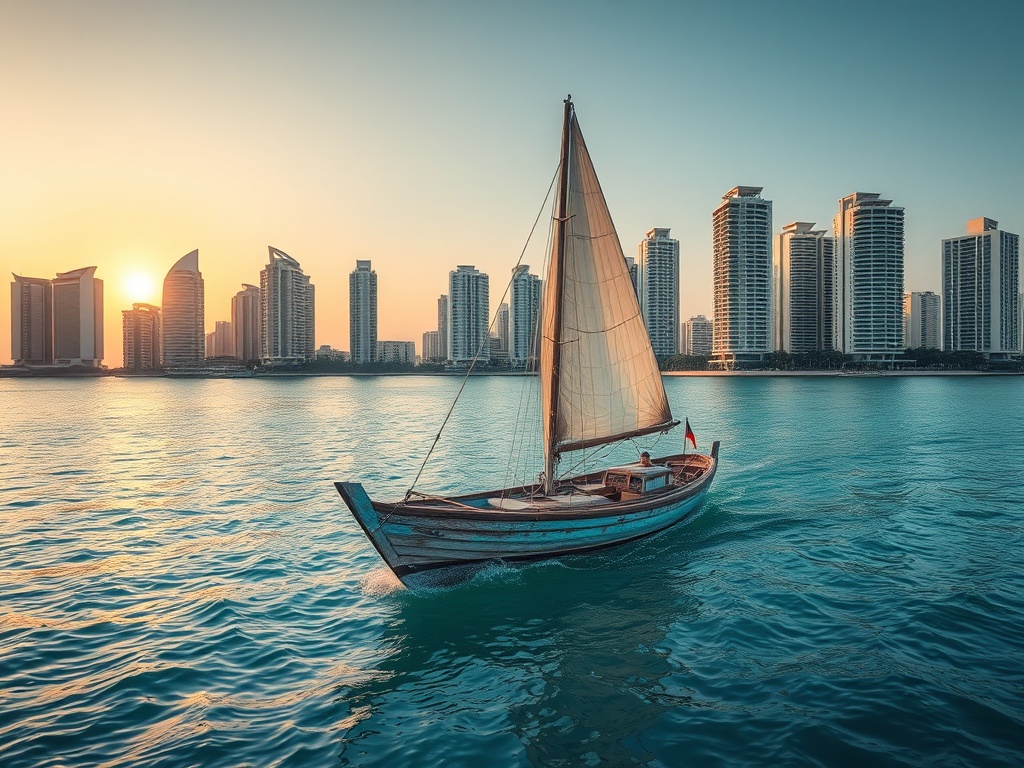
A Dhoni Sails Past Malé's High-Rises, Carrying a Nation's Faith
In the island nation of Maldives, where Islam forms the bedrock of national identity, contemporary debates reveal the tension between religious tradition and modern global perspectives. The conversation reflects a society navigating its place between unwavering faith and evolving social consciousness.
The citizenship law, which restricts non-Muslims from obtaining Maldivian nationality, stands at the center of this discourse. Critics question how this aligns with democratic principles, while supporters view it as essential to preserving religious and cultural identity. This legal framework embodies the broader struggle between maintaining religious purity and engaging with global norms of religious freedom.
Scientific theories like the Big Bang have become unexpected flashpoints in this dialogue. Some approach them as compatible with Islamic teachings, viewing scientific discovery as revealing Allah's creation. Others maintain that the Quran must remain the ultimate standard against which all theories are measured—a perspective that sees scientific inquiry through the lens of religious truth.
The discussion extends to social practices, where interpretations of religious modesty requirements for women prompt reflection on cultural implementation versus spiritual intent. Similarly, judicial punishments grounded in Islamic law spark debate about their application in contemporary society, with some defending traditional methods while others question their modern relevance.
Beneath these surface debates lies a deeper concern about religious authenticity. Many express anxiety about "trend-based" belief systems, where social media influences both religious abandonment and political solidarity. This has created a landscape where genuine conviction is increasingly difficult to distinguish from performative activism.
The conversation reveals a community grappling with how to maintain religious integrity while engaging with global discourse. Some advocate for clear boundaries to protect against perceived external threats to Islamic values, while others seek pathways for coexistence and dialogue. This tension reflects the broader Maldivian experience of balancing thousand-year-old traditions with twenty-first-century realities.
As the nation contends with economic pressures, governance challenges, and social transformation, these religious discussions mirror larger questions about identity, belonging, and the future direction of Maldivian society. The challenge lies in honoring religious heritage while creating space for the diverse perspectives that inevitably emerge in a globally connected world.
— Source fragments: Discussions about citizenship laws restricting non-Muslims; debates about scientific theories like Big Bang in relation to Islamic teachings; conversations about religious practices and modesty; reflections on judicial punishments; concerns about social media influencing belief systems