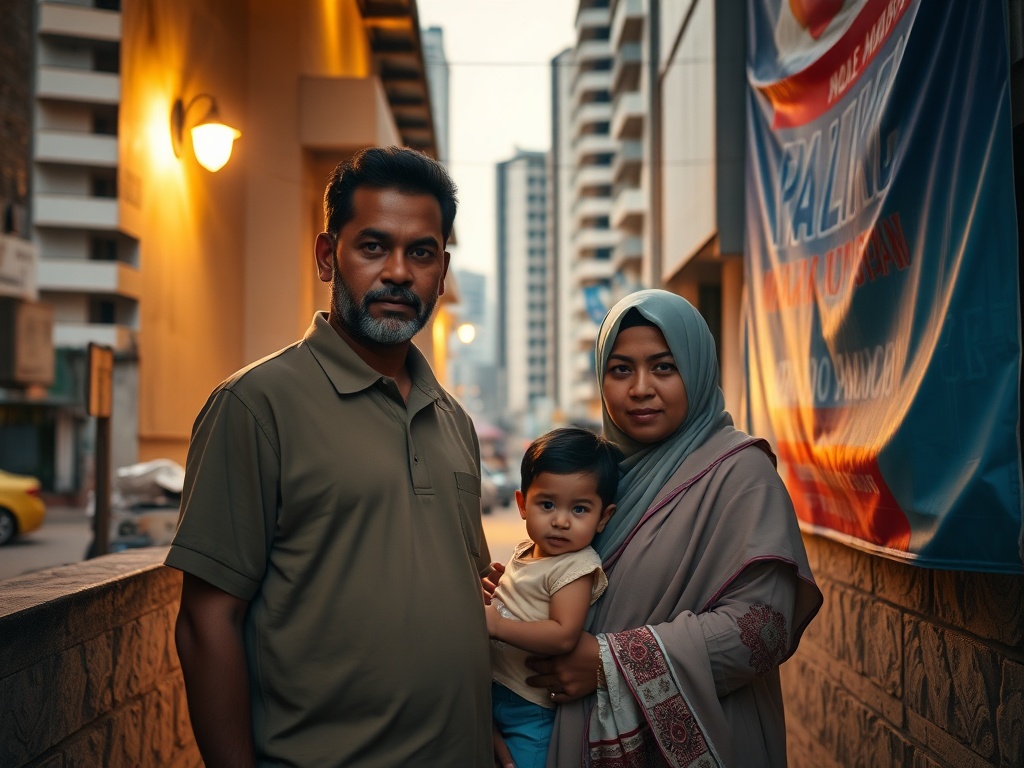
A Family's Home, a Nation's Political Monsoon
Across the Maldivian archipelago, where political winds shift with the monsoon seasons and economic stability remains perpetually elusive, one fundamental question persists: what truly guarantees a citizen's claim to what they own? The answer extends far beyond legal documents or land registries—it speaks to the very architecture of democratic governance.
In recent years, Maldivians have witnessed property become political currency. The distribution of subsidized housing, the allocation of land, and the awarding of development rights have frequently served as tools for electoral advantage rather than expressions of fundamental rights. When housing projects become politicized and flats meant for local families are subleased for profit by absentee leaseholders, the social contract between citizen and state begins to fray.
The erosion of property security mirrors broader governance challenges. A politicized judiciary, where Supreme Court appointments become political battlegrounds, cannot reliably serve as the ultimate arbiter of ownership disputes. When the institutions designed to protect rights become instruments of power consolidation, the foundation of property rights crumbles.
Economic pressures further complicate this landscape. As the cost of living soars and foreign currency shortages persist, the value of property—whether a modest Malé apartment or a small business—becomes both a lifeline and a vulnerability. The knowledge that one's home or livelihood could be compromised by political whim or economic mismanagement creates a pervasive sense of insecurity that transcends material concerns.
Yet property rights represent more than economic security—they embody personal autonomy, family legacy, and community stability. For Maldivians navigating the turbulent waters of contemporary politics and economics, the guarantee of ownership represents the ultimate measure of governance legitimacy. It's the difference between building for future generations and merely surviving the present.
As the nation continues its democratic journey, the protection of property rights may well serve as the most reliable indicator of institutional maturity. When citizens can confidently invest in their homes, their businesses, and their communities without fear of arbitrary deprivation, democracy moves from theoretical principle to lived reality. In this sense, property rights become not just a legal concept but the bedrock of national stability and individual dignity.
— Source fragments: The only test that guarantees property rights.