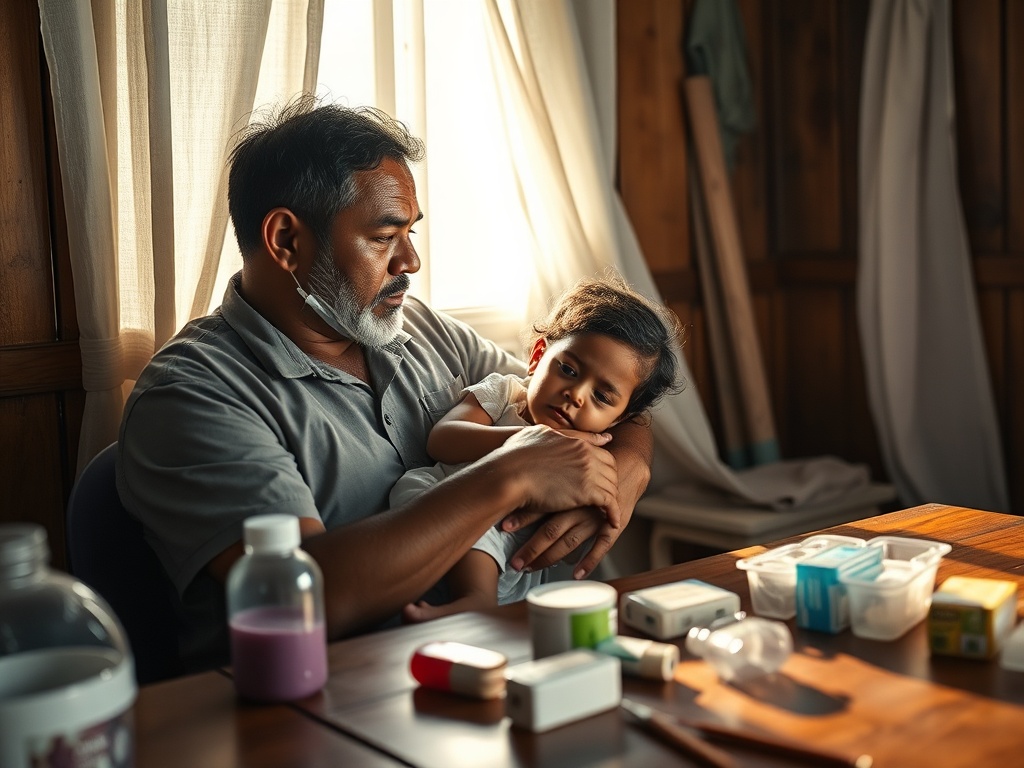
A Father's Digital Scream in the Night
The message arrives like a digital scream in the night: "My poor daughter's body is covered in blisters. She's in excruciating pain. I don't want to lose her." These words, typed by a trembling hand somewhere in the Maldives, carry the weight of every parent's nightmare. They represent not just one family's crisis, but the collective anxiety of a nation where adequate healthcare remains an elusive promise.
In the cramped living rooms of Malé and across our scattered islands, similar stories unfold daily. Parents watch helplessly as their children suffer through illnesses that should be treatable, navigating a healthcare system that often feels like navigating a maze with no exit. The desperation in the father's plea—"Please quote my pinned post... so the world can see my suffering"—speaks volumes about where we've arrived as a society: when citizens must turn their personal tragedies into public spectacles to receive basic medical attention.
This crisis exists against a backdrop of systemic failures that have become all too familiar. The chronic medicine shortages, the overcrowded clinics, the exorbitant costs that force families to choose between treatment and putting food on the table. When a parent speaks of their child's body being "violated by the virus," they're describing not just physical suffering but the violation of a fundamental social contract—the promise that society will care for its most vulnerable.
The frustration extends beyond individual suffering to the very infrastructure meant to provide relief. "Don't tell me you work in the health sector," the message continues, "I've been hearing support staff complaining about risk allowance." Here lies another layer of the crisis: the demoralization of those who are supposed to be our healers. When healthcare workers feel undervalued and undercompensated, the entire system suffers, creating a vicious cycle where quality care becomes increasingly scarce.
What emerges from these fragmented cries is not just a story of one child's illness, but a portrait of a healthcare system stretched to its breaking point. The irony is stark: in a nation blessed with natural beauty that attracts visitors from around the world, we struggle to provide basic medical security for our own citizens. The distance between the luxurious resort clinics and the crowded public hospitals tells its own story about inequality in our islands.
As this father fights for his daughter's life, his struggle becomes a mirror reflecting our collective failure to prioritize human dignity over political expediency. His plea echoes in the spaces between policy debates and budget allocations, reminding us that behind every statistic about healthcare funding gaps, there are real children whose bodies bear the cost of our systemic neglect.
The question hanging in the humid island air is whether we will hear these cries as a call to action or let them fade into the background noise of our national discourse. For now, a father keeps vigil, his daughter's feverish body a living testament to what happens when a society's safety nets fray beyond repair.
— Source fragments: Primary: Father's desperate plea for daughter's medical treatment, healthcare system frustrations. Secondary: Healthcare worker complaints about compensation.