A Fisherman’s Vanishing Sea: When Foreign Ships Stole Our Tomorrow
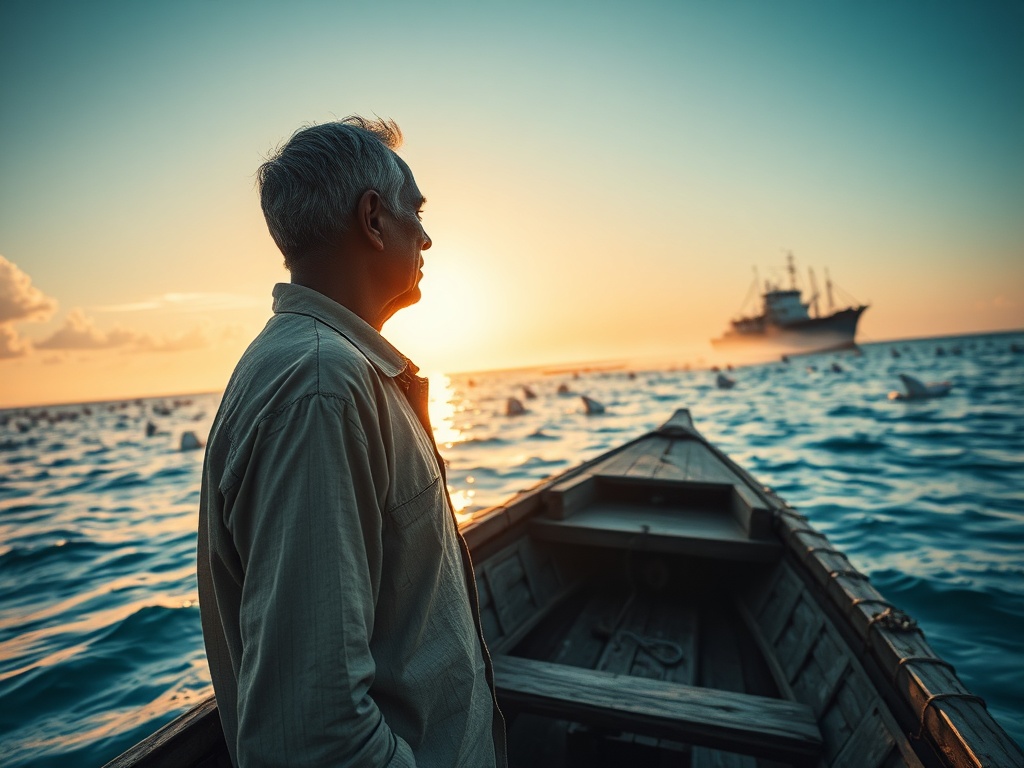
The diesel fumes reached Ahmed before the vessel did—a sharp chemical sting cutting through the salt-spray morning. He squinted against the rising sun, hand shielding his eyes as the foreign ship cut through the cerulean water like a steel predator. From his dhoni, he watched the industrial-scale operation: the mechanical winches, the systematic harvesting of what his people had sustainably fished for generations.
They were doing lanu masverikan, yes—but at a scale that made his stomach clench. His grandfather had taught him to take only what the ocean could give, to respect the balance. These vessels didn't recognize the 200-mile shore, didn't recognize anything but their own hunger. The fishermen knew this truth, carried it in their weathered hands and tired bones.
Ahmed remembered finding the shark carcasses last monsoon—bodies discarded after their fins were taken, floating like discarded ghosts in the turquoise water. The brutality of it lingered in his dreams.
He steered his dhoni back toward Malé, the skyline crowding the horizon. The city felt different now—not just congested, but tense. He'd heard the arguments about land allocation, about who deserved what, while the sea that sustained them all was being systematically emptied. He was a man without strings, as one voice had declared—free of government affiliations, yet trapped in a system where political parties saw only half of humanity.
As he tied his boat at the harbor, Ahmed watched the sun catch the whitecaps beyond the breakwater. The ocean had always been their provider, their identity. Now it felt like a contested territory, a bargaining chip in games he didn't understand. The foreign military presence, the land policies that favored the already well-off, the corruption that siphoned their resources—all of it felt connected, like different currents from the same polluted source.
That evening, sitting on the harbor wall with other fishermen, Ahmed didn't speak of what he'd seen. They already knew. Their silence was heavier than words, filled with the unspoken understanding that some things were changing too fast, that the foundations were shifting beneath their feet. The sea that had always given them life was now being taken from them, piece by piece, fin by fin, while they argued about who deserved which piece of land.
He looked at his son playing with a toy boat in the fading light, and wondered what ocean would be left for him—what country would be left for him. The real threat wasn't just the foreign vessels on the horizon, but the erosion happening from within, the slow severing of their connection to the sea that made them who they were.
— Source fragments: I saw foreign vessels with my eyes. yes they were doing the same lanu masverikan at industrial scale. they don't recognize our 200 mile shore. its actually common. fishermen know this. and they are more brutal actually. they just cut the fins and throw away the shark; I am free of government and its affiliations. Alhamdhullillah 2025. A man without strings in a threat; Most of the people I know who got land are already well-off. Relatively speaking ofcos. These are people who will inherit property when their parents pass. We're talking multi-storey houses with just two or three siblings