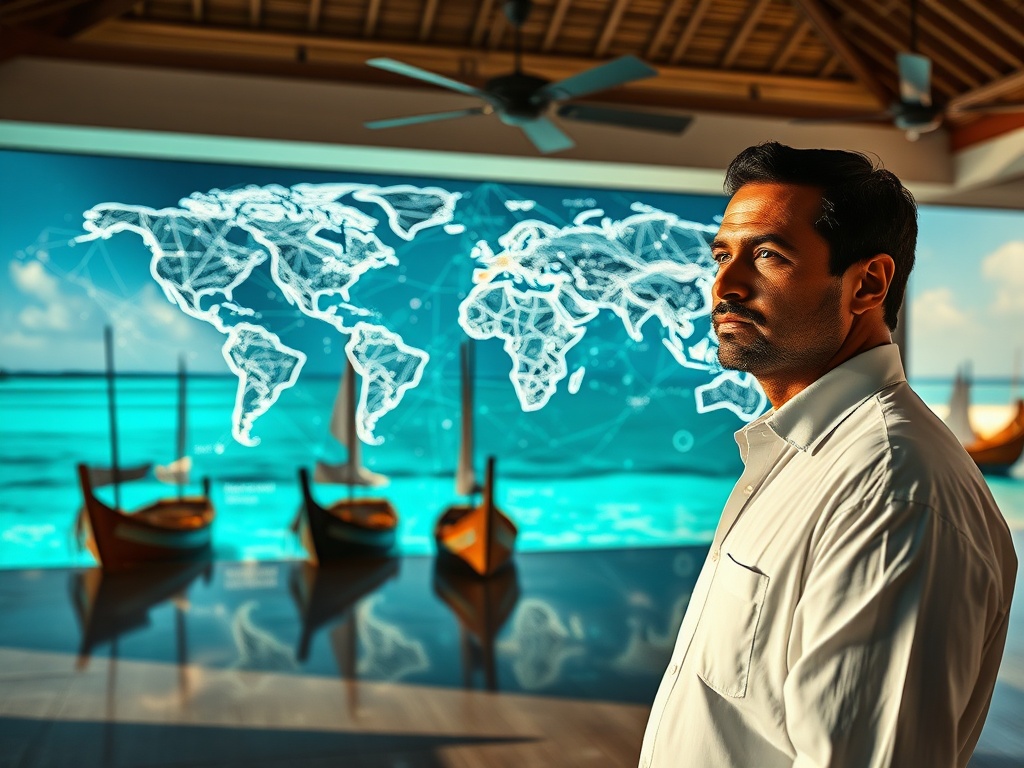
A Maldivian Diplomat's World Map and the Dhoni in the Foreground
In the intricate chessboard of international relations, small island nations like the Maldives watch global power shifts with particular attention. The recent discussions around emerging technologies, strategic alliances, and diplomatic maneuvering reveal a world where size no longer guarantees security, and traditional power structures are being challenged.
The conversation around artificial intelligence as the next frontier of global competition highlights how technological supremacy has become the new battleground. When major powers invest heavily in AI development and advanced manufacturing capabilities, it signals a fundamental shift in how influence will be measured in the coming decades. For small states, this technological race presents both opportunities and vulnerabilities—the chance to leapfrog in certain sectors, but also the risk of being left behind in critical infrastructure.
Diplomatic strategies have evolved beyond traditional statecraft. The observation that world leaders quickly learn how to navigate relationships with powerful figures speaks to the adaptive nature of modern diplomacy. What some call 'applied diplomacy' reflects the pragmatic recognition that principles must sometimes be balanced with practical necessities in international engagement.
For the Maldives, these global dynamics intersect with local realities in unique ways. The nation's strategic location in the Indian Ocean has long made it a point of interest for larger powers, much like Singapore's position in the Malacca Strait. This geographical significance brings both advantages and pressures, requiring careful navigation between competing interests while maintaining national sovereignty.
The ongoing discussions about alliance structures and backchannel diplomacy reveal the complex web of relationships that small states must manage. When larger nations form partnerships and strategic alignments, smaller countries often find themselves navigating between multiple poles of influence, seeking to maximize benefits while minimizing dependencies.
What emerges from these conversations is a recognition that in today's interconnected world, no nation exists in isolation. The challenges of economic stability, technological advancement, and diplomatic positioning affect all states, regardless of size. For the Maldives, the path forward requires balancing global engagement with domestic priorities, technological adoption with cultural preservation, and strategic partnerships with independent policymaking.
As the international landscape continues to evolve, the ability to adapt while maintaining core principles will determine how successfully small nations can secure their interests in an increasingly competitive global environment.
— Source fragments: Discussions about global power competition, diplomatic strategies, technological advancement, and strategic alliances from the input fragments