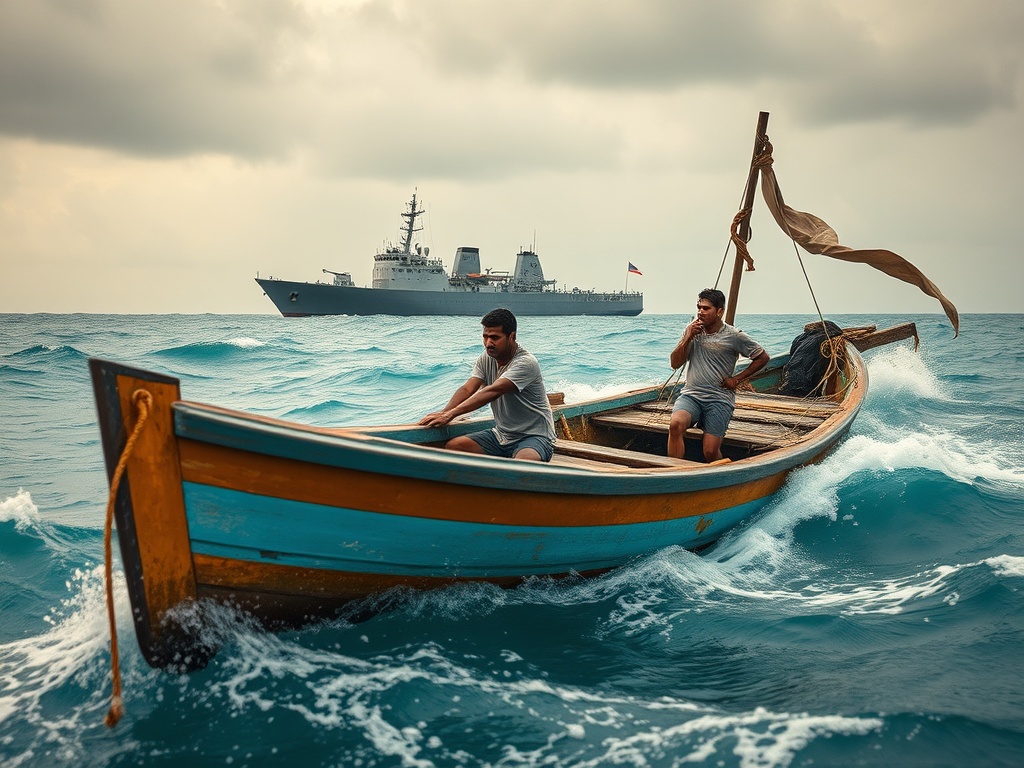
A Maldivian Fishing Boat, a Naval Ship on the Horizon
The recent global unrest—from West Africa to the Middle East—has sparked urgent conversations in Maldivian circles about the nature of sovereignty in an age of resurgent imperialism. The fundamental question echoes across social platforms and coffee shops alike: What does true independence mean when larger nations can dictate terms with impunity?
This anxiety manifests most clearly in discussions about regional security dynamics. The presence of foreign military assets in Maldivian territory has become a flashpoint, with many citizens questioning whether their nation's sovereignty exists more in theory than practice. The sentiment reflects a broader post-colonial dilemma: how small island nations navigate relationships with regional powers while preserving their autonomy.
Strategic posturing emerges as a recurring theme in these discussions. Some argue for calculated demonstrations of military capability—drones, missile tests, naval exercises—not as acts of aggression but as necessary signals of national resolve. The underlying philosophy suggests that visible defense capabilities create diplomatic leverage, forcing larger neighbors to acknowledge smaller nations as equals rather than subordinates.
Parallels are drawn to other small nations navigating complex regional relationships. Singapore's relationship with Malaysia offers a compelling case study in maintaining sovereignty through strategic paranoia and calculated independence. The comparison highlights how small nations must constantly balance economic interdependence with security autonomy, a challenge increasingly relevant to the Maldives as it diversifies its international partnerships.
The global landscape provides sobering context. Recent threats against Nigeria and Venezuela by Western powers demonstrate that even resource-rich, populous nations face external pressure when pursuing independent economic policies. The pattern repeats: nationalization of key sectors, alignment with non-traditional partners, and subsequent international backlash. For Maldivians observing these developments, the lesson is clear—sovereignty must be actively defended, not passively assumed.
Yet the conversation remains grounded in practical realities. Critics of confrontational approaches warn against overestimating small nation leverage while underestimating the costs of provocation. The debate centers on finding that delicate middle ground—maintaining principled independence without triggering the very interventions one seeks to avoid.
At its core, this discourse reflects a nation grappling with its place in a changing world order. The Maldives, like many small states, seeks to preserve its hard-won sovereignty while navigating the complex realities of global power dynamics. The challenge lies in building relationships that ensure security without compromising independence—a balancing act that grows more precarious with each new international crisis.
— Source fragments: Foreign military presence concerns, strategic posturing arguments, sovereignty anxieties, comparisons to other small nations, observations about global power dynamics