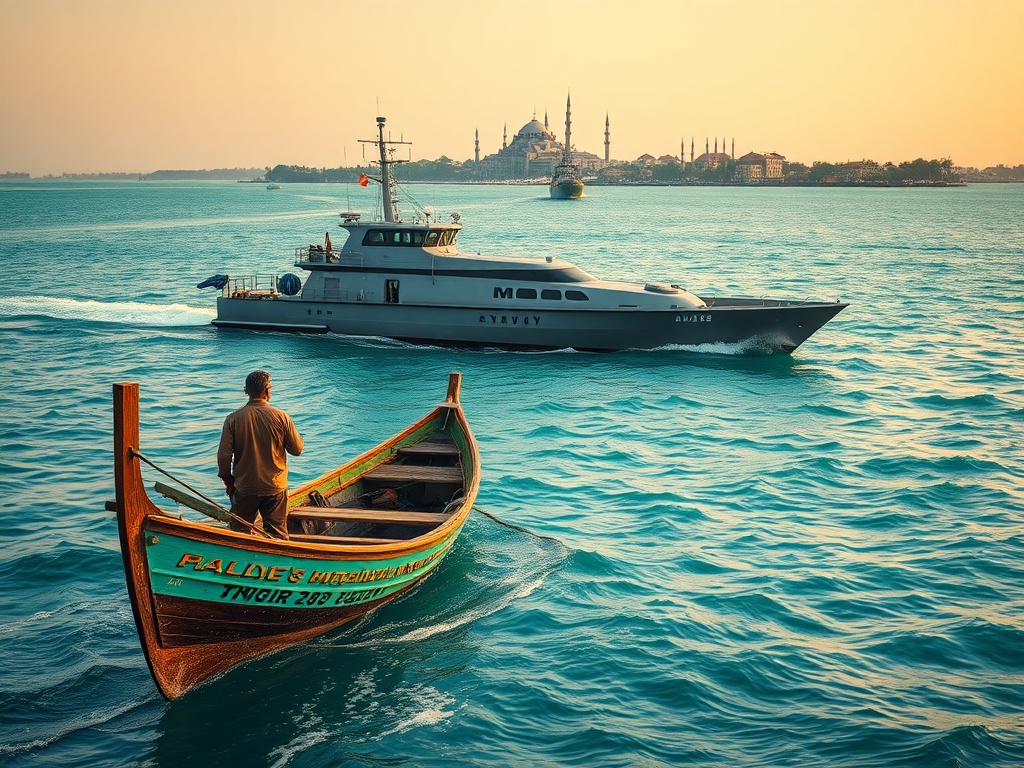
A Maldivian Fishing Boat and a Foreign Warship in the Same Waters
The debate over foreign influence in the Maldives has moved beyond simple political slogans to confront deeper questions about sovereignty and security in the Indian Ocean region. Recent discussions reflect a growing awareness that small island nations must navigate complex power dynamics while preserving their independence.
Critics of regional power dynamics point to what they perceive as increasingly aggressive foreign policies from neighboring countries. The sentiment that dependence on any single nation for security creates vulnerability resonates across social and political circles. This perspective suggests that true sovereignty requires maintaining balanced relationships rather than alignment with any particular power.
The conversation often turns to historical examples of international conflicts and interventions. References to situations in Iraq, Venezuela, and other regions serve as cautionary tales about the consequences of foreign involvement. These examples, while drawn from distant contexts, inform local understanding of how global power plays can affect smaller nations.
At the heart of the matter lies a fundamental question: what constitutes genuine security for a developing island nation? Some argue that security extends beyond military protection to encompass economic independence, environmental resilience, and social stability. The ability to make sovereign decisions without external pressure represents a core aspect of national dignity.
Economic considerations feature prominently in these discussions. The experience of Chinese companies facing forced sales of their assets in other countries raises questions about the stability of international partnerships. Observers note that technological and economic cooperation must be built on mutual respect rather than coercion.
The Maldivian context adds unique dimensions to these global concerns. As a nation transitioning from developing to middle-income status, the Maldives faces the challenge of maintaining its Islamic identity while engaging with diverse international partners. The country's geographic dispersion across the Indian Ocean gives it strategic significance that belies its small population.
Recent political developments reflect these competing visions of sovereignty. The 'India Out' campaign, while controversial to some, represents one manifestation of the broader desire for independent foreign policy. Meanwhile, economic realities—including tourism dependencies and infrastructure needs—create practical constraints on ideological positions.
What emerges is a nuanced understanding that sovereignty cannot be reduced to simple anti-foreign sentiment. True independence requires building domestic capacity, diversifying international partnerships, and developing the institutional strength to negotiate from a position of confidence rather than dependency.
The path forward appears to involve careful balancing: maintaining friendships while avoiding over-dependence, welcoming investment without compromising self-determination, and participating in regional security arrangements while preserving national autonomy. As the geopolitical landscape continues to shift, these conversations will likely remain central to Maldivian political discourse.
— Source fragments: Fragments discussing Indian regional power, concerns about dependency on foreign security, references to international conflicts and forced economic transactions