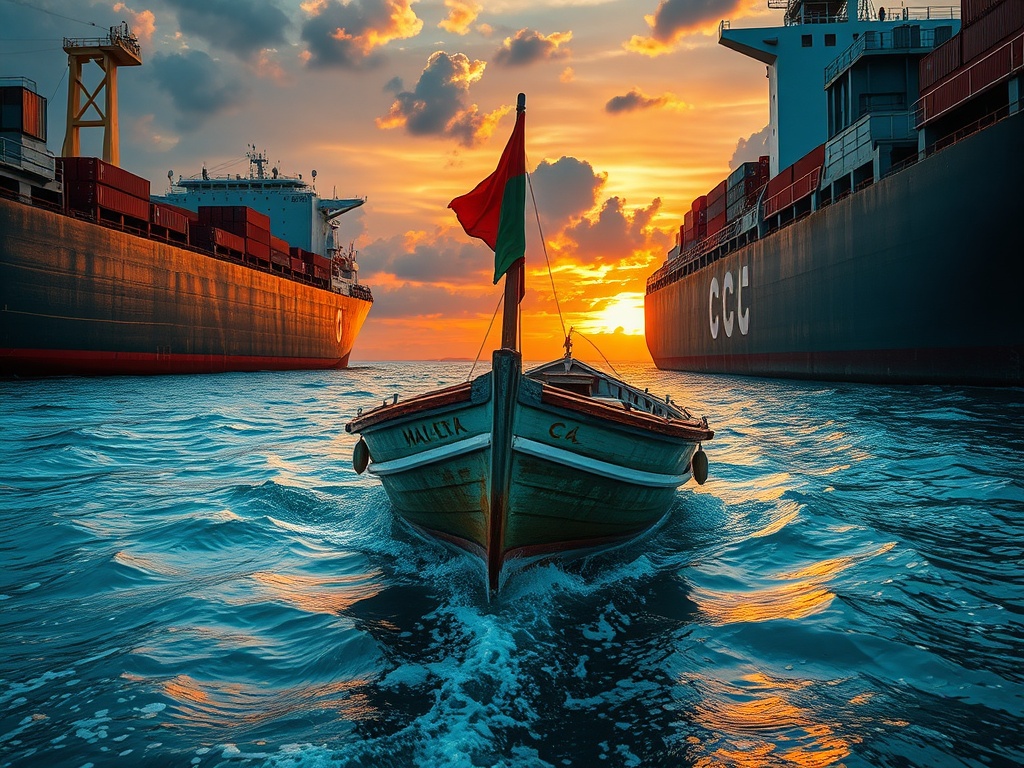
A Maldivian Fishing Boat Between Giants at Sea
The conversation unfolding across Maldivian social platforms reveals a nation wrestling with its place in the world. Beneath the surface of resort brochures and tourism statistics lies a complex reality of sovereignty anxieties and security calculations that demand closer examination.
At the heart of the discourse is the fundamental question of what true independence means for a small island nation. The maritime boundary disputes and territorial recognition issues reflect deeper concerns about how global powers perceive and respect small states. When major nations disregard established maritime claims or fail to consult smaller countries on regional matters, it reinforces the perception that sovereignty has different weights depending on a nation's size and power.
The current debate around foreign military presence has evolved beyond simple opposition to specific countries. It now centers on strategic positioning and the delicate art of small-state diplomacy. Some argue for measured posturing—demonstrating capability without confrontation—as a necessary tool for ensuring a nation's interests are taken seriously. This approach reflects the Singaporean model of maintaining security through capability and strategic positioning rather than direct confrontation.
Recent global events have amplified these concerns. The threats against independent nations like Nigeria and Venezuela serve as sobering reminders that sovereignty remains conditional in a world where might often makes right. For Maldivians watching these developments, the question becomes not if but how to navigate these treacherous geopolitical waters.
The discussion reveals a nuanced understanding that security isn't merely about military strength but about strategic relationships and economic independence. The observations about resource nationalization and currency policies in other nations show an awareness that true sovereignty requires control over economic destiny. This connects directly to domestic concerns about foreign currency shortages and economic dependency that have long troubled the Maldivian economy.
What emerges is a portrait of a nation maturing in its geopolitical thinking—moving beyond reactive nationalism toward a more sophisticated understanding of how small states can maintain dignity and autonomy in an unequal world. The challenge lies in balancing necessary relationships with strategic independence, ensuring that the Maldives never finds itself in the position of being spoken about rather than spoken with in international forums.
This evolving consciousness represents a crucial development in Maldivian political discourse—one that acknowledges the complexities of modern statecraft while remaining fiercely protective of the nation's hard-won sovereignty.
— Source fragments: Maritime boundary recognition concerns, sovereignty debates, foreign military presence discussions, comparisons to Singapore-Malaysia relations, observations about global power dynamics affecting smaller nations