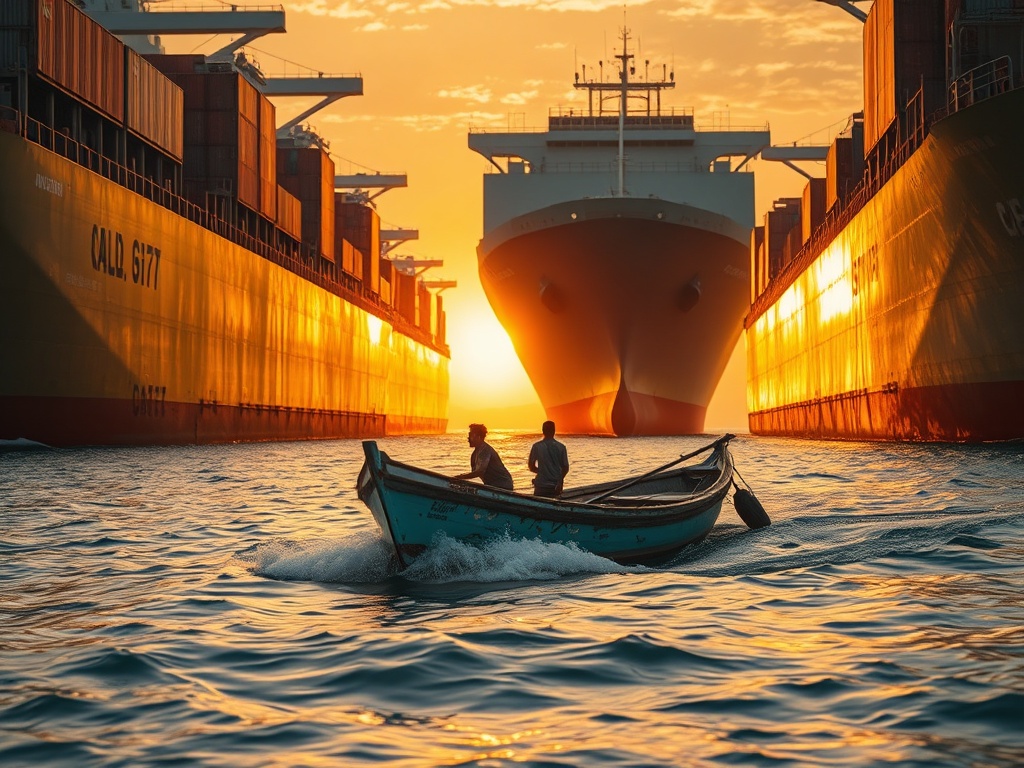
A Maldivian Fishing Boat in a Sea of Foreign Warships
The world watches as conflicts erupt from Gaza to Sudan, Venezuela to Nigeria—each flashpoint a reminder of how quickly sovereignty can become negotiable. For Maldivians observing these distant crises, the conversations turn inward, to questions closer to home about what true independence means for a small island nation.
Recent public discourse reveals a nation grappling with its place in the regional order. The underlying tension centers on foreign military presence and the delicate balance of maintaining sovereignty while navigating necessary relationships. This isn't abstract geopolitics—it's about daily reality in a country where every external relationship carries weight.
The debate manifests in practical concerns: maritime boundaries, economic dependencies, and strategic positioning. When larger nations recognize only 12-mile territorial waters instead of 200-mile exclusive economic zones, the implications ripple through fishing communities and resource management. These aren't merely legal technicalities but matters of livelihood and national rights.
Parallels emerge with historical precedents like the Chagos Islands case, where the UN called it decolonization while Britain framed it as defense strategy—the Maldives was never consulted. This historical memory fuels contemporary anxieties about being sidelined in decisions that affect regional security and sovereignty.
Current discussions reflect a spectrum of responses to these challenges. Some advocate for strategic diversification of international relationships, arguing that over-reliance on any single partner compromises bargaining power. Others propose more assertive posturing—not confrontation, but clear signaling of boundaries and expectations. The comparison to Singapore-Malaysia dynamics surfaces repeatedly: small nations must maintain vigilant awareness of their security environment without succumbing to paranoia.
What emerges is neither isolationism nor submission, but a sophisticated understanding of interdependence in the modern world. The conversation acknowledges that sovereignty isn't absolute independence but the capacity to make conscious choices about relationships and boundaries. It's about building the economic resilience, diplomatic skill, and military capability to ensure those choices remain meaningful.
As new conflicts appear on the global "menu," Maldivians are having the difficult but necessary conversation about what it takes to keep their nation off that list—not through isolation, but through smart engagement that preserves the essence of self-determination.
— Source fragments: Global conflict references (Gaza, Sudan, Venezuela, Nigeria), sovereignty debates, maritime boundary recognition, historical Chagos precedent, military presence discussions, regional power dynamics comparisons