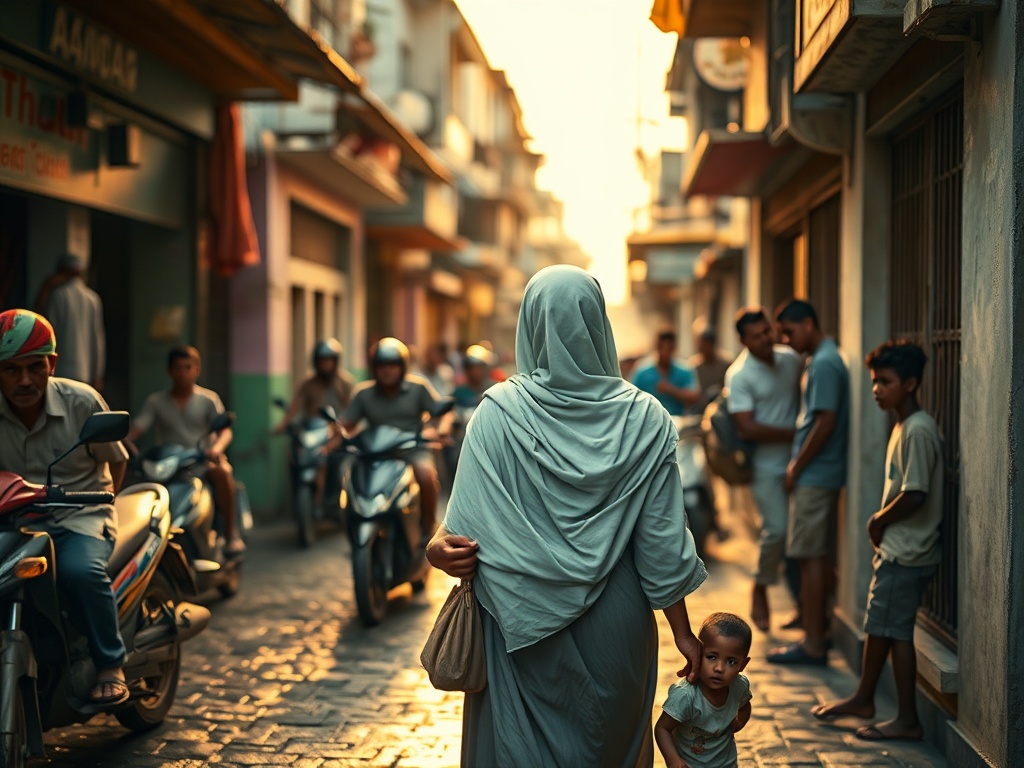
A Mother of Five, Her Husband Imprisoned, Her Family on Her Shoulders
In the narrow streets of Malé, where the ocean breeze carries both salt and tension, a quiet crisis unfolds daily. A mother of five navigates her new reality—her husband imprisoned, her family's survival resting solely on her shoulders. After just four months in the workforce, she represents thousands of Maldivian women caught between economic necessity and inadequate social support systems.
Her story echoes through the archipelago, where the intersection of poverty, family breakdown, and limited opportunities creates a cycle that's difficult to break. The debate surrounding her situation reveals deeper societal fractures—questions about who deserves assistance and why some remain invisible until their circumstances become public.
Meanwhile, another narrative unfolds on these same streets—young people who grew up without parental guidance, drawn into gangs during formative years. These youth face a triple disadvantage: no education to secure formal employment, no marketable skills for entrepreneurship, and no foundational support to launch independent ventures. Their teenage years spent navigating urban survival rather than classrooms have left them permanently behind in a rapidly developing economy.
Critics argue that the conversation often devolves into personal attacks rather than addressing systemic failures. The real issue isn't individual morality but structural inadequacies that leave vulnerable populations without safety nets. As economic pressures from high living costs and currency shortages intensify, these gaps become more pronounced, affecting not just individuals but community stability.
The tourism-driven economy, while generating national revenue, hasn't translated into comprehensive social protection programs. While resort owners profit and political appointments multiply, basic support for struggling families remains inconsistent and politicized. The housing crisis in Malé further compounds these challenges, as both locals and expatriates compete for limited space amid government projects that often fail to reach those most in need.
What emerges is a portrait of a society at a crossroads—one where economic development hasn't been matched by social infrastructure. The mother working to support her children and the street youth seeking direction represent different facets of the same problem: a system that often fails to catch people before they fall too far. As these conversations gain visibility, they challenge the nation to reconsider what constitutes genuine social responsibility in an era of both prosperity and persistent inequality.
— Source fragments: The father is in jail she has 5 children! Even if she works does she not deserve to have support? She began working 4 months ago!; Kids who were neglected by their parents and pulled in by gangs spent their teenage on the streets. They don't have education to get a job, no skills & not even basic support to start their own projects.