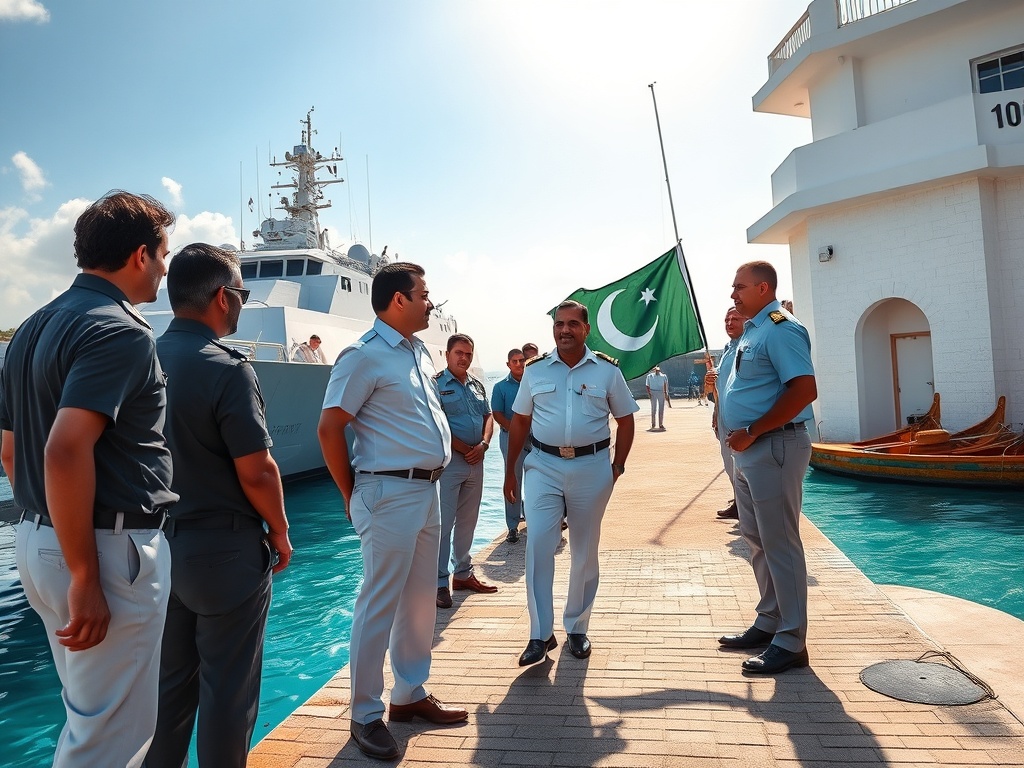
A Pakistani Ship Docks Where Indian Ships Once Did
In the intricate dance of Indian Ocean geopolitics, the Maldives is steadily asserting its sovereignty through calculated diplomatic maneuvers. Recent developments signal a deliberate shift away from traditional dependencies toward more balanced international relationships.
The recent port call by a Pakistani naval vessel, conducted despite external pressure to cancel, underscores this strategic recalibration. This military engagement represents more than mere protocol—it signals a strengthening of defense ties between Malé and Islamabad, reflecting the current administration's commitment to diversifying security partnerships.
This foreign policy evolution finds historical precedent in former President Maumoon Abdul Gayoom's decisive action decades ago, when he expelled Indian military personnel who had overstayed their welcome by two years. That bold move, often overlooked in contemporary discourse, established a precedent for Maldivian leaders safeguarding national sovereignty against perceived overreach.
Simultaneously, the Maldives continues to engage robustly with international human rights mechanisms, having recently concluded its fourth Universal Periodic Review at the UN Human Rights Council. This ongoing commitment to multilateral engagement demonstrates that sovereignty assertion doesn't mean isolationism, but rather a more selective and strategic internationalism.
The government's current approach appears informed by expert analysis suggesting that permanent foreign military presence ultimately diminishes host nation influence. This perspective drives efforts to rebalance relationships, ensuring that partnerships remain mutually beneficial rather than disproportionately favoring larger powers.
Meanwhile, economic horizons are expanding beyond traditional spheres. Rumors of Maldivian construction firms securing contracts in Saudi Arabia's NEOM project hint at growing economic diversification. Such ventures would represent significant achievements for local industry and signal confidence in Maldivian expertise abroad.
This multifaceted strategy—combining military diplomacy, human rights engagement, and economic expansion—reflects a mature approach to foreign policy. Rather than reacting to regional pressures, the Maldives appears to be proactively shaping its international relationships based on national interest and strategic calculation.
The path forward requires careful navigation. As the nation balances relationships with regional powers while developing new partnerships, the ultimate measure of success will be whether these maneuvers translate into tangible benefits for Maldivian citizens—enhanced security, economic opportunity, and preserved sovereignty in an increasingly complex geopolitical landscape.
— Source fragments: Pakistan Navy warship visit despite Indian pressure; historical reference to MAG expelling Indian forces; discussion of sovereignty and reducing foreign influence; UN human rights review engagement; economic partnerships with Saudi Arabia