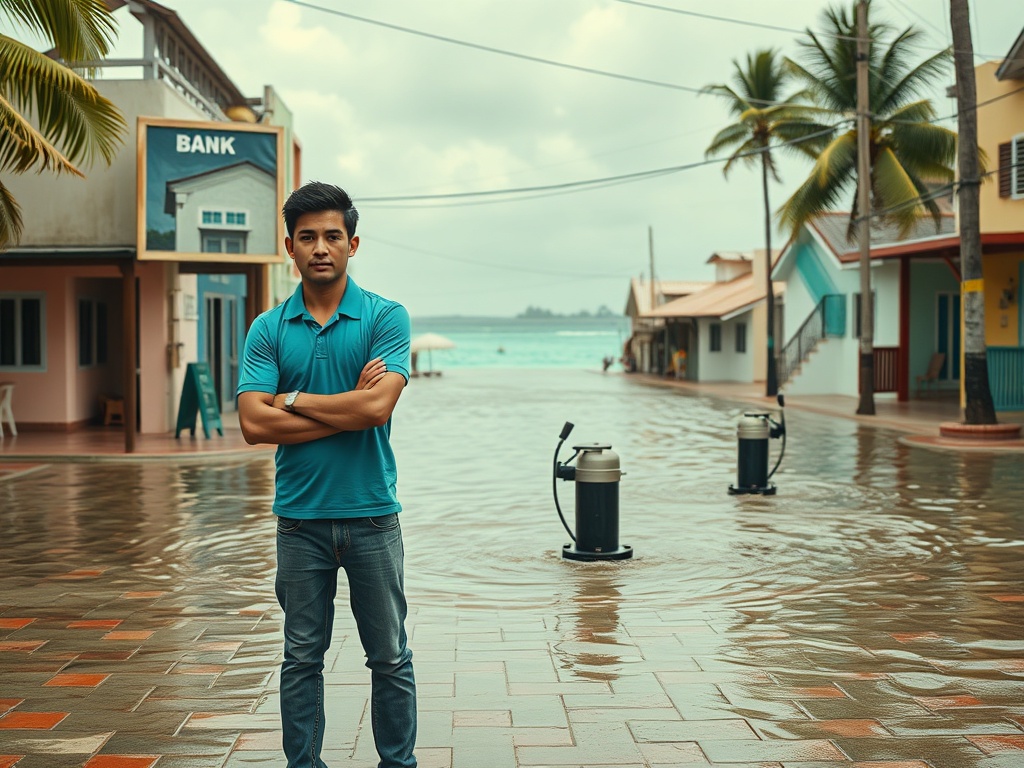
A Photograph Where the Hulhudhoo Bank Should Be
The man searching for the Hulhudhoo branch of Bank of Maldives found only a photograph where a bank should be—a perfect metaphor for infrastructure that appears present but remains inaccessible. This image echoes across the archipelago, where development projects often prioritize appearance over utility, leaving communities with the shell of progress without its substance.
In Malé, the recent flooding revealed another dimension of this infrastructure gap. While officials celebrated drain cleaning and pump deployment as solutions, residents watched water pool in familiar patterns. The storm water pumps, deployed only after flooding began, offered temporary relief but failed to address the systemic issue. As one observer noted, fifteen years of incremental measures have yielded little lasting change.
Meanwhile, Malaysia demonstrates how thoughtful design can create inclusive infrastructure. Their BRT bus system features extended platforms that accommodate passengers with mobility challenges—a simple innovation that acknowledges diverse public needs. In contrast, Malé's development often overlooks such considerations, prioritizing rapid construction over thoughtful urban planning.
The city's water management presents perhaps the most poignant example of missed opportunity. With nearly all surfaces paved, rainwater that once replenished groundwater aquifers now flows directly to the sea. The absence of water recycling facilities means this precious resource—once 'sweet and portable,' as older residents recall—is lost while islands face drinking water shortages.
These disconnected infrastructure failures share a common thread: solutions designed for political visibility rather than public utility. The photograph of a bank that isn't there, the pumps that activate too late, the pavement that prevents water absorption—all represent systems that look functional but operate inadequately.
True infrastructure development requires moving beyond temporary fixes and cosmetic solutions. It demands integrated planning that considers water management, transportation, and banking as interconnected systems serving real human needs. Until then, citizens will continue navigating the gap between what appears to exist and what actually functions.
— Source fragments: Somebody trying to find the door to the Hulhudhoo branch of BML found it was just a photo of the bank not a real bank; Heres a picture of how its done in Malaysia (BRT buses); Male' city should have a water recycling facility; all the roads are paved so no fresh water goes to the ground; The storm water pumps not being deployed meant the water wouldn't be drained out; 15 years of nothing on this