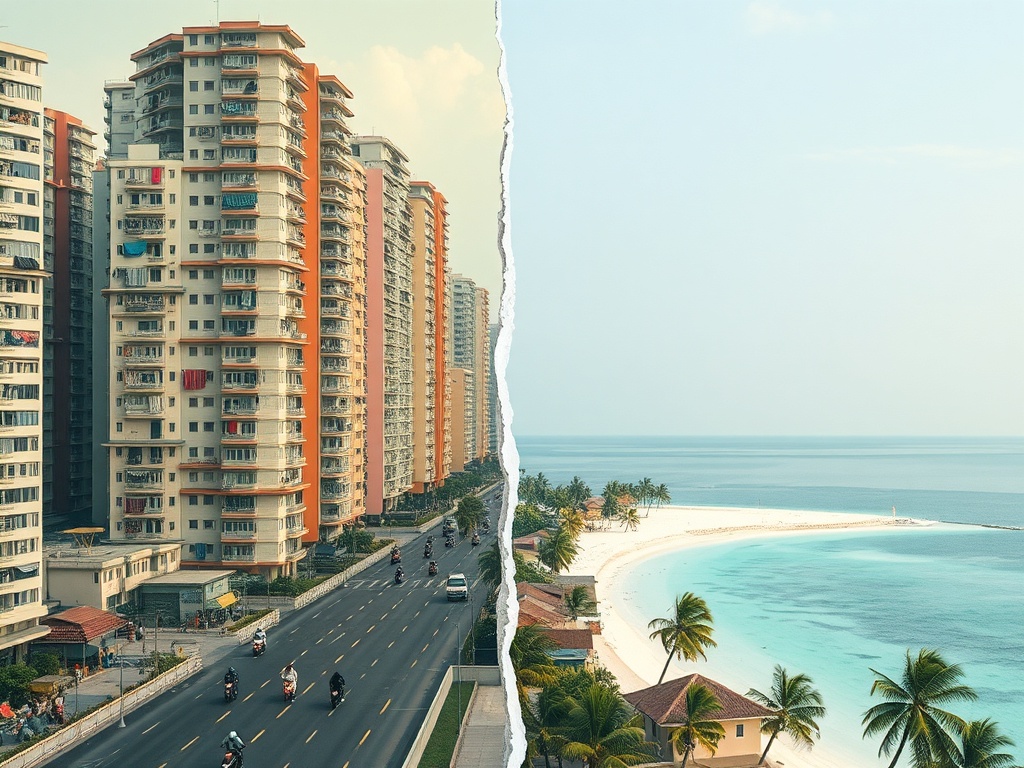
A Political Campaign Poster Torn Between Malé's Skyline and a Remote Island's Need
In the intricate calculus of Maldivian politics, housing has emerged as the most potent symbol of division and discontent. The recent electoral setbacks for the Maldivian Democratic Party trace directly back to what critics describe as systematically discriminatory policies that favored the capital at the expense of the atolls.
The Binveriya scheme, implemented under the previous administration, has become emblematic of this division. While framed as a solution to Male's congestion, the policy generated unprecedented public outrage by deepening the rift between the capital and outer islands. The perception grew that political elites were prioritizing votes in Male' while neglecting the pressing housing needs across the archipelago.
This geographic schism reflects a broader pattern in Maldivian governance, where resource allocation often follows political calculations rather than equitable development principles. The concentration of housing initiatives in the capital reinforced existing inequalities, creating what many island residents describe as a two-tier system of citizenship.
The political consequences have been severe. The housing debate has exposed fundamental questions about representation and fairness that transcend party lines. Voters across the political spectrum have grown increasingly skeptical of promises that fail to materialize into tangible improvements in living conditions. The perception that political parties prioritize maintaining power over addressing systemic inequalities has eroded public trust.
Current discussions center on whether any major party can break from this pattern. Critics argue that without genuine internal reform and a commitment to equitable development, political rhetoric about national unity rings hollow. The challenge for Maldives' political establishment lies in moving beyond geographic and political tribalism to address housing as a universal right rather than a political bargaining chip.
As sea levels rise and climate pressures intensify, the stakes extend beyond electoral politics. The distribution of land and housing resources will determine not just political fortunes but the very fabric of Maldivian society in the coming decades. The conversation has shifted from mere policy critique to fundamental questions about what constitutes fair governance in an island nation facing existential threats.
— Source fragments: Discriminative housing policy was one of the main reasons Ibu lost the last election; MDP had a weak opposition event tonight because they centralized their housing voice for Male'; promised to address discrimination between Male' and atolls but undermined by Binveriya scheme; effects will be felt till Maldives goes under the waves