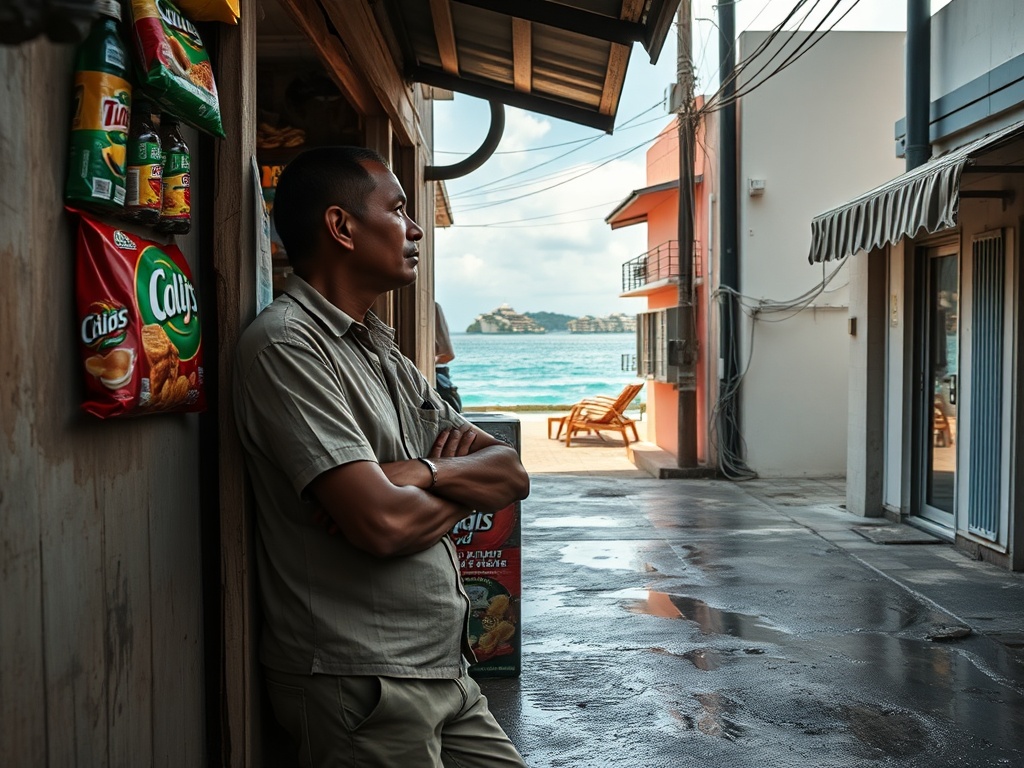
A Shopkeeper’s View of Resort Islands He’ll Never Visit
The question hangs in the salty air like the persistent humidity before a storm: what truly constitutes the 'private sector' that matters to our economy? The answer seems to shift like the sands of our islands, depending on who's speaking and what interests they represent.
In the narrow streets of Malé, where buildings strain skyward as if trying to escape the congestion, shopkeepers navigate impossible choices. A generation ban policy feels abstract when survival demands selling to any paying customer, while outside, more dangerous transactions occur in plain sight. The disconnect between policy and reality stretches like the distance between islands.
Meanwhile, Maldivian workers find themselves caught in currency currents not of their making. When dollars become ruffiya in their pockets, the value of their labor diminishes with each exchange. The resorts, those glittering symbols of our economic engine, operate in a different financial reality than the people who serve them. The workers who clean the infinity pools and tend the manicured gardens return to neighborhoods where the economic tide never seems to rise.
For fifty years we've spoken of diversification, the words echoing through political rallies and committee meetings. Yet the fisherman still struggles, the young graduate still searches for meaningful work, and families still calculate each rufiyaa with growing anxiety. The real private sector isn't just the resort owners or the newspaper publishers—it's the woman selling mas huni from her small shop, the boat builder crafting dhonis by hand, the teacher tutoring after hours to make ends meet.
When economic policies feel like distant thunder with no rain to nourish the ground, people stop looking to charts and reports. They look at their empty shelves, their children's uncertain futures, and the growing gap between promised prosperity and daily struggle. The true measure of any economic policy isn't in percentage points or foreign reserves—it's in whether a father can provide for his family without leaving his homeland, whether a young person can build a future here rather than seeking it abroad, whether the dignity of work translates to the dignity of living.
— Source fragments: Economic policy frustration, worker currency concerns, generation ban criticism, fifty years of promised diversification