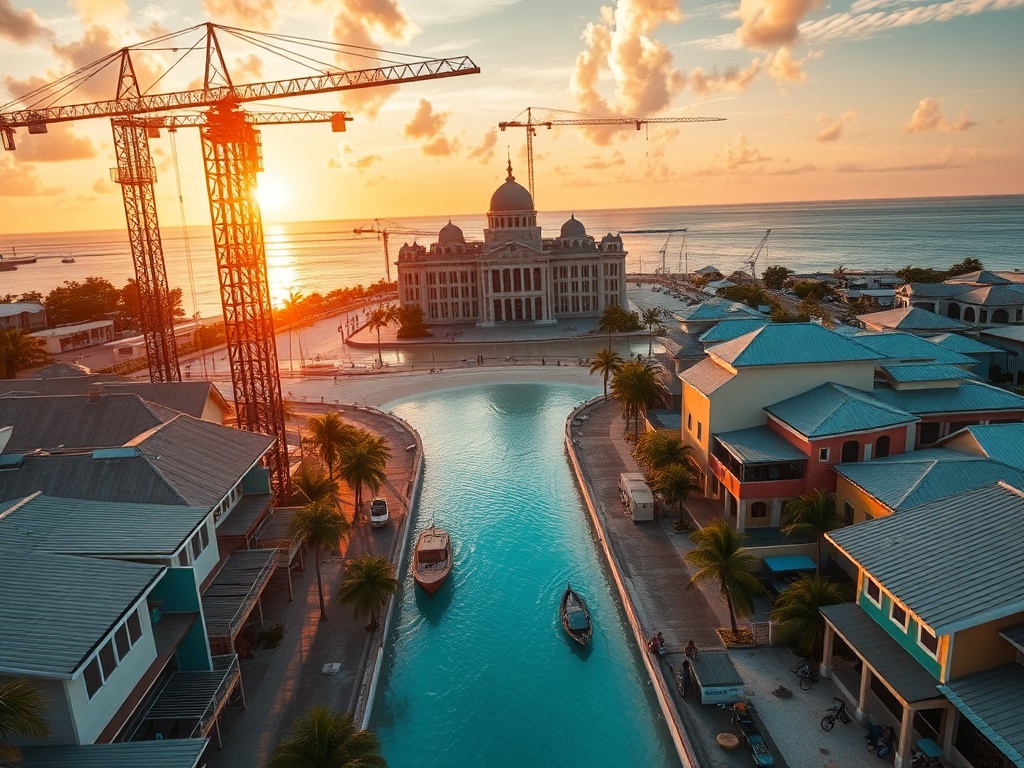
Adam Smith's 250-Year-Old Warning for Malé's Construction Cranes
When Adam Smith articulated that the sovereign's final duty lies in erecting public works "which, though highly advantageous to a great society, are of such nature that the profit could never repay the expense to any individual or small group," he could scarcely have imagined how this principle would play out in the complex political economy of the modern Maldives. This foundational economic concept finds particular relevance as the nation grapples with major infrastructure projects and their approval processes.
The recent parliamentary approval of what appears to be a significant public works initiative—despite opposition from certain quarters—highlights the enduring tension between visionary public investment and political expediency. The debate surrounding such projects often centers on whether they serve genuine public need or political legacy-building, particularly when substantial budget increases follow initial approvals.
In the Maldivian context, where major infrastructure development frequently intersects with political cycles, the question of which projects truly serve the public good becomes increasingly complex. The approval process itself becomes a barometer of political alignment, with opposition voices often framed as obstructionist rather than constructive critics.
The timing of such approvals—potentially spanning multiple budget cycles with escalating financial commitments—raises important questions about fiscal responsibility and long-term planning. When projects receive initial approval in one fiscal year only to expand significantly in subsequent budgets, it challenges the very notion of transparent governance and fiscal discipline.
Public institutions like MACL (Maldives Airports Company Limited) often become focal points in these debates, as airport development represents exactly the kind of infrastructure Smith described: essential for national development but requiring public investment beyond what private interests could reasonably undertake. The challenge lies in distinguishing between necessary public works and politically motivated mega-projects that may strain national resources.
As the Maldives continues its development trajectory, the balance between sovereign duty and political calculation remains precarious. The true test of leadership lies not in securing parliamentary approval, but in ensuring that public works serve genuine public need rather than political ambition—a distinction that becomes increasingly blurred in an environment where infrastructure announcements often double as political theater.
The enduring wisdom of Smith's observation reminds us that the measure of public works should be their contribution to society's wellbeing, not their utility as political symbols or their alignment with transient political agendas.
— Source fragments: The last duty of the sovereign is that of erecting and maintaining those public institutions and those public works; This time it's PG approved; Did that happen in 2024 and 2025 (with bigger budget); It seems this statement related to MACL