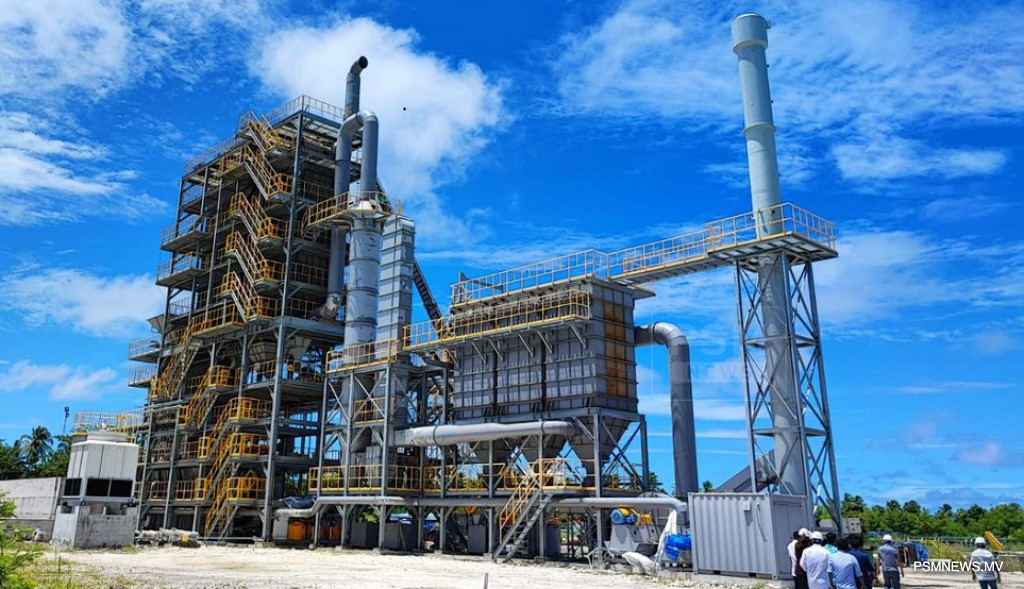
Addu Waste-to-Energy Plant to Transition to Public-Private Partnership Model
The Ministry of Climate Change, Environment and Energy has announced that the waste-to-energy plant in Addu City will be operated under a public-private partnership (PPP) model. The decision comes as the government acknowledges a critical lack of local technical capacity to manage the complex facility.
Completed in 2023 with a USD 16 million investment from the Maldives Green Fund, the plant is designed to process 50 tonnes of waste daily and generate 1.5 megawatts of electricity. Despite its completion, the facility remains non-operational due to unresolved commissioning requirements and a lack of specialized manpower.
One of the primary hurdles is the logistical challenge of securing a consistent waste supply. Current arrangements are insufficient to transport the required 50 tonnes of daily waste from the three southernmost atolls and other regions of the Maldives to the Addu facility.
Ahmed Muruthala, Director General of Waste Management and Pollution, explained that the government initially expected local technical capacity to evolve by the time the plant was ready. However, this did not materialize, necessitating a shift toward a PPP model to ensure professional operation and maintenance.
Muruthala contrasted this with the Thilafushi project, which utilizes a 'design, build, and operate' model where the contractor manages the facility for 15 years. He noted that earlier projects in Vandhoo and Addu were planned with a different assumption regarding local readiness.
The Ministry emphasized that transitioning to a PPP model requires strict adherence to legal procedures and regulations, meaning no specific timeline for the plant's handover has been established yet.
Officials warned that the Maldives cannot afford to let expensive, high-tech infrastructure deteriorate. The failure to maintain specialized machinery introduced through international funding programs represents a significant financial and environmental loss for the nation, underscoring the urgency of finding a sustainable operational partner.