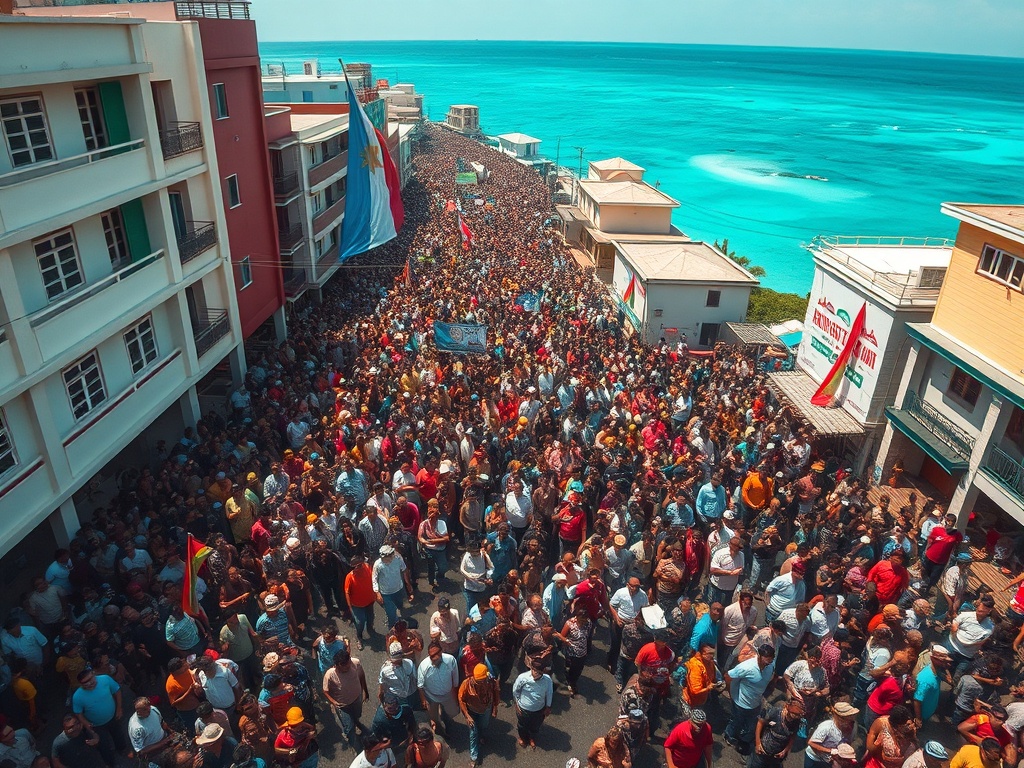
Aerial Photo Shows 13,000 Crowding Malé Streets for Rally
The aerial photograph shows a sea of people filling multiple streets, a visual testament to political mobilization in the Maldives. Initial estimates suggest between 10,000 to 15,000 attendees, with event reports confirming over 13,000 at a recent PNC rally. Such numbers inevitably spark discussions about political popularity and influence in the island nation.
Yet these crowd counts represent just one piece of a complex puzzle. As one observer notes, without reliable surveys or voting data, claims about political popularity remain speculative at best. The statement that Gasim Ibrahim ranks as the third most popular politician exemplifies this uncertainty—it could be true or false, but verification remains elusive in the absence of concrete data.
This data vacuum creates fertile ground for competing narratives and speculation. The political landscape features multiple power centers: from the ruling PNC under President Muizzu to the main opposition MDP and its splinter faction The Democrats, alongside significant figures like Jumhooree Party's Gasim Ibrahim and various other party leaders.
Historical context adds layers to current assessments. References to past parliamentary dynamics—such as minority leadership roles during different Majlis compositions—remind us that political fortunes shift with time and circumstance. The control of key ministries by influential figures rather than nominal appointees further complicates understanding of where power truly resides.
Many Maldivians acknowledge gaps in their political knowledge, particularly regarding the evolution of foreign relations, major power players, and the historical development that shaped the current landscape. This awareness of incomplete understanding reflects a mature political consciousness, even as reliable sources of information remain scarce.
In a nation where governance challenges include politicized institutions, electoral considerations, and complex socioeconomic pressures, accurately measuring political support requires more than crowd estimates. It demands transparent data, reliable polling, and a deeper understanding of how Maldivians navigate their political choices amid competing pressures and limited information.
— Source fragments: Counting heads in this dense aerial shot is challenging, but the crowd fills multiple streets and areas. My rough estimate from the photo is 10,000–15,000 people. Event reports confirm over 13,000 attendees; what are the chances bro went to the island? It's impossible to say without a vote. Or without reliable surveys. I can make a similar statement; Gasim is the third most popular politician in the Maldives. Now, my statement could be true, or it could be false. We won't know without data; Good point, I think a lot of us (including myself) lack knowledge about the Maldivian political scene, major power players, foreign relations and its historical development