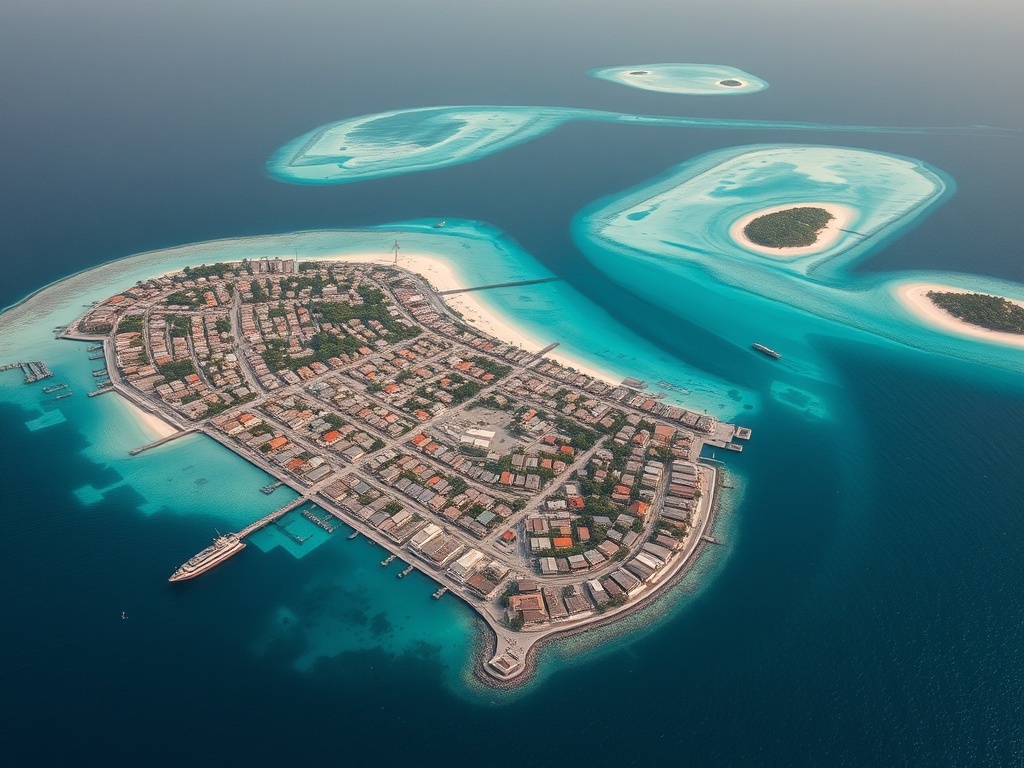
Aerial view of Malé's rooftops, no space left between them
Across the scattered islands of Maldives, land represents more than just physical space—it embodies opportunity, identity, and economic potential. Yet as development pressures mount and urban centers like Malé reach saturation, how we manage this finite resource has become one of our most pressing national conversations.
The core principle gaining traction is straightforward: land should be accessible for private purposes through leasing arrangements rather than outright ownership. This approach acknowledges both individual aspirations and the collective responsibility we share toward our limited territory. Leasing creates a framework where land remains a national asset while allowing citizens to pursue their dreams—whether building homes, starting businesses, or developing community spaces.
Critical to this model is the concept of utilization requirements. The suggestion that unutilized land should revert to public stewardship after a reasonable period—say, three years—addresses the troubling reality of speculative holding. Too often, prime locations sit idle while genuine need goes unmet. This isn't about punishing landowners but rather recognizing that in a nation where every square meter counts, idle land represents wasted potential.
Where land does generate income through rental arrangements, taxation emerges as a natural companion policy. This isn't merely about revenue generation—though in an economy grappling with budget constraints, that benefit shouldn't be dismissed. More fundamentally, it's about ensuring that those benefiting from public assets contribute fairly to the common good. The revenue could fund infrastructure, education, or healthcare—directly recycling land value back into community development.
Zoning completes this policy framework, moving us from reactive to proactive land management. Proper zoning ensures that residential areas remain peaceful, commercial districts thrive, and industrial activities occur in appropriate locations. It protects environmental assets, preserves cultural heritage sites, and guides development in ways that serve both current and future generations.
What makes this conversation particularly relevant to Maldives is our unique geography. Unlike continental nations with vast hinterlands, our usable territory is strictly limited. Every decision about land use carries weighty consequences for environmental sustainability, economic development, and social equity. The policies being discussed represent a mature approach to stewardship—one that honors individual initiative while safeguarding collective interests.
As we move forward, the challenge will be implementing these principles with fairness and transparency. The mechanisms for assessing utilization, calculating taxes, and enforcing zoning must be clear, consistent, and free from political manipulation. Only then can land governance become a source of national unity rather than division—a system where every Maldivian has the opportunity to build a future while ensuring our islands remain vibrant for generations to come.
— Source fragments: I believe land shall be given. But un-utilized (say 3 years) land shall be taken back. If generating rental income, then shall be taxed.; Land for private purposes should be leased. Zoning is also important