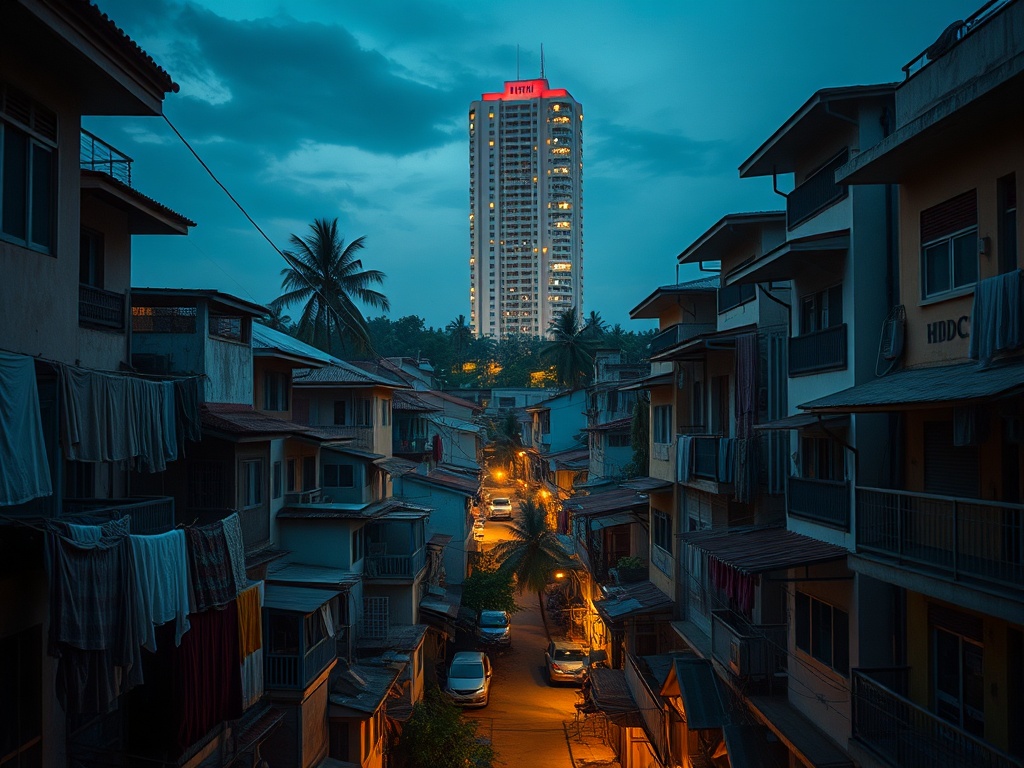
After Eight Years, the Email Said Your Flat Was Ready
The email arrives after eight years of waiting. "We are pleased to inform you that your unit is ready for handover..." For many Maldivians, this message from the Housing Development Corporation represents not just shelter, but a long-delayed promise finally fulfilled—or another chapter in what some call the #HDChousingScam.
In Malé, where land prices defy gravity and living space shrinks daily, the conversation around housing has become a mirror reflecting deeper societal fractures. The capital's geography creates an economic paradox: while land ownership remains the ultimate financial security, the reality is that most residents navigate a precarious rental market where every square foot carries political weight.
Recent weeks have seen an unusual phenomenon—prospective tenants calling from political rallies, background music audible through the phone. This intersection of political mobilization and housing searches raises uncomfortable questions about the relationship between accommodation and allegiance. If political parties cannot provide housing solutions, critics ask, why transport supporters to the capital where affordable options barely exist?
The system creates what one observer describes as a state of hostage-taking through jobs and housing. Every aspect of life appears engineered to make citizens petition the state for rights and opportunities that should be fundamental. This dependency framework explains the sympathy many feel toward those navigating these impossible choices.
Meanwhile, the debate around HDC's role reveals competing expectations. Some defend the corporation as doing its maximum amid challenging circumstances, while others question why private developer failures become public sector burdens. The underlying tension centers on whether housing should be treated as commodity or right.
The solution, many argue, lies not in cramming more people into Malé's limited footprint but in dispersing development. When citizens have secure homes, they can manage on current salaries without the additional stress of exorbitant rent. This vision of decentralized living represents both practical urban planning and a philosophical shift toward greater independence from the capital-centric model.
As families navigate this landscape, the fundamental question remains: Is housing in Malé becoming a tool of political engineering rather than a solution to human need? The answer may determine not just where people live, but how they relate to their government and each other in the years to come.
— Source fragments: So it all comes down to owning land from male and renting the building to make money?; People have been calling the rental rooms looking for cheaper accommodation; Families have been held hostage through jobs and housing; After more than 8 years, when HDC sends an email; the real solution would be disperse Male; when you have a home you can manage by current salary