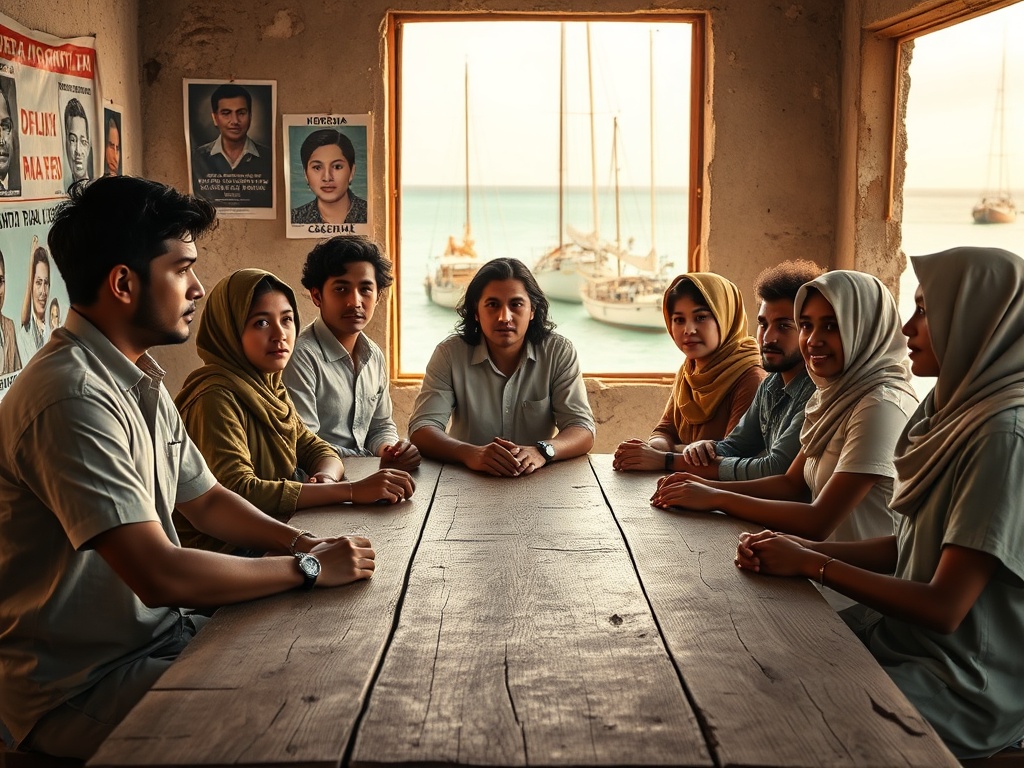
After the Chairperson Resigned, Young Voices Fill the Party Hall
The resignation of a major political party's chairperson in the Maldives represents more than just a leadership change—it signals a potential democratic recalibration at a crucial moment. This strategic departure, widely seen as both bold and forward-thinking, opens pathways for institutional reform and generational renewal that could reshape the political landscape.
Across Maldivian politics, a quiet consensus is emerging: old-school thinking must give way to more dynamic approaches. The debate has shifted toward creating political structures that reflect contemporary realities rather than maintaining traditional hierarchies. At the heart of this transformation lies the question of how parties can remain relevant to younger generations while maintaining political effectiveness.
The timing of this leadership transition coincides with a critical period for party membership and engagement. Without significant membership growth in recent years, political organizations face the challenge of reinvigorating their base. This creates a strategic opening for focusing recruitment efforts on attracting new members and restructuring party mechanisms to be more inclusive and responsive.
Strategic considerations also play a crucial role in these developments. When leadership positions are occupied by individuals not seeking presidential office, it reduces internal competition and creates space for collaborative party building. This approach allows for clearer succession planning and provides emerging leaders with valuable experience before considering higher office.
The broader democratic ecosystem stands to benefit from this renewal. Youth-led initiatives monitoring parliamentary proceedings demonstrate growing civic engagement beyond electoral politics. This reflects an understanding that robust democracy requires continuous oversight and accountability mechanisms, not just periodic voting.
For the Maldives, where political institutions continue to evolve, these developments represent a maturation of democratic practice. The willingness to create space for new leadership, combined with strategic positioning for long-term stability, suggests political actors are thinking beyond immediate electoral cycles toward sustainable party structures.
As the country navigates complex socioeconomic challenges, from housing shortages to economic pressures, the quality of political leadership becomes increasingly consequential. A party that successfully bridges generational divides while maintaining strategic coherence may well position itself as the standard-bearer for Maldives' democratic future.
— Source fragments: Resigning from the chairperson position of the biggest party in the Maldives is a bold, democratic, and strategic move; This the best candidate for PNC; It would be great if someone young took on the role of Chairperson; This way party is given max attention by someone who doesn't want to be the NEXT president; Old-school thinking must be abolished