Agribusiness Grant Opens to Help Northern Island Farmers Adopt Climate-Smart Technology
The Ministry of Fisheries, Agriculture and Ocean Resources, in collaboration with the International Fund for Agricultural Development (IFAD), has launched the second round of the Agribusiness Matching Grant Program. The initiative specifically targets farmers, NGOs, small- and medium-sized enterprises, and cooperative societies across Haa Alifu, Haa Dhaalu, and Shaviyani atolls.
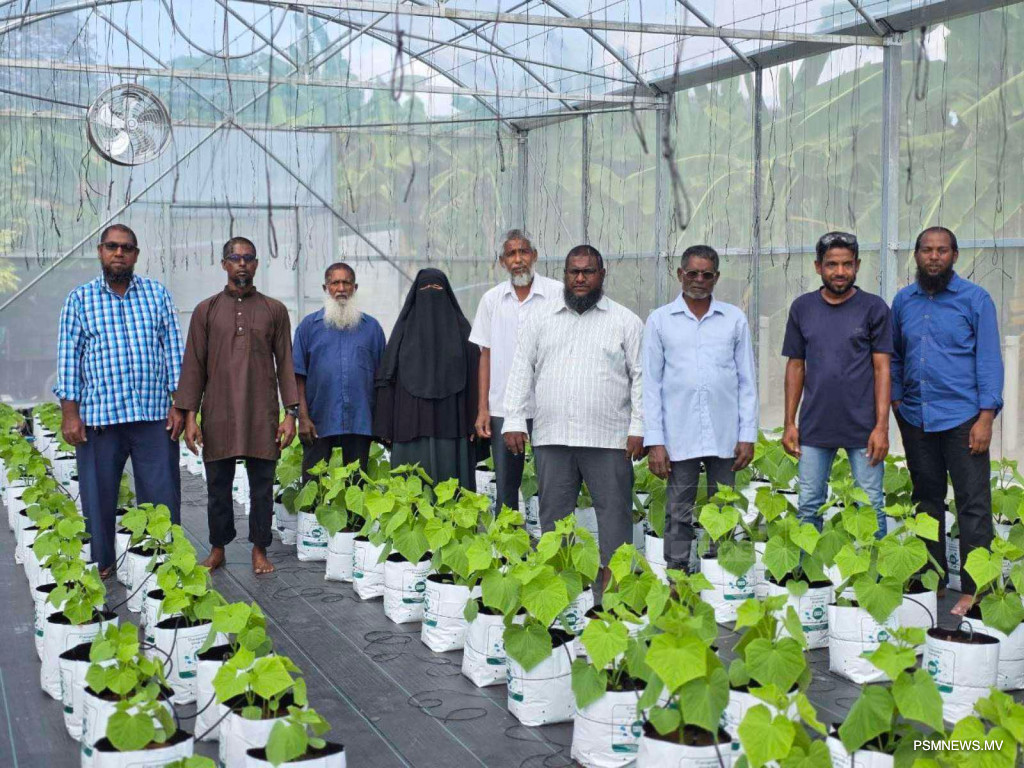
Managed in partnership with SME Digital, this phase focuses exclusively on Climate-Smart Production. Eligible projects include the installation of greenhouses, hydroponic systems, and other climate-resilient farming mediums designed to withstand environmental challenges.
Applicants can request total project financing of up to USD 129,702, though individual grants are capped at USD 9,728 per beneficiary. The program utilizes a matching fund model, covering between 30 percent and 50 percent of the total project cost. Beneficiaries are expected to secure the remaining funds through their own resources or farm-profit financing.
This follows a successful first round last year that supported 15 farmers across the target atolls. To ensure higher accessibility and quality applications, the program will conduct a series of information-sharing sessions across the islands to guide prospective applicants through the technical requirements.
Badruddeen Hassan, CEO of SME Digital, emphasized that the grant reduces the financial barriers preventing local farmers from investing in innovation. According to Hassan, the program empowers producers to shift toward sustainable growth and helps establish a more robust, environmentally friendly agricultural system in the Maldives.
The wider Maldives Agribusiness Program is a joint venture between the Maldivian government and IFAD. To date, the initiative has established Island Farmer Forum Groups across 26 islands, providing critical training and financial aid. Current efforts include specialized technical training on cultivating high-value crops like cucumber, melon, chili, and watermelon using cocopeat across 12 islands.
Project coordinators aim to move local growers beyond traditional farming practices by introducing advanced technologies. By modernizing the sector, the program seeks to increase food security and make agriculture a more attractive and viable career path for the Maldivian youth.