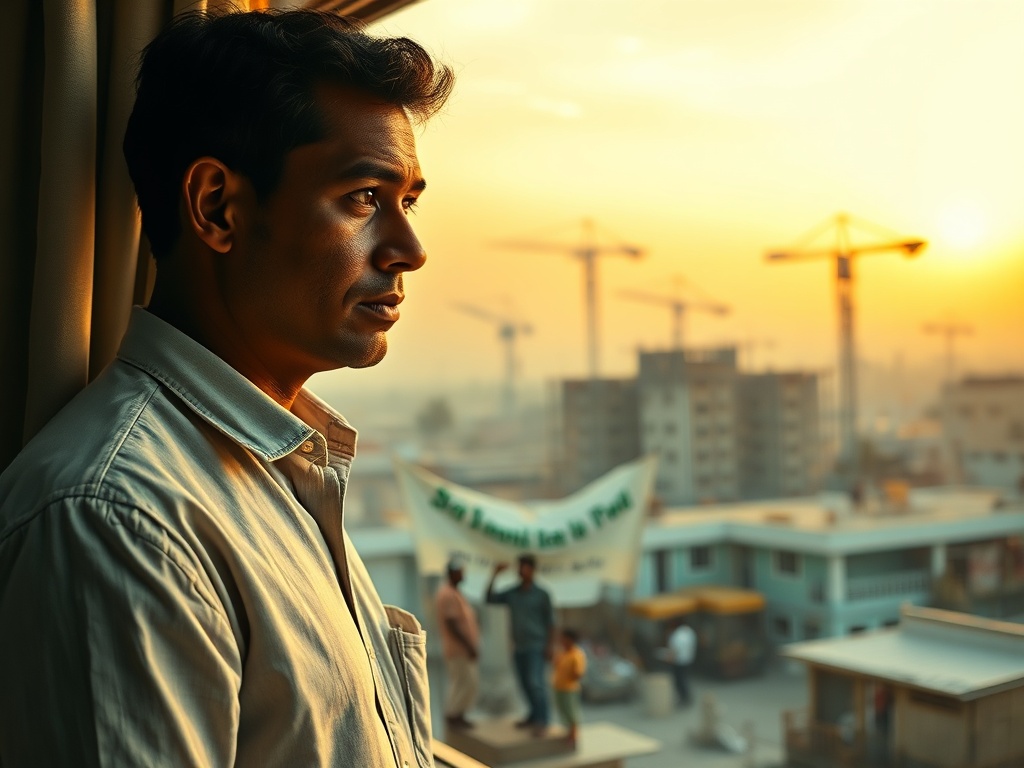
Ahmed's Window Frames Both Housing Ceremony and Construction Cranes
The morning light filtered through the dusty window of Ahmed's small office, casting long shadows across the stacks of budget reports. He could hear the distant call to prayer mingling with the sounds of construction from the new high-rises going up near the harbor. His fingers traced the columns of numbers—allocations for media outlets, construction subsidies, housing projects—each line telling a story of priorities and compromises.
From his third-floor window, he watched the Free Goathi distribution ceremony unfolding in the square below. Selected families received land deeds with beaming smiles, while others watched from the periphery with expressions he knew all too well—that particular blend of hope and resignation unique to those waiting their turn in a system that moved at its own pace.
Later, walking home through the narrow streets of Malé, Ahmed passed shops where merchants debated the new generation ban policy. "What will prevent a shopkeeper from selling cigarettes to a paying customer," one man argued, "when we have drugs injecting in broad daylight?" The question hung in the salty air, unanswered.
At the local café, construction workers discussed their industry's importance over sweet tea. "We're building this country," one said, gesturing toward the rising steel frames visible above the coral-stone walls. "Not like those newspapers always complaining."
That evening, Ahmed visited his cousin, living in a cramped apartment with his family while waiting for housing allocation. The children did homework at a small table as the parents discussed the rising rents. "The government gives free land and loans to build houses," his cousin said bitterly, "yet claims it can't regulate rent. But when someone buys a car, they fix taxi rates immediately."
Walking home beneath the emerging stars, Ahmed felt the weight of these contradictions. The sea breeze carried the scent of salt and diesel, of progress and stagnation. He thought about the fiscal health of the nation, the delicate balance between helping specific groups and serving the whole. In the distance, the lights of construction cranes blinked like fireflies against the darkening sky—symbols of growth casting long shadows of inequality.
The scales of justice, he realized, weren't just in courtrooms or government buildings. They were in every policy decision, every allocation, every regulation that lifted some while leaving others waiting. And somewhere in the space between intention and implementation, between helping hands and systemic gaps, the character of a nation was being forged.
— Source fragments: Free goathi distribution creating imbalance in society; Government giving free land & loans yet not regulating rent; Construction industry importance; Concerns about fiscal health and currency; Policy inconsistencies between different sectors