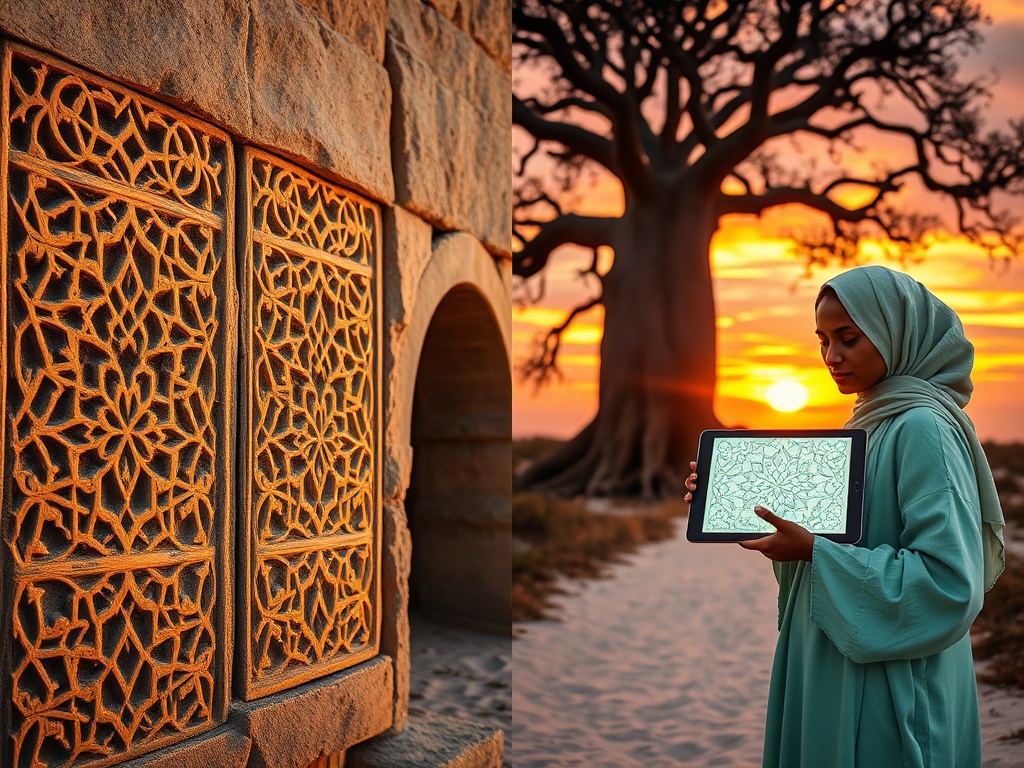
AI Traces Ancient Coral Stone Carvings to Preserve Maldives' Heritage
The intricate carvings of Vaadhoo's Friday Mosque, etched into weathered coral stone over centuries, are now being meticulously traced by artificial intelligence. This digital preservation aims to protect the art from the relentless erosion of time and weather. It marks a critical intersection where new technology serves ancient mastery, reflecting a national imperative to honor a deep cultural past while facing a future full of change.
Across the archipelago, this blend of old and new defines the current moment. AI-generated artworks now revive the calm and wise expressions captured in photographs of Maldivian women from 1977, giving digital life to fading physical memories. The sunken British Loyalty in Addu Atoll, a relic of war, has been transformed into a heritage site and tourist attraction, mirroring the country's broader economic pivot toward tourism as its primary source of foreign currency.
Yet these acts of cultural preservation exist in stark contrast to pressing modern challenges. The same society that produces masters of traditional socio-economic crafts—where children learn to knot hammocks and adults carve intricate models from wood—now contends with youth unemployment, drug use, and educational gaps. Celebrated archival skills stand alongside a strained public sector, politicized housing distribution, and a healthcare system grappling with shortages.
The most potent symbol of this duality may be found on Fodhdhoo Island, named for the baobab tree. This species is not native to the Maldives, yet it has taken root and become part of the national identity. Like these 'upside-down trees' with roots that seem to reach for the sky, Maldivian society appears both deeply grounded in tradition and actively stretching toward modernization. The baobab's legendary resilience in harsh conditions echoes the nation's own endurance through political upheavals, economic pressures, and environmental threats.
The emerging picture is not one of contradiction, but of synthesis. AI does not replace the human artistry of stone carvers; it provides a new tool to safeguard their legacy. Digital archives do not erase living memory; they ensure its survival. The political landscape, with its complex web of parties, similarly reflects this blend, where traditional leadership structures intersect—often uneasily—with modern democratic processes.
The future taking shape is one of interdependence. Digital tools must preserve physical heritage. Economic development must sustain cultural identity. Political leadership must bridge generations of experience. In this balance lies the central challenge: to build a nation where coral stone mosques and AI algorithms coexist, where foreign baobabs flourish, and where the untold stories in a decades-old photograph finally find their voice.
— Source fragments: AI tracing of ancient Maldivian stone carvings for preservation; AI-generated artworks based on 1977 photo of Maldivian woman; Friday Mosque of Vaadhoo as heritage site; British Loyalty shipwreck as heritage; Fodhdhoo Island named after baobab tree; traditional Maldivian craftsmanship skills; comparison of young plants to century-old tree; Maldives political/economic/social context including tourism economy, youth issues, governance challenges.