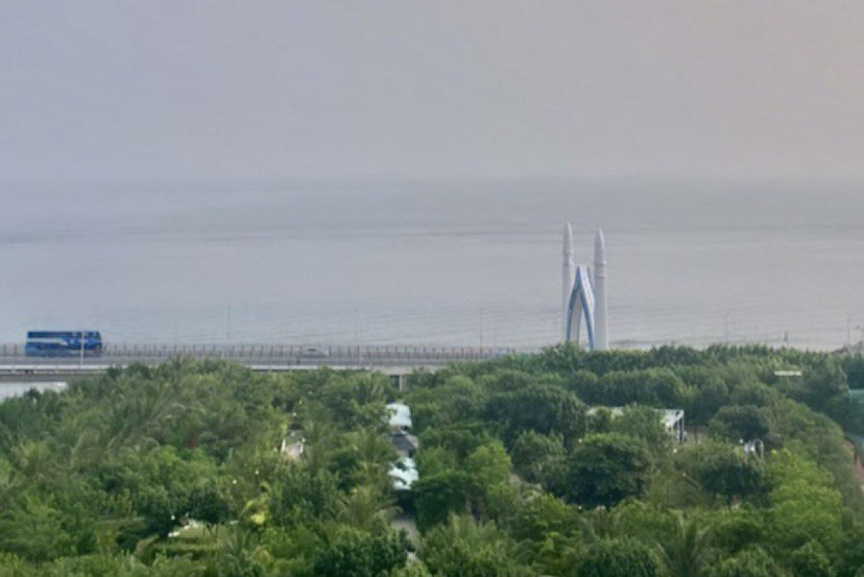
Air Quality in Malé Drops to Unhealthy Levels, Posing Risks for Sensitive Groups
The air quality in Malé, the capital of the Maldives, has deteriorated to unhealthy levels, posing significant health risks, particularly for sensitive groups such as children, older adults, and individuals with heart or lung conditions. According to IQ Air, Malé's Air Quality Index (AQI) has reached 104, categorizing it as 'unhealthy for sensitive groups.' This level of pollution, marked by an orange color code, indicates moderate contamination that requires awareness and reduced outdoor activity for vulnerable populations. The fine particulate matter (PM2.5) concentration is currently at 36.6 micrograms per cubic meter, which is 7.3 times the World Health Organization's annual guideline value. Health recommendations include reducing outdoor exercise, closing windows to avoid polluted air, wearing masks outdoors for sensitive groups, and using air purifiers. Haze, caused by fine particles in the air, is a recurring issue in the Maldives during December and January, reducing visibility and worsening air quality. Environmental analysts warn that the problem has intensified in recent years, largely due to hazardous gases emitted by factories in neighboring countries.