Almost gives me hope
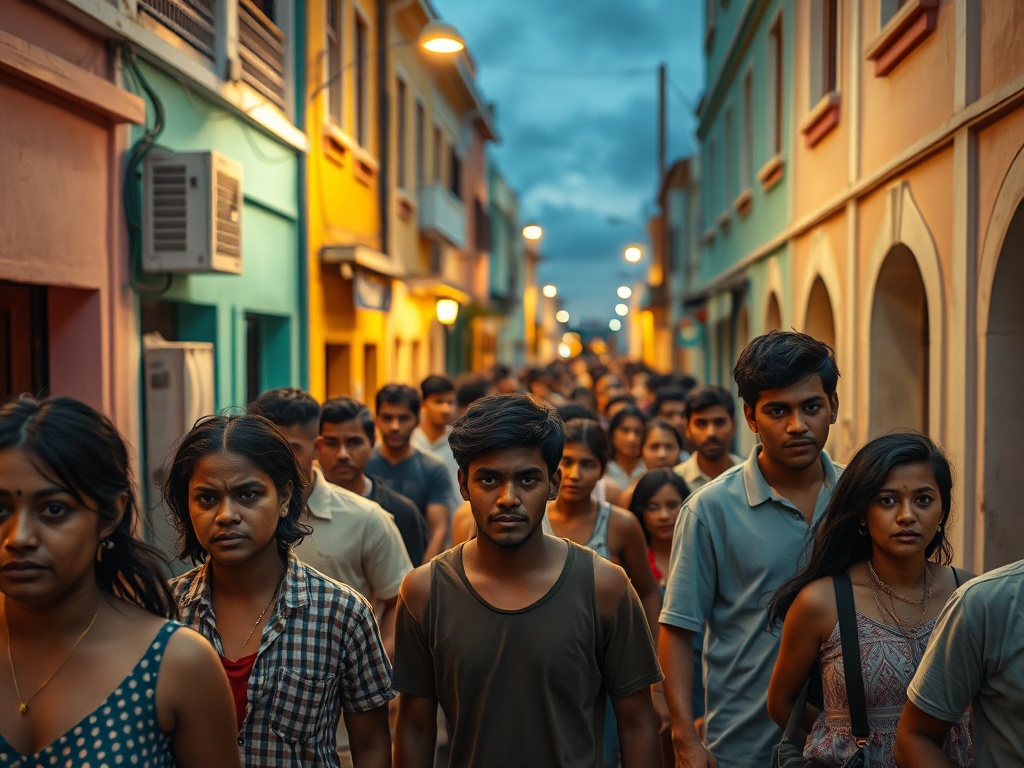
Sometimes, standing in the crush of a protest in Malé, I look at the faces around me. The sun is sharp on the white buildings, the air thick with salt and exhaust. I know these people. I grew up with them, went to school with their cousins, see their mothers at the market. And I know, with a sinking certainty, that many of them are not here for the greater good. It’s all just self-interest, polished and presented as principle. The system feels like a game where the rules are written in sand, washed away with each new tide of power.
We see it everywhere. The grand projects announced with fanfare, the deadlines that stretch and then vanish like a mirage. We’ve grown accustomed to the feeling of waiting, of things never being quite finished. It’s a national habit, this suspension of disbelief. We are a small nation, a collection of dots in a vast ocean, and everyone knows everyone. This intimacy should be a strength, a web of community. Instead, it often feels like a cage where real accountability goes to die, and corruption wears a familiar face.
Our institutions, meant to be pillars, sometimes feel like they are actively working against us. The denials from official channels ring hollow when lived experience tells a different story. It creates a low, constant hum of anxiety, a sense that the ground beneath our feet is less solid than it appears. We are told to trust the process, but the process seems designed for the benefit of the few.
And then there’s the world stage. Our foreign policy can feel like we’re a ping-pong ball, batted between global powers. We leap from one ally to the next, and it’s hard not to wonder if anyone has a map, a real plan for where we’re going. It adds to the vertigo, this sense of being adrift in geopolitical currents far beyond our control.
Yet, in the midst of all this, something stubborn persists. A laugh in the dark. A quiet observation that anything can happen. It’s not a roaring, confident hope. It’s an ‘almost’ hope. A fragile thing that acknowledges the deep flaws in our fundamentals, the generations of mixed character—the corrupt, the gullible, the silent, the hardworking—all jumbled together. But it’s there. This flicker of possibility that despite the self-interest, the delays, the posturing, the culture might still change. For better or worse, it will change. And that ‘almost’ is what we hold onto, the small, defiant space where a different future might still take root, even here, even now.