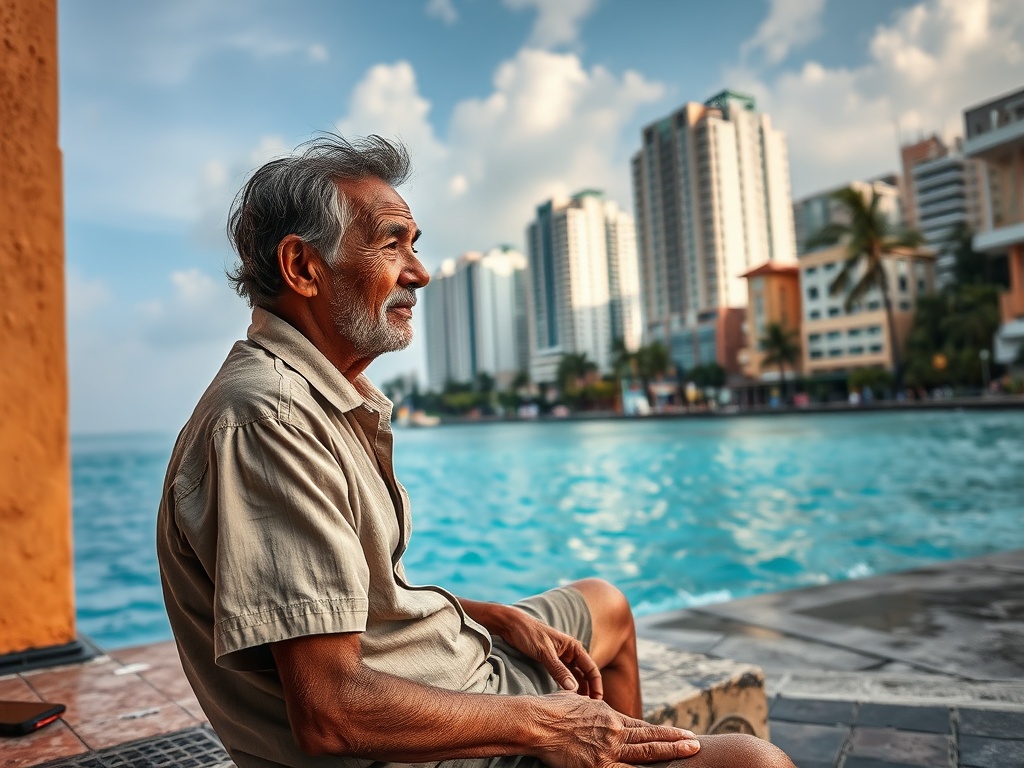
An Elder on a Stone Bench, Malé's Towers Behind Him
In the scattered archipelago of the Maldives, a quiet struggle unfolds—not just over politics or resources, but over the very narrative of who Maldivians are and where they belong. The conversation has moved beyond policy debates into the realm of identity, where historical claims and geopolitical positioning collide with local realities.
The persistent theories linking Maldivian origins exclusively to India have sparked growing skepticism among citizens. For many, this feels less like academic discourse and more like a subtle form of cultural imposition. The question echoes through social media and coffee shops: why the relentless focus on Indian origins when Maldivian culture has evolved through centuries of unique island development, Arab trade routes, and regional exchanges?
This skepticism reflects broader concerns about sovereignty and mental independence. The fear isn't merely about historical accuracy but about contemporary power dynamics—the sense that defining a people's origins can become a tool for influencing their present allegiances. As one observer noted, the danger lies in "mentally enslaving a native aboriginal people" by controlling their foundational story.
Meanwhile, the tourism industry—the nation's economic lifeline—faces its own narrative challenges. Whispers about "hidden truths" that challenge tourism tycoons suggest deeper questions about who benefits from the current economic model and what stories remain untold. The relationship between historical narrative and economic power becomes increasingly clear: control the past, and you influence who profits in the present.
These identity debates occur against a backdrop of genuine social challenges—youth unemployment, housing shortages, and economic pressures that make abstract discussions about origins feel both urgent and distracting. When young people struggle to find affordable housing in Malé or meaningful employment across the atolls, theoretical debates about ancient migration patterns can seem like luxuries they cannot afford.
Yet the persistence of these conversations suggests they touch something fundamental. In a nation navigating complex relationships with regional powers, maintaining cultural sovereignty becomes as important as political independence. The Maldivian identity isn't something to be given or taken by external forces; it's continually shaped by the people who live it daily—in their language, their traditions, and their determination to write their own story.
The challenge for Maldives isn't just about resisting external narratives but about building internal consensus. It requires creating space for multiple stories to coexist while maintaining a core understanding of shared Maldivian identity. As the nation moves forward, the most valuable resource may not be tourism dollars or foreign investment, but the confidence to own its narrative without apology or external validation.
— Source fragments: Theory, theory, and more theory.... Anything to make us dhivehin to look as if we came from India. Why? The idea is mentally enslave a native aboriginal people to make them believe they are Indians. Fr, Somadhube drops a lot hidden truths we've never been told that challenges tourism tycoons.