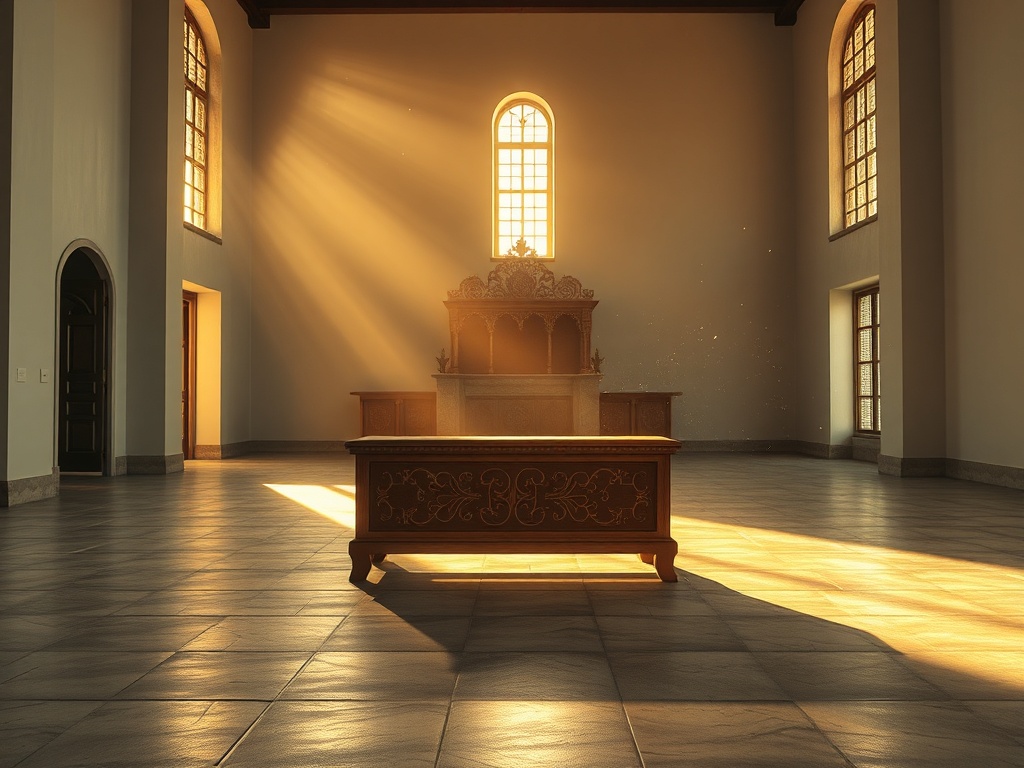
An Empty Mosque at Dawn and the Bier That Made a Congregation Laugh
In the quiet hours before dawn, when a Yemeni mosque stood empty except for a funeral bier left overnight, a story unfolded that would make an entire congregation laugh. The humor emerged not from disrespect but from recognition—the recognition of how easily ritual can overshadow meaning, how form can obscure essence.
This tension between the human and the divine finds its most profound expression in Islamic history. When the Prophet Muhammad (peace be upon him) passed away, the community faced a crisis of faith so profound that Umar, known for his strength and conviction, could not initially accept the news. It was Abu Bakr who reminded the grieving Muslims of the fundamental distinction: "Whoever worships Muhammad, know that Muhammad is dead. But whoever worships God, He is Ever-Living and never dies."
This foundational moment reveals Islam's core insistence on directing worship exclusively toward the divine, never toward intermediaries or human figures, no matter how revered. The theological clarity serves as a constant check against the human tendency to elevate the created above the Creator.
Yet this theological purity often meets complex realities. Historical Islamic societies frequently accommodated religious diversity, with people of different faiths living alongside Muslim communities without compulsion to convert. The principle of protection for recognized religious communities existed alongside specific legal frameworks that governed interfaith relations.
In contemporary contexts, particularly in religiously homogeneous societies, these historical precedents raise challenging questions about the relationship between religious identity and civic participation. When a nation defines itself through a single religious tradition, how does it navigate the space between preserving religious character and acknowledging the diversity of human conscience?
The question becomes more pressing when considering broader existential themes. If the universe contains stars that shine for billions of years without strain, why would the concept of eternal paradise for humanity present a theological problem? The answer may lie in recognizing that religious faith addresses questions of meaning and purpose that transcend physical limitations—it operates in a different register than astronomical phenomena.
What emerges from these reflections is a faith that demands both theological precision and practical wisdom. It calls believers to worship the Eternal while navigating the temporal, to maintain religious commitment while engaging with complex social realities. The laughter in that Yemeni mosque may have been about a simple misunderstanding, but it points to a deeper truth: faith remains vital not when it becomes rigid formalism, but when it guides how we live in the world with clarity, compassion, and recognition of both human limitations and divine transcendence.
— Source fragments: A true story from a mosque in Yemen; When the Prophet Muhammad (SAW) died; 'Whoever worships Muhammad, know that Muhammad is dead. But whoever worships God, He is Ever-Living and never dies'; The plurality in islam you are talking about was existing people in the land who were of different faiths