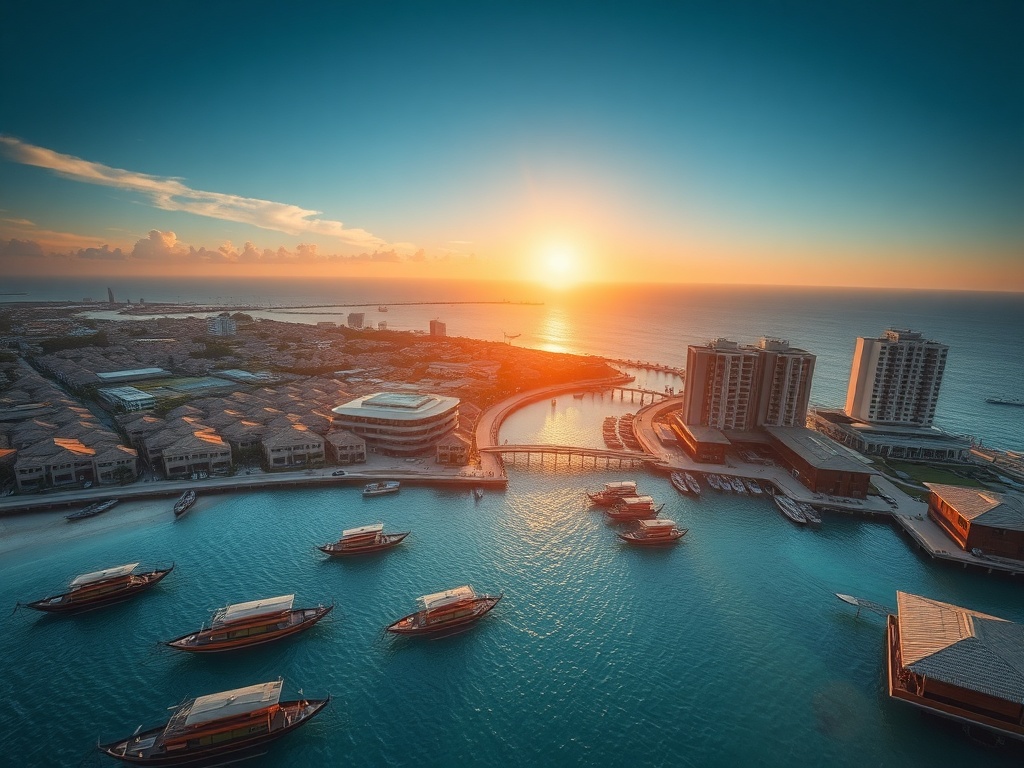
An Engineer's Blueprint Meets the Ocean's Own Design
The engineer dreams in concrete and steel, drawing straight lines across blueprints while the ocean draws its own patterns just beyond the window. There's a certain poetry to this tension—the ordered geometry of development plans laid over the organic chaos of island life. We build upward because we cannot build outward, stacking lives like coral blocks in a sea that remembers every footprint.
In the spaces between these structures, life persists with its own stubborn rhythm. The morning fish market still hums with the same energy it did generations ago, though now the prices make people shake their heads and calculate carefully. The sea breeze still carries the scent of salt and diesel, of both tradition and change. Young men gather on the seawall, their conversations bouncing between football scores and job applications, between local gossip and global aspirations.
Every system we create seems to develop its own leaks. The grand housing projects meant to solve crowding become another layer in the puzzle, their subsidized units sometimes occupied by ghosts—leaseholders living abroad while others cram into relatives' homes. The healthcare meant to protect us sends people flying across oceans for treatments that should be available here. The tourism that fuels our economy sometimes feels like watching money flow through a sieve, with too much slipping through fingers and national boundaries.
Yet in the late afternoon, when the light turns golden and families emerge for their evening walks, you can still feel the resilience that has always defined these islands. Children chase each other across newly paved roads while their grandparents remember when those same paths were sand. The call to prayer still rises above the construction noise, a reminder of rhythms older than any political term or development plan.
We live in this space between what is and what could be, between concrete dreams and coral reality. The challenge isn't just building better structures, but remembering what we're building for—not just taller buildings, but better lives; not just economic growth, but shared prosperity; not just development, but home.
— Source fragments: Economy: High cost of living, government money printing, rising taxes; Housing: Crisis in congested capital, government housing projects politicized; Youth issues: Unemployment, lack of opportunities; Healthcare: Inadequate, many travel abroad for treatment