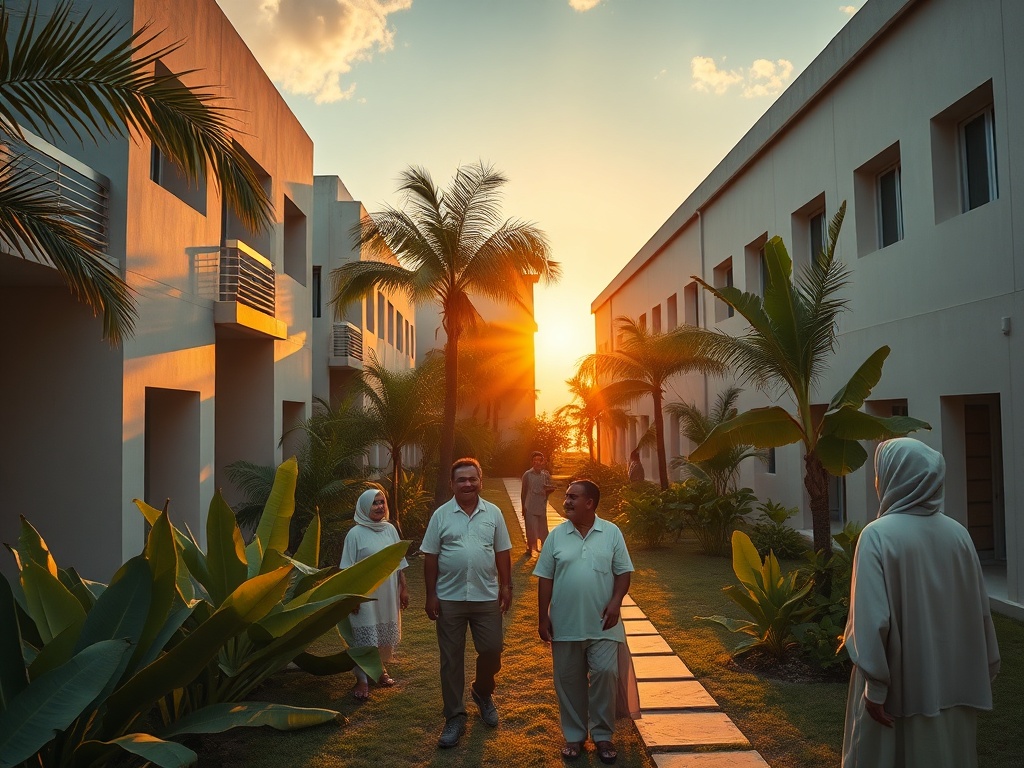
An Equal Home, No Matter the Island You're From
The debate over housing in the Maldives has reached a critical juncture, moving beyond mere allocation to confront fundamental questions of identity and equality. At its core lies a simple but powerful demand: that every Maldivian, irrespective of their island of birth, deserves equal access to housing where they live and work. This principle challenges longstanding practices that have subtly favored certain geographic origins over others.
The Binveriya Scheme represents the current administration's ambitious attempt to address the housing crisis. Proponents highlight its innovative approach—apartments designed with uncommon attention to livability, featuring spacious layouts and communal gardens where residents can grow bananas and coconuts. The promise of permanent ownership offers stability in a nation where secure housing remains elusive for many. Yet critics argue these initiatives, however well-intentioned, fail to address systemic inequities in eligibility criteria that disadvantage citizens based on their ancestral islands.
A growing consensus suggests that social housing constructed on available land might serve broader public interest than individual land plots. Such an approach could potentially house more families while fostering community integration. The political dimension remains unavoidable—housing policies have long been leveraged as electoral tools, with subsidized accommodations sometimes becoming political currency rather than sustainable solutions to urban congestion.
Beneath the policy debates lies a deeper cultural conversation about what constitutes home in an archipelago nation. The vision of communal gardens yielding fresh produce evokes a nostalgic connection to traditional Maldivian life, even within urban settings. This represents not just housing provision but an attempt to preserve cultural identity amid rapid development.
The path forward requires moving beyond politicized distribution toward needs-based allocation that recognizes citizenship rather than birthplace as the primary criterion. As the nation urbanizes and populations shift, the definition of 'home island' evolves. True success in housing policy will be measured not by the number of units distributed but by whether they strengthen the social fabric, ensuring all Dhivehin have a place to belong.
— Source fragments: Equal opportunity regardless of birth island; pressure MPs to end discrimination; MDP housing policy reference; housing needs; oversight of apartment design for comfort; social housing vs land distribution debate; Binveriya Scheme success claims; permanent ownership with communal gardens