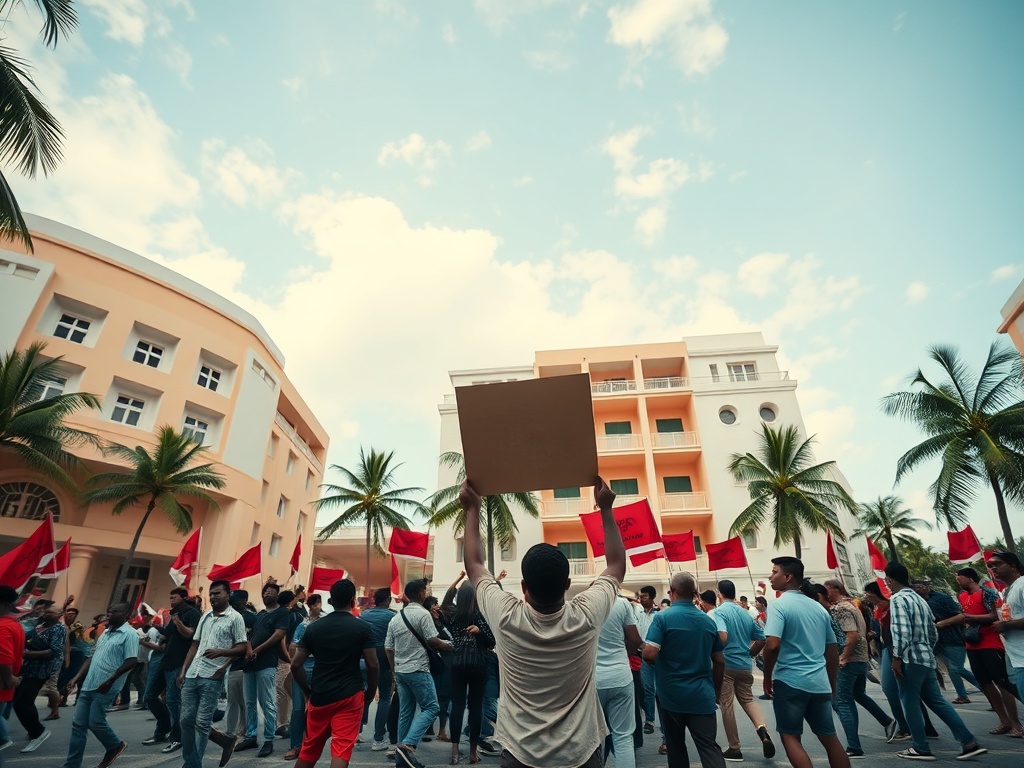
Anti-Govt protest erupts in Maldives
The streets of Malé witnessed another gathering of frustrated citizens today, their banners reflecting a deeper unease spreading through our island communities. These protests aren't spontaneous outbursts but the visible symptoms of brewing discontent that has been simmering beneath the surface of our political landscape.
What drives ordinary Maldivians to abandon their daily routines and gather in public spaces? The answer lies in the growing disconnect between political promises and lived realities. When development projects stall and housing solutions remain out of reach, public trust erodes one broken commitment at a time.
The conversation on social media reveals deeper concerns about political neutrality and accountability. Citizens are increasingly questioning whether party loyalty has overshadowed genuine public service. When political allegiances determine who receives government assistance and who gets left behind, the very foundation of our democracy faces serious challenges.
Economic pressures compound these political frustrations. With limited job opportunities and rising costs, many Maldivians feel caught between ambitious national development projects and their personal struggle to make ends meet. The gap between political rhetoric about national progress and the daily reality of putting food on the table creates a breeding ground for public discontent.
These protests represent more than just opposition to a particular policy or politician. They reflect a fundamental question about the direction of our nation and whether our political system truly serves the people it claims to represent. As the chants echo through Malé's streets, they carry the weight of unanswered questions about transparency, accountability, and the future of governance in our island nation.
The emergence of digital platforms has amplified these voices, transforming private kitchen-table conversations into public debates. What was once discussed quietly in tea shops now reverberates across social media, creating new pressure points for political accountability. This digital awakening challenges traditional power structures and demands new forms of civic engagement.
As we watch these events unfold, the critical question remains: will these expressions of public concern lead to meaningful dialogue and reform, or will they further polarize our political landscape? The answer may determine not just the fate of current leadership but the health of our democracy for generations to come.