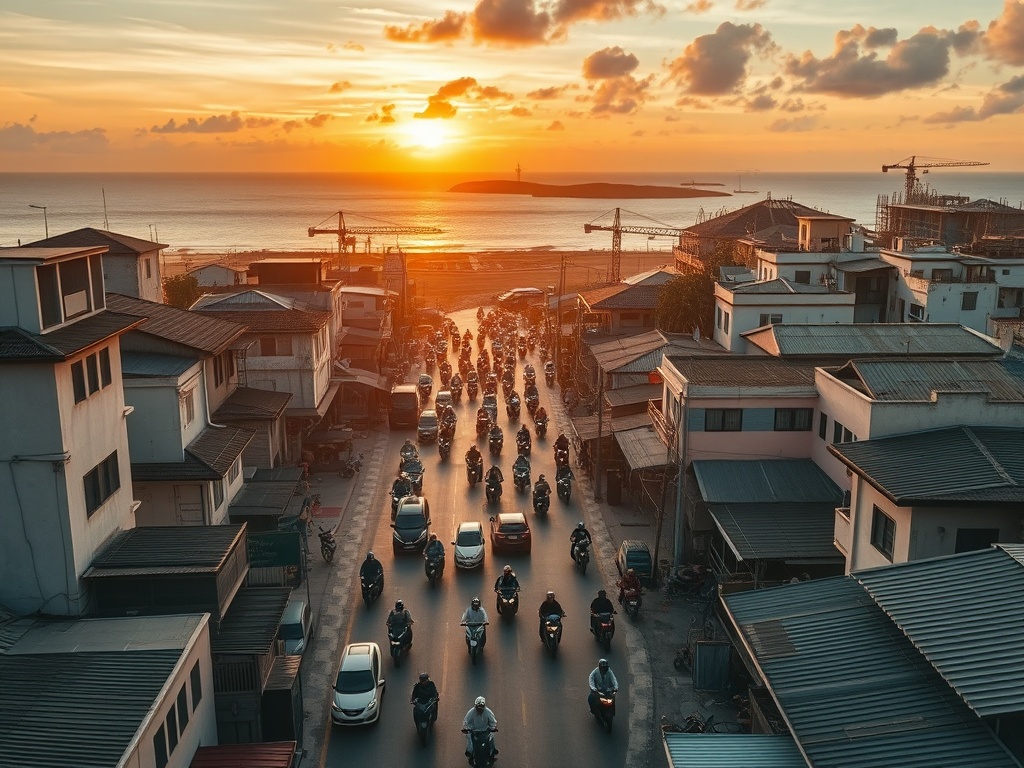
Before Dawn Until After Dark: Malé's Gridlocked Commute
The traffic snarls begin before dawn and persist long after sunset—a daily ritual of honking horns and gridlocked streets that has become the defining soundtrack of Malé. Commuters sit trapped in their vehicles, watching precious hours evaporate while questioning the logic behind infrastructure planning that seems to prioritize spectacle over substance. The irony is palpable: just kilometers away, dredgers work around the clock pumping sand from the ocean floor to create new islands, while the existing capital suffocates in its own congestion.
This infrastructure paradox defines modern Maldivian development. Billions of rufiyaa flow into ambitious reclamation projects—Vilimalé, Hulhumalé, Gulhifalhu, and beyond—creating artificial land masses that promise to alleviate the nation's spatial constraints. Yet these mega-projects often feel disconnected from the immediate needs of Malé's residents, who navigate flooded streets and traffic jams that simple drainage maintenance could alleviate.
The recent success in addressing Malé's chronic flooding through basic drainage cleaning highlights this disconnect. Where previous administrations pursued complex engineering solutions, a straightforward approach yielded immediate results. This suggests that technical competence in municipal management may matter more than grand political visions. The capital's unique density and complexity demand experienced urban planners who understand that sustainable cities aren't built on reclaimed land alone but through thoughtful management of existing infrastructure.
Critics argue that the obsession with creating new territory reflects a deeper failure to address systemic governance issues. The technical capacity to manage a city of Malé's complexity appears lacking, with political appointments often trumping professional expertise. Meanwhile, the development of natural islands as sustainable alternatives to Malé's congestion receives scant attention, despite their potential to create genuinely livable communities rather than merely expanding urban sprawl.
The fundamental question remains: are we building for political legacy or public benefit? As vehicles crawl through Malé's one-way streets and residents navigate flooded sidewalks, the contrast between ambitious reclamation and basic urban management grows starker. Sustainable development requires balancing visionary projects with pragmatic solutions—recognizing that sometimes the most impactful infrastructure investment isn't creating new land but making existing spaces functional for those who inhabit them.
— Source fragments: traffic jam packed, wasted millions, drainage cleaning solution worked, Malé needs experienced technical person, billions poured into sea reclamation, natural islands as sustainable alternatives