Beneath the Concrete: The Unchanged Heart of Our Economy
The conversation always circles back to numbers—units built, approvals granted, timelines compressed. But beneath the statistics lies a truth we feel in our daily lives, a truth as persistent as the sea breeze that carries the scent of wet concrete across our islands.
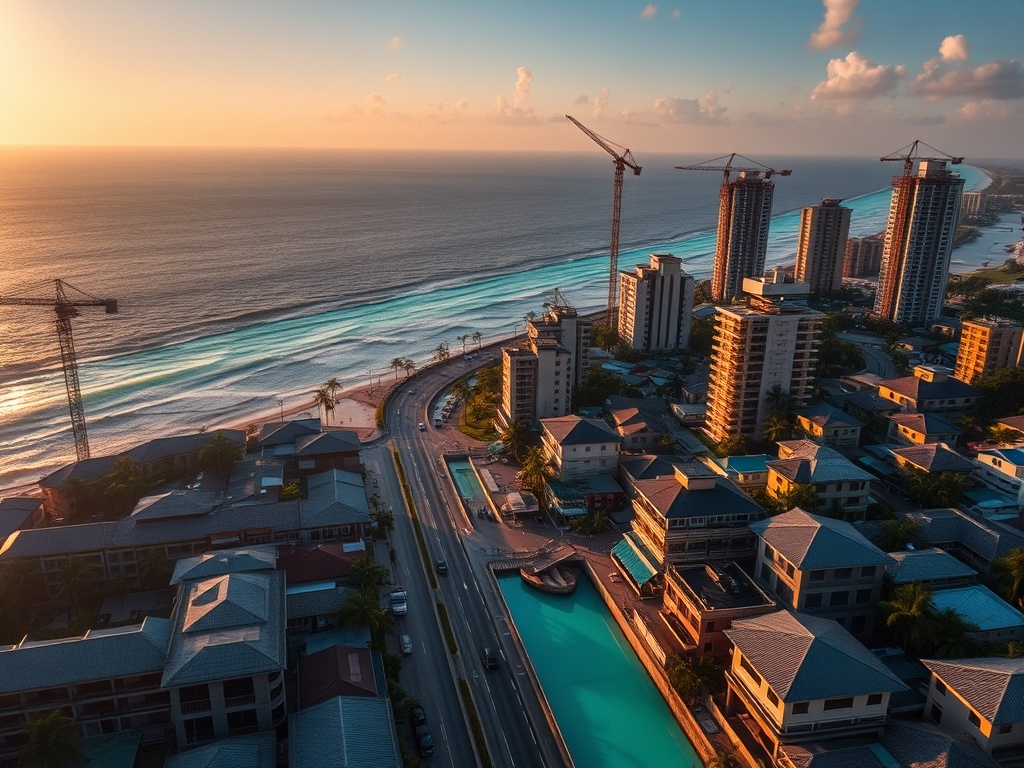
When they speak of development, they show us architectural renderings and completion dates. They talk of progress measured in square meters and occupancy rates. Yet we who live here know another story. We watch as new structures rise where fishing boats once docked, as apartment blocks shadow the narrow streets where children used to play. The cranes become permanent fixtures against our horizon, their metal arms sketching promises in the sky.
But the promises have a curious way of never touching the ground where we stand. They speak of supply meeting demand, of market forces finding equilibrium. Yet we see the opposite—the scales tipping further, the distance between what is and what could be widening with each new foundation poured.
There's a peculiar mathematics at work here, one that doesn't follow the rules we learned in school. Three thousand homes should mean more space for everyone, more opportunities, more breathing room. Instead, we find ourselves pressed closer together, watching the value of everything around us rise while our ability to participate in that value diminishes.
The approval process becomes a blur of paperwork and political handshakes, moving with a speed that suggests urgency. But whose urgency? Not the family saving for generations to afford a single room. Not the young couple watching their dreams of homeownership recede with each new luxury development.
We're told to celebrate growth, to embrace change. And we do—we understand that islands must evolve, that economies must develop. But development without connection to the people it's meant to serve becomes mere construction. Growth without shared benefit becomes empty expansion.
The real discussion isn't about rents or square footage. It's about what happens to a community when its physical transformation outpaces its social and economic foundation. It's about watching your neighborhood become someone else's investment portfolio. It's about the quiet realization that progress, when measured only in concrete and currency, can leave the human spirit behind.
So we continue the conversation, not with charts and data, but with the lived experience of watching our world change around us. We speak of the spaces between the numbers, the stories that don't fit in spreadsheets, the truth that persists long after the ribbon-cutting ceremonies have ended.
— Source fragments: The discussion isn't about rents; Pagewood has had 3000 apartments built; quick approval from councils; price of apartments have gone up, they haven't decreased