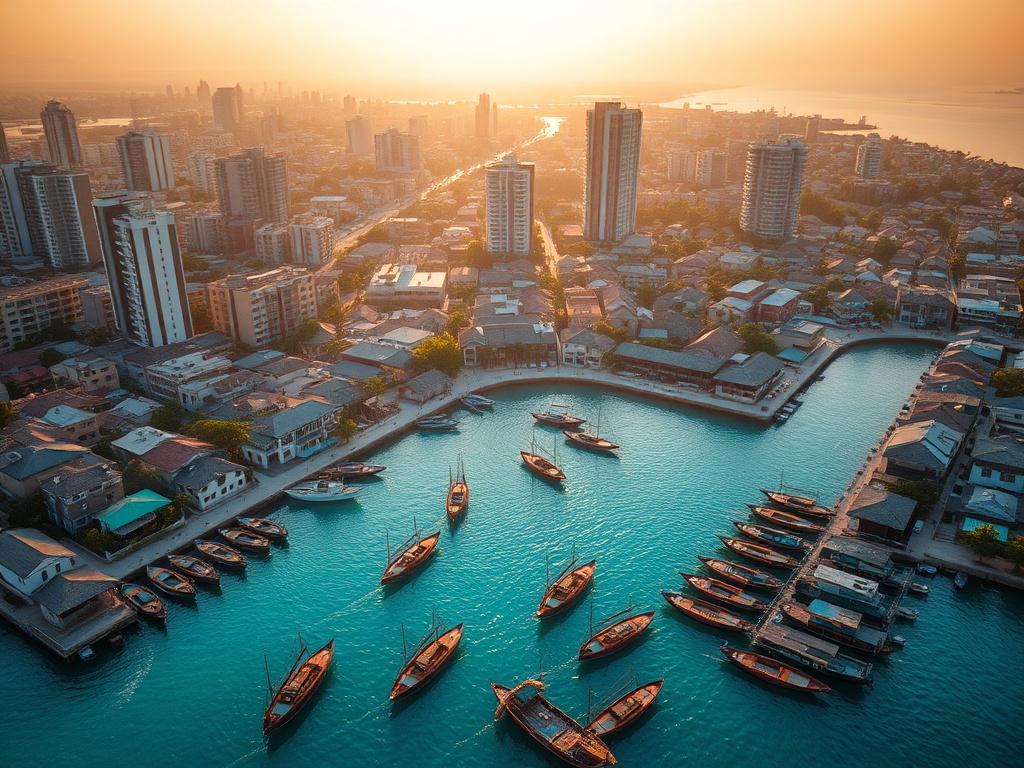
Beneath the Turquoise: The Unseen Weight of Island Dreams
There is a particular heaviness that settles over Malé when the afternoon heat gives way to evening. It's not just the humidity clinging to the air, but something more profound - the collective weight of dreams deferred and opportunities just out of reach. You see it in the way young men gather on the seawall, their laughter masking the uncertainty of what comes next. You hear it in the quiet conversations between mothers at the local shop, calculating how much further the rufiyaa will stretch this week.
In this city of compacted lives, where buildings reach for the sky because there's nowhere else to grow, housing becomes more than shelter - it becomes the measure of a life. The promise of a flat, of space to call your own, dangles like a mirage. Some wait years, watching as political winds determine who gets to plant roots. Others watch from abroad as their government-subsidised homes become someone else's profit, the very system meant to help them instead creating new distances.
Meanwhile, the sea that surrounds us offers both connection and separation. It brings tourists who see only the surface beauty, while beneath the calm waters run currents of economic pressure that pull at our foundations. The resorts glitter on distant horizons, their wealth often passing through our hands like seawater - felt, but impossible to hold.
Yet in this tension between scarcity and abundance, there persists a remarkable resilience. It's in the fisherman who still goes out before dawn, in the teacher who makes do with limited resources, in the young graduate who refuses to let disappointment define them. We navigate these challenges not as victims of circumstance, but as people who understand that islands, by their very nature, teach adaptation. The same ocean that isolates us also connects us to something larger - the enduring belief that tomorrow's tide might bring different shores.
— Source fragments: Housing crisis in congested capital, High cost of living, Youth unemployment and lack of opportunities, Tourism wealth not fully benefiting locals, Economic pressures and foreign currency shortages