Between Bureaucratic Portals and Island Councils
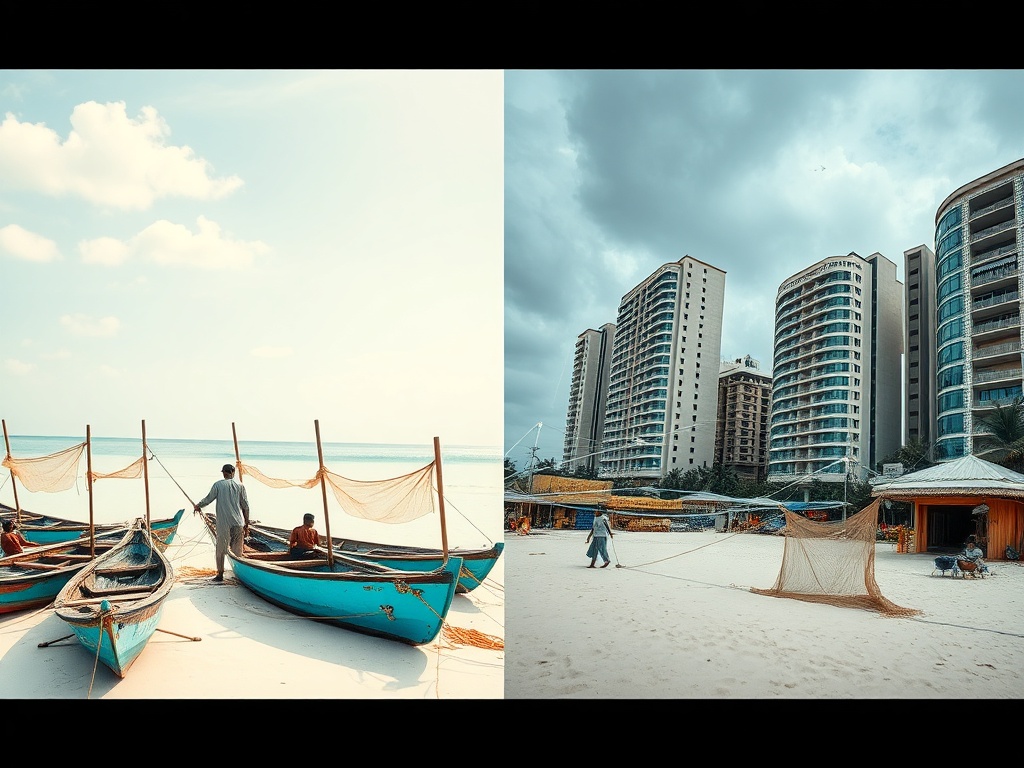
The debate over governance in the Maldives has reached a critical juncture, with competing visions of centralized authority versus decentralized empowerment shaping the nation's political landscape. What began as a movement toward local empowerment—the desire for communities to elect their own island chiefs—has evolved into a system where centralization appears to be gaining ground.
The tension reflects deeper structural questions about how a nation of scattered islands should govern itself. Proponents of centralization argue that at the Maldives' scale, concentrated authority enables more efficient administration and resource allocation. They point to Male's congestion problems as evidence that coordinated, nationwide planning is essential. This perspective gained particular traction when political parties found themselves outside government and sought to restructure state power.
Yet the practical implementation of policies often reveals the limitations of any governance model. Recent discussions about family benefits highlight how policy details can become distorted in public discourse—what some perceived as a 12,000 MVR payment actually breaks down to 3,000 MVR per child, applying only to families with four children under eighteen. Such misunderstandings underscore the communication gaps between policy makers and citizens.
The creation of digital portals for public feedback represents another attempt to bridge this gap. A recently launched platform promised direct access to the President, allowing citizens to voice concerns without bureaucratic filtration. However, questions linger about its effectiveness—whether it functions as a genuine two-way communication channel or merely a symbolic gesture. The platform's current maintenance status fuels skepticism about governmental commitment to meaningful public engagement.
Healthcare administration exemplifies these governance challenges. When citizens raise concerns about local health centers, they must navigate the delicate balance between expressing needs and understanding jurisdictional boundaries. Health centers fall under central government oversight, not parliamentary responsibility, creating confusion about where accountability lies.
The fundamental question remains: how can the Maldives develop governance structures that are both effective and responsive? As the nation contends with congestion, resource allocation, and public service delivery, the tension between centralized efficiency and localized empowerment will continue to shape political discourse and policy outcomes. The answer likely lies not in choosing one model exclusively, but in finding the right balance for different sectors and services—a calibration that remains the ongoing work of Maldivian democracy.
— Source fragments: I think at our scale we need centralization. Not decentralization. Originally people wanted to vote their katheeb. But this evolved to #centralization. MDP when they cannot enter govt at the time wanted to weaken the state. Male's problem is congestion.; They made a portal that 'allows people to directly voice their concerns and share their feedback with the President' Not sure how effective or useful it was, or whether it was a one or two-way channel.; The health center project is overseen by the central government, not; You're taking it the wrong way. The 12,000 MVR applies only to someone with four children under 18. The actual rate is 3,000 MVR per child.