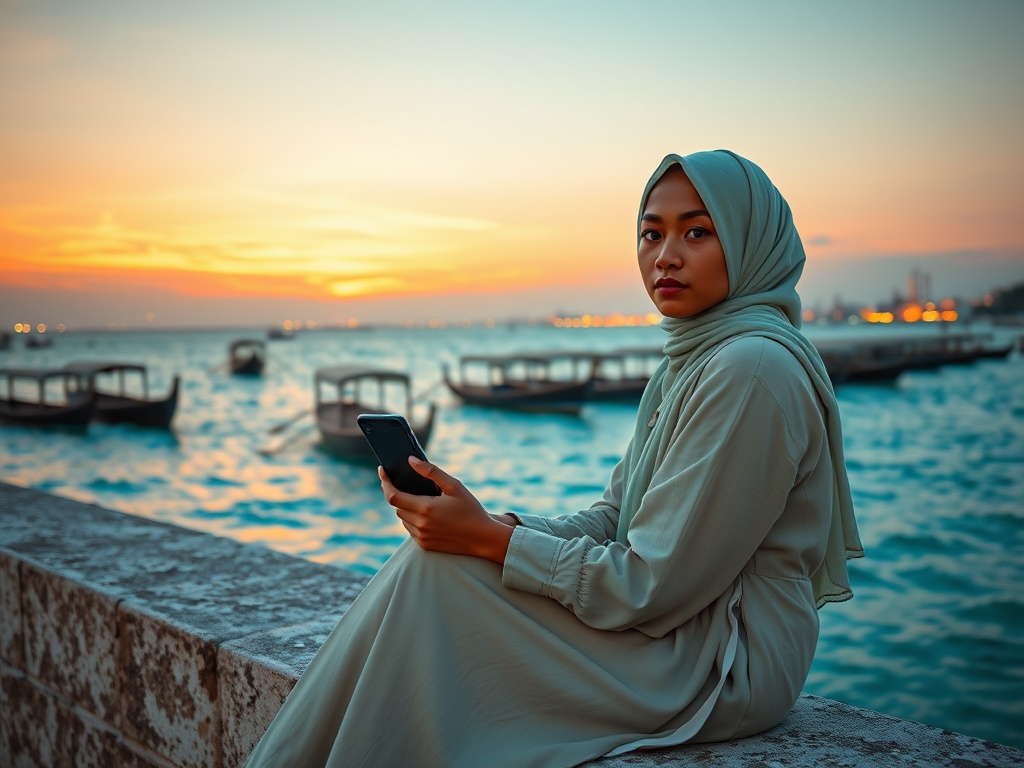
Between Competing Tides: A Nation's Soul Adrift
The scent of salt and diesel hung heavy over the harbor as Aishath watched the sun bleed into the horizon. On her phone, the voices of her country screamed at each other—about land, about foreign bases, about who deserved what and why. She scrolled past the anger, the accusations, the coded language that divided Malé from the atolls, neighbor from neighbor.
Her own family was split between the capital and their home island. When she visited her grandparents in the south, they spoke of a different Maldives—one where the rhythm of life was measured by fishing seasons and prayer times, not political scandals or currency fluctuations. Her uncle, a fisherman turned construction worker in Malé, complained about the free housing given to certain families while he paid half his salary for a single room shared with three others.
'They're deciding what class our children will be,' he'd said last week, his hands calloused from hauling nets and now concrete blocks. Aishath had nodded, but her mind was elsewhere—on the job interview tomorrow, on the resume she'd polished until it shone, on the hope that hard work might still mean something.
Down at the harbor, young men gathered near the fishing boats, their laughter sharp and nervous. Some spoke of friends lost to addiction, others of applications sent to resorts that never replied. They debated weapons purchases and foreign bases with the certainty of those who have never held power, only witnessed its consequences.
Aishath remembered her economics professor explaining how simple the currency fix would be—just spend the dollar reserves to buy rufiyaa until balance returned. Yet the system remained broken, tangled in favors and deputy approvals. Everything required someone's blessing, someone's turned blind eye.
She put her phone away and watched a traditional dhoni cut through the water, its sail patched but still catching the wind. The boat moved with a grace that the political arguments lacked—a practical elegance born of necessity. Tomorrow she would put on her best clothes and walk into an office building, carrying not just her qualifications but the weight of all these competing expectations.
The young men's voices carried over the water, mixing with the call to prayer from the mosque. They were talking about exposure therapy now—about facing fears head-on. Aishath smiled faintly. Perhaps that's what they were all doing, in their way: exposing themselves to the difficult truth that building a future meant navigating between the islands you came from and the capital you aspired to, between the traditions that anchored you and the changes that might lift you up.
The sun disappeared, leaving the sky bruised purple and orange. Somewhere, politicians were making decisions about military bases and land distribution. But here at the water's edge, Aishath understood that the real battle wasn't about which foreign power had influence, but about whether her generation could stitch together the fragments of their nation into something that could hold them all.
— Source fragments: Discrimination along Malé-RT lines; free goathi distribution creating class imbalance; youth challenges and professional success; exposure therapy for overcoming fears; political decisions affecting future generations; the weight of where you come from versus where you're going