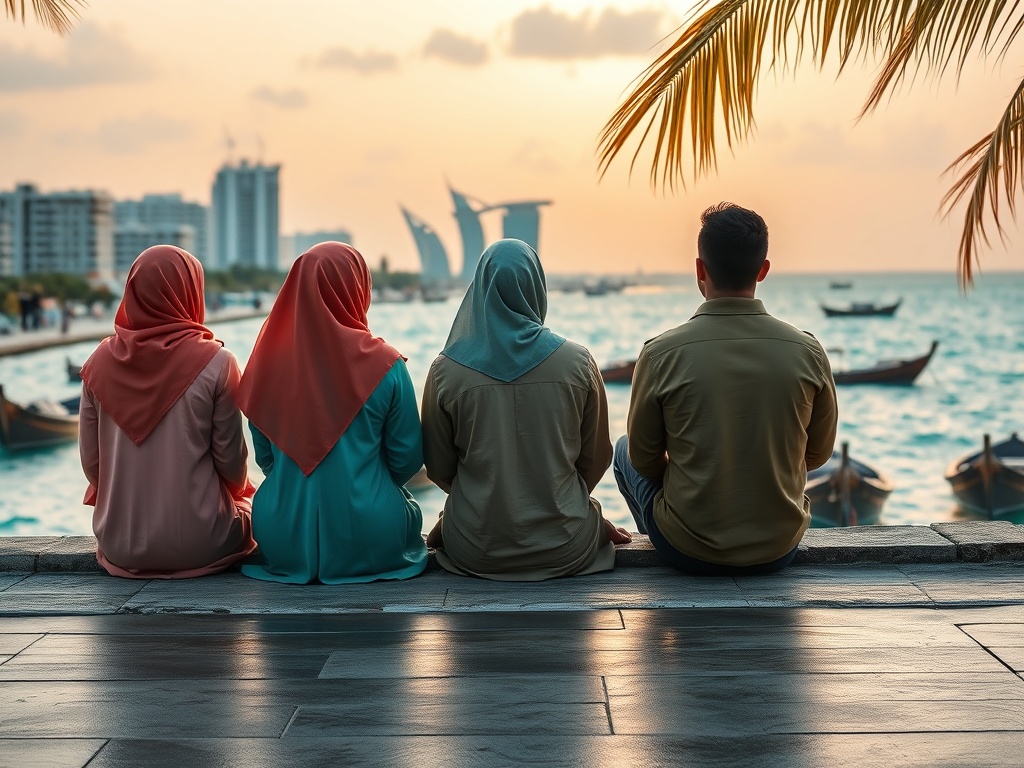
Between Concrete and Coral: The Silent Dreams of Maldivian Youth
The sea breeze carries the scent of salt and diesel across Malé, where concrete buildings rise like coral formations against the endless blue horizon. Young men gather on the sea wall, their laughter mingling with the distant hum of tourist speedboats heading to pristine resorts. They speak of applications submitted, interviews attended, and the quiet disappointment that follows when qualifications meet the silent barriers of nepotism and limited opportunity.
In the narrow streets between buildings, dreams take shape in small ways—a photography business started with a secondhand camera, a home bakery supplying local cafes, a YouTube channel documenting traditional fishing methods. These small enterprises bloom like resilient sea grass in tidal pools, finding nourishment where larger ambitions might wither.
The contrast between the Maldivian reality and the tourist perception creates a peculiar duality. While visitors see paradise, young locals navigate the complex mathematics of survival—calculating rent against minimum wage, weighing education costs against uncertain returns, measuring dreams against practical constraints. The resorts that dot the atolls represent both economic opportunity and psychological distance—places where Maldivians work but rarely belong, where luxury exists just beyond reach.
Yet in this tension between aspiration and reality, something resilient persists. The same sea that separates islands also connects them; the same ocean that limits land also provides sustenance. Young Maldivians are finding ways to bridge these divides—using social media to create new economies, forming cooperatives to bypass traditional barriers, preserving cultural knowledge while embracing global opportunities.
Their patience is not resignation but rather the steady rhythm of tides—the understanding that change, like the monsoon, comes in its own time. They watch the tourist seaplanes land and take off, carrying visitors to experiences they themselves may never afford, yet they find contentment in simpler treasures: the shared meal with family, the evening football game on the artificial turf, the satisfaction of creating something uniquely their own.
The true story of the Maldives is not written in political speeches or economic reports, but in the quiet determination of its youth—navigating the space between concrete and coral, building lives of meaning in the archipelago they call home.
— Source fragments: Youth issues: Drug use, unemployment, lack of educational/job opportunities; High cost of living; Tourism is the main forex source; Housing crisis in congested capital