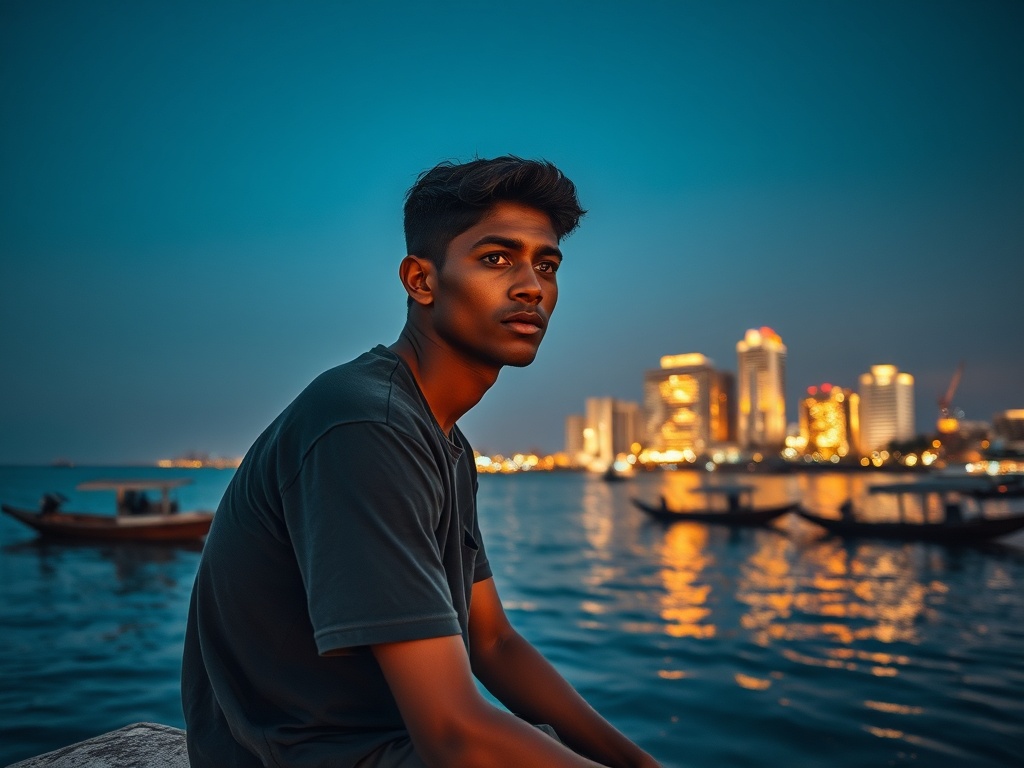
Between Concrete and Coral: The Unspoken Weight of Our Islands
The sea whispers different stories depending on where you stand. From the overwater villas, it speaks of luxury and escape. From the edges of Malé, it murmurs of rising tides and shrinking spaces. For the young people growing up between these realities, the ocean becomes a metaphor for the currents pulling at their futures.
In the narrow alleys where the salt air mixes with the scent of frying hedhikaa, you can feel the tension between what our islands promise and what they deliver. The same waters that draw tourists in yachts also lap at the foundations of crowded homes, where multiple families share spaces meant for one. The brilliant blues that fill Instagram feeds are the same waters that separate us from opportunities abroad.
There's a particular weight to being young here—a sense of navigating two worlds simultaneously. One world speaks of degrees and ambitions, of becoming engineers, doctors, pilots. The other speaks of practicalities—the jobs that don't exist, the businesses that struggle against imported competition, the education that doesn't translate to employment. The gap between aspiration and reality widens like the space between high tide and low.
Yet in this tension, something remarkable persists. You see it in the late-night conversations at coffee shops, where ideas flow as freely as the black tea. You hear it in the determined strum of guitar strings from apartment windows overlooking the sea. You feel it in the resilience of those who wake each morning and try again, despite the mounting evidence that the system isn't built for their success.
The real story of these islands isn't in the political speeches or the resort brochures. It's in the quiet determination of a generation learning to build their futures while standing on ground that sometimes feels like it's dissolving beneath them. They're learning to find footing not just on land, but within themselves—forging identities strong enough to withstand both the literal and metaphorical rising waters.
What emerges is a new kind of Maldivian resilience—one that acknowledges the shrinking spaces but refuses to be defined by them. A recognition that while the geography may be limited, the human spirit isn't. And in that recognition lies the possibility of creating something new, something that honors both the coral and the concrete, the tradition and the transformation.
— Source fragments: Youth issues: Drug use, unemployment, lack of educational/job opportunities; Housing crisis in congested capital; High cost of living; Economy heavy import reliance; Tourism benefits not reaching locals